PHILADELPHIA – Steven Kelty had been addicted to crack cocaine for 32 years when he tried a different kind of treatment last year, one so basic that he was skeptical.
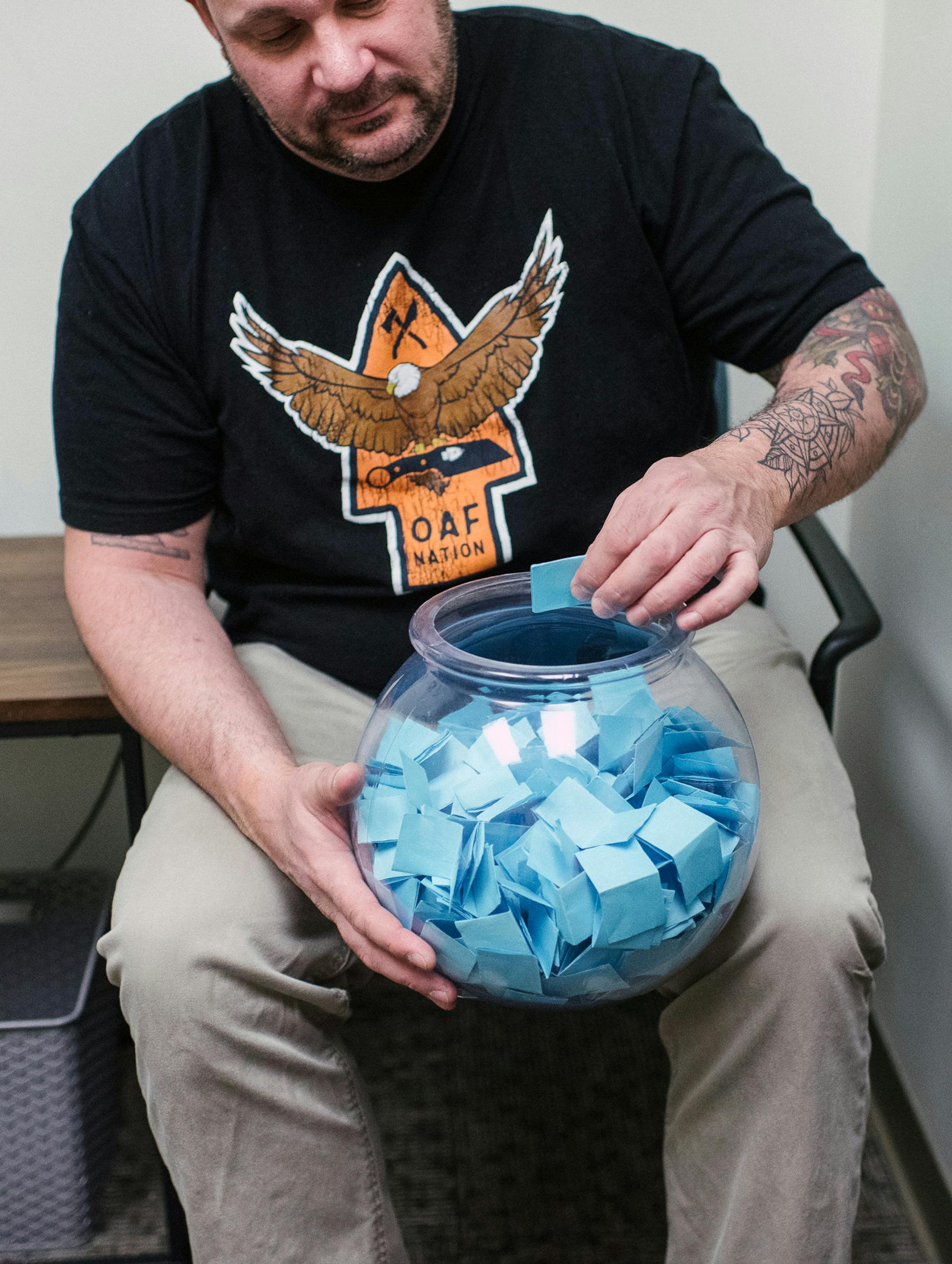
He would come to a clinic twice a week to provide a urine sample, and if it was free of drugs, he would get to draw a slip of paper out of a fishbowl. Half contained encouraging messages but the other half were vouchers for prizes worth between $1 and $100.
"I've been to a lot of rehabs, and there were no incentives except for the idea of being clean," said Kelty, 61, of Winfield, Penn. "Some of us need something to motivate us — even if it's a small thing — to live a better life."
The treatment is called contingency management, because the rewards are contingent on staying abstinent. A number of clinical trials have found it highly effective in getting people addicted to stimulants like cocaine and methamphetamine to stay in treatment and stop using. But outside the research arena and the Department of Veterans Affairs, where Kelty is a patient, it is nearly impossible to find programs that offer such treatment — even as overdose deaths have soared. Researchers say one of the biggest obstacles is a moral objection to the idea of rewarding someone for staying off drugs. That is one reason publicly funded programs like Medicaid do not cover the treatment.
Some treatment providers are also wary of giving prizes that they say patients could sell or trade for drugs. Greg Delaney, a pastor and the outreach coordinator at Woodhaven, a residential treatment center in Ohio, said, "Until you're at the point where you can say, 'I can make a good decision with this $50,' it's counterproductive."
Two medications used to treat opioid addiction, methadone and buprenorphine, have been viewed with similar suspicion because they are opioids themselves, even though research shows they substantially reduce the risk of death and help people stay in treatment. But the federal government has started aggressively promoting such treatment for opioid addiction, and has heavily invested in expanding access to it.
The fact that no public or private insurer will pay for contingency management, except in a few pilot programs, is a major challenge to expanding it; the biggest obstacle is that offering motivational rewards to patients has been interpreted as violating the federal anti-kickback statute. A group of experts asked the Department of Health and Human Services to waive the statute for two years as it pertains to contingency management, but the agency refused.
Congress recently told states that they could start spending federal "opioid response" grants on treatment for stimulant addiction, but the agency that distributes the grants allows only $75 per patient, per year, for contingency management.