

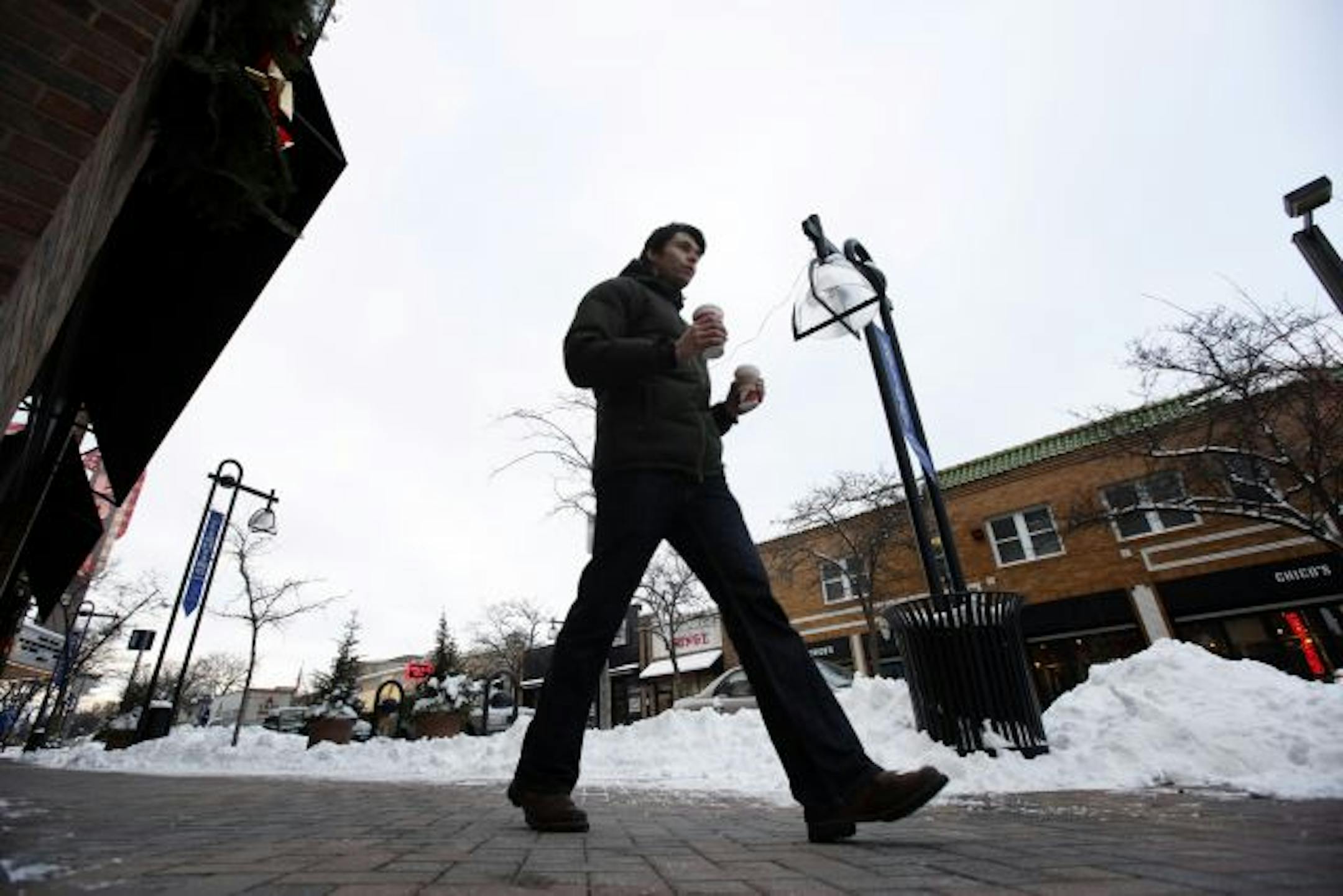
Month after month, requests for new stop signs come to Edina City Hall. People emotionally plead with the City Council for safer road crossings to parks and schools, or recount how kids nearly dashed into traffic to reach a dog that had been hit by a car.
Then city engineers step forward to explain why no stop signs are needed: There aren't enough accidents, average vehicle speed isn't too high and traffic volume doesn't meet the threshold for a stop sign.
Council Member Mary Brindle heard these appeals last spring. She thought that sometimes traffic analysis is too clinical to reflect how people really live and want to live.
"It's about healthy living, neighborhood connectedness and livability," she said.
Brindle wants Edina to consider developing a "pedestrian master plan," which lays out how to reduce conflicts between pedestrians and vehicles, tries to improve accessibility for people on foot and make walking in the city more pleasant.
Edina Mayor Jim Hovland shares Brindle's interest in making it easier to be a pedestrian in Edina, saying he wants to make his city "the most walkable community in Minnesota."
Last year Minneapolis approved what is believed to be the state's first such city pedestrian plan. The city now has a permanent citizen advisory committee that gives officials feedback on street reconstruction and design from a pedestrian point of view.
Cities such as Seattle, Denver, Portland and Boston also have pedestrian master plans.


