

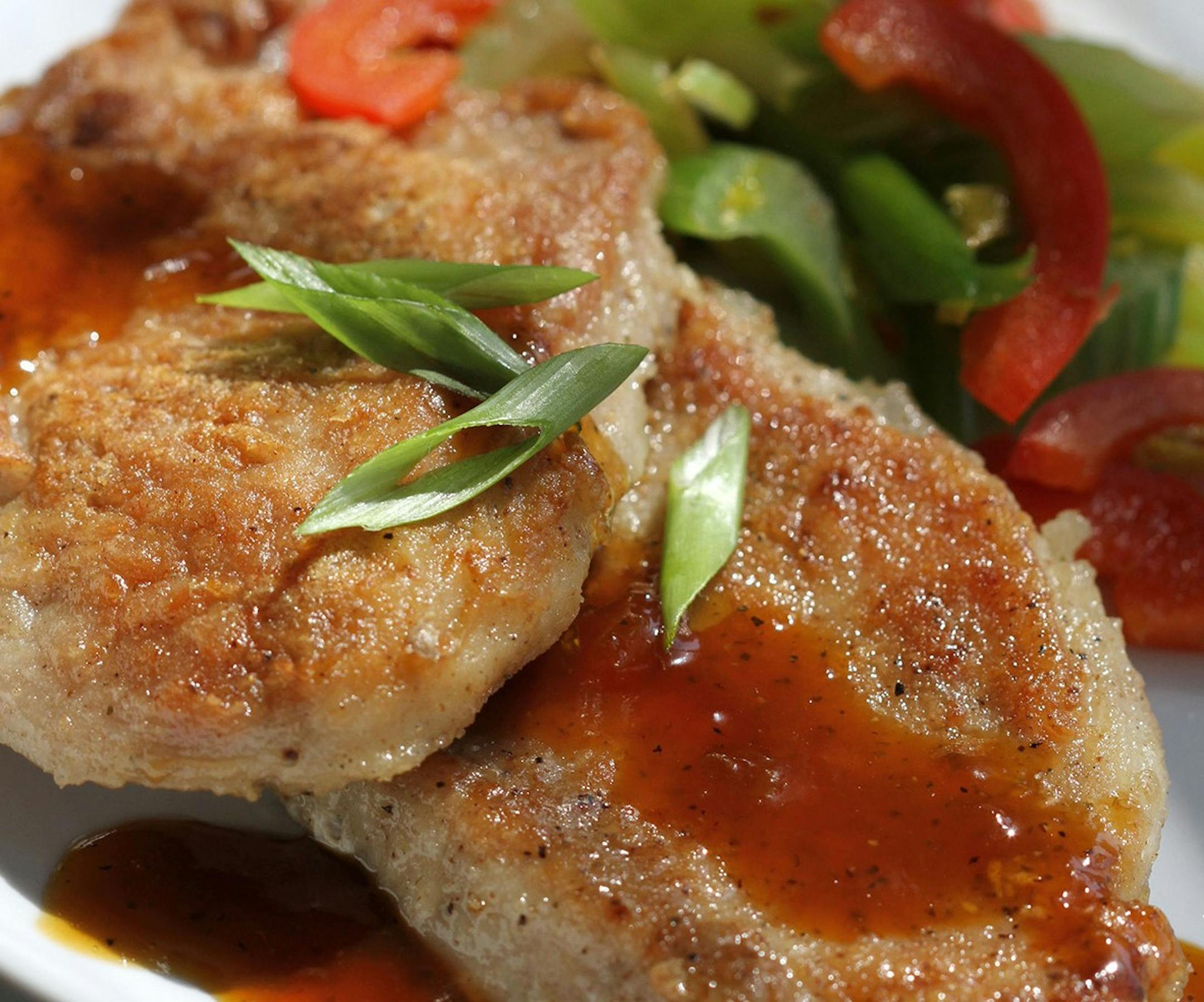
Thin cuts of pork chops make for a fast dinner on busy nights. Their charm is they cook quickly.
But how thin is thin? Look for the pork chops to be about ¼- to ⅓-inch thick. Most packages will be labeled "thin."
Today's pork chop recipe has a basic seasoning. The chops are pan-seared and topped with an easy sauce made in the same skillet from the pan drippings. That makes cleanup a breeze.
Seasonings, of course, add flavor depending on what's in them. But when you use salt to season, say, fish or meats, it's also bringing out their natural flavors. That's why most chefs will say season generously with salt and pepper. But seasoning with too much becomes problematic. You don't want your dish overly salty or favoring one seasoning more than the other. Strive for balance.
In this recipe, the thin pork chops are seasoned first with salt and pepper. Once seasoned, the chops are dredged in a seasoned flour mixture, which will give them somewhat of a crispy texture once they hit the hot pan. The flour mixture is seasoned with Morton Nature's Seasons seasoning blend — one of my go-to seasoning blends.
I use the two seasonings because pork is generally bland. The additional salt brings out the meat's natural flavor.
Before you season and cook the chops, take them out of the refrigerator at least 20 minutes before cooking. You don't want to put a cold chop, especially a thin one, in a hot pan. If you do, chances are it won't cook evenly.
Also, take care not to overcook the chops. Several years ago, the U.S. Department of Agriculture (USDA) lowered the safe internal cooking temperature recommendation for whole pork cuts to 145 degrees. Pork cooked to 145 degrees might still have a pinkish hue, but it's safe to eat, according to the USDA. Previous recommendations, often found in older cookbooks, were for an internal temperature of 160 to 170 degrees. That almost certainly produced dry meat.


