

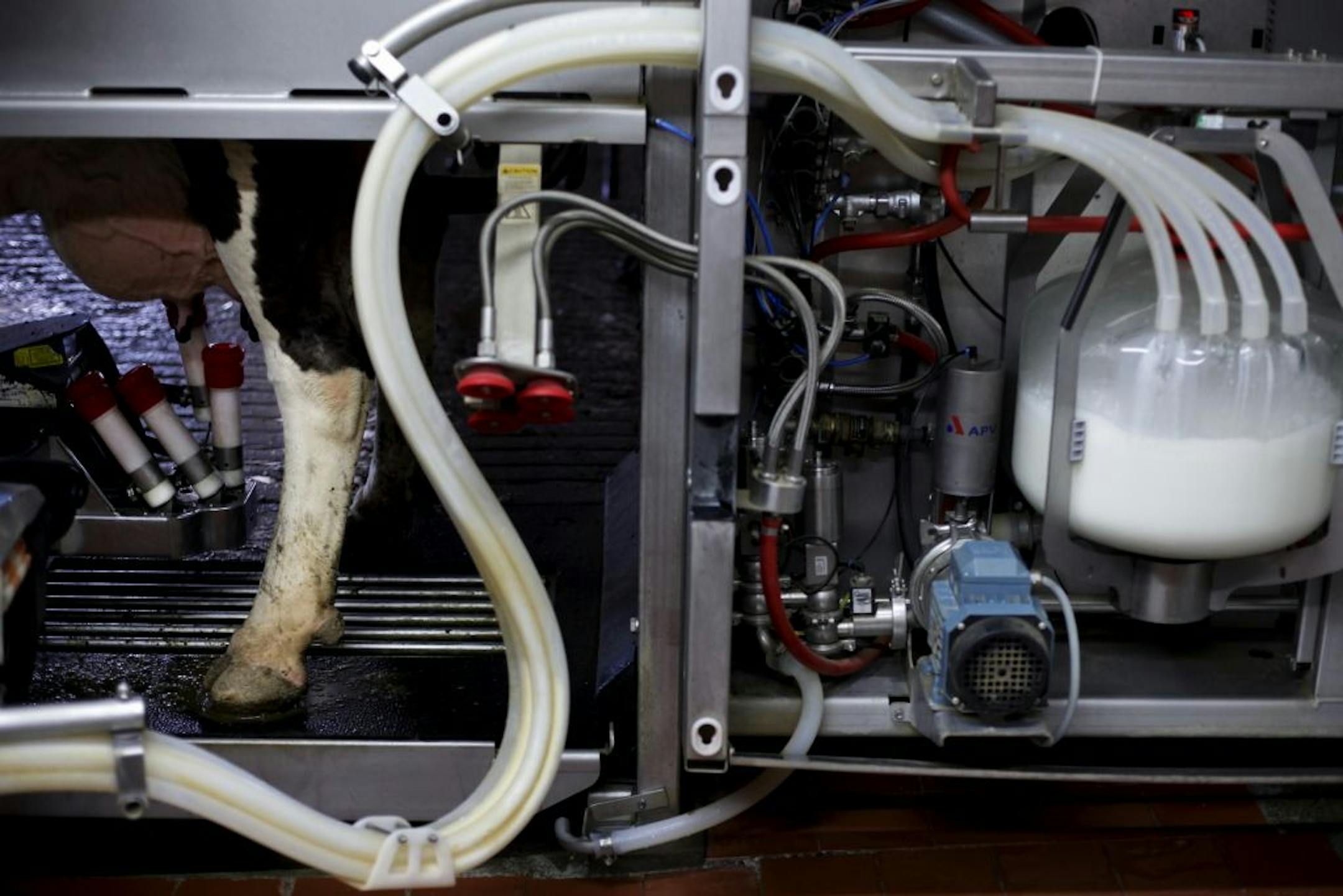
The boss cow saunters to the head of the line and, with a flick of her hip, cuts off two other ladies. She's itching to get at the tasty brown morsels waiting in the feed trough.
"It's like candy for them," Lisa Groetsch said as she oversaw milking on her Stearns County farm one recent afternoon. "It's full of protein and nutrients."
Groetsch and her Holstein herd represent the leading edge in a new wave of farm technology that is sweeping into the Upper Midwest: a dairy robot so sophisticated that it has practically taken the milker out of milking. The robots -- which not only milk the cows but also control their feed and adjust their schedules -- have spread to about 50 dairy farms in Minnesota and Wisconsin since they were first installed in 2006. The Dutch manufacturer, Lely, recently expanded its North American headquarters in Iowa to include a 36,000-square-foot production facility, the company's first outside the Netherlands.
Now, Groetsch says, the robots have the potential to save Minnesota's dwindling community of family dairy farms.
Many dairy kids leave the farm because they see their parents slave away in milking parlors twice a day, seven days a week, with never a vacation or even a break for the children's baseball games. With robots, a mechanical arm handles the milking and each cow chooses its own routine, leaving farmers with more time for family and flexibility for other chores.
"Younger kids like technology. ... [Robots] are keeping the new generation on the farm," said Marcia Endres, a University of Minnesota Extension dairy scientist.
By reducing labor costs and increasing productivity, robots can also help small family farms compete with big dairy operations springing up in California and other states.
But the machines don't come cheap. Each can cost between $150,000 and $200,000 -- a significant investment for small farmers, considering that the price of milk has fallen about 20 percent in the last year.


