

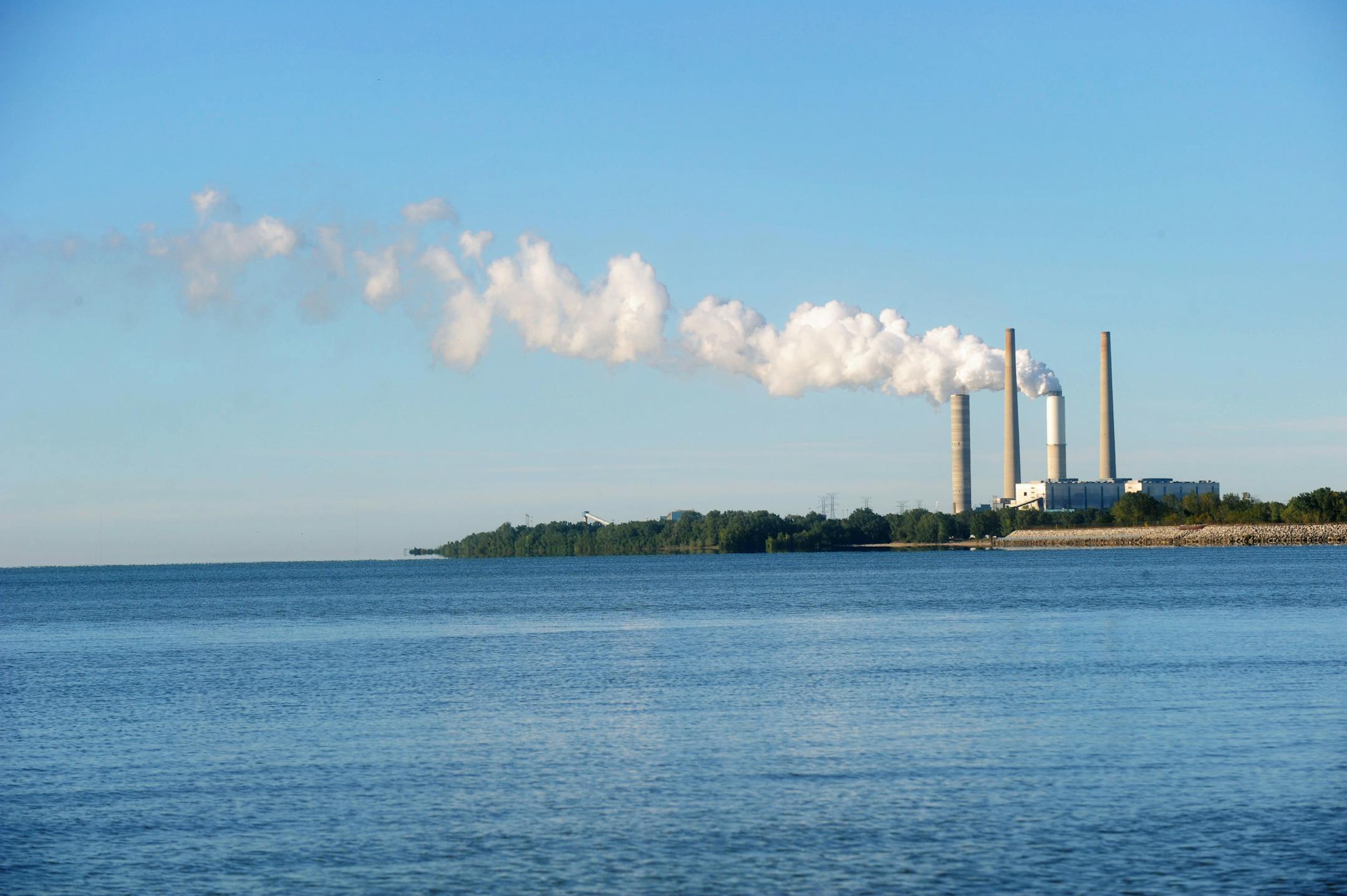
Mitt Romney and President Obama have traded barbs over coal in both their debates, each accusing the other of failing to champion the fuel. It's a shame that neither presidential candidate acknowledges the difficult economic reality coal now faces, or mentions that this form of power still produces intolerable amounts of pollution and greenhouse gases.
"I'm going to make sure we can continue to burn clean coal," Romney, the Republican nominee, said at the first debate on Oct. 3. Obama didn't disagree. When they met again this week, they vied to come across as coal's staunchest defender.
Nonetheless, the question remains: How can we "continue to burn clean coal," when we've never done so before?
In the near future, U.S. coal-fired power plants will be required to scrub their emissions of mercury and other toxic pollutants. They also may have to eliminate more sulfur dioxide and nitrogen oxides, the chief ingredients of acid rain. Even then, coal power will still put out too much carbon dioxide, the main human-produced greenhouse gas. Only when CO2 is also removed from the exhaust will it be truthful to speak of coal as "clean."
What the candidates also fail to mention is that coal consumption is already declining as a result of economic realities that have little to do with federal regulations meant to make it cleaner. The price of natural gas, coal's main competitor in the electricity-generation business, has fallen to historic lows. Natural-gas power plants, cheap and easy to build and run, are springing up across the nation. Electricity demand is almost flat. And slowly but surely, as states demand it, renewable sources of power such as solar and wind are carrying a greater share of demand.
So coal is unlikely to ever provide as much cheap wattage as it once did. It now accounts for 39 percent of U.S. electricity, down from almost half only five years ago. (Over the same period, the share provided by natural gas has risen to 34 percent, from 22 percent.)
Many old plants built in the 1950s and '60s have been closing, and some are being altered to use natural gas as fuel. Coal plants accounting for about 40 gigawatts -- 12 percent of total U.S. coal capacity -- have been scheduled for retirement by 2016, according to Bloomberg New Energy Finance, and that number could soon grow to 60 gigawatts.
Yes, federal clean-air regulations -- which Romney castigates and Obama inadequately defends -- will surely accelerate some of these closures. This doesn't mean, however, that federal red tape is killing coal, as Romney would have it. Instead, it reflects the increased attention to public health in the decades since Congress passed the 1990 amendments to the Clean Air Act meant to eventually restrict power-plant emissions. This past spring, the Environmental Protection Agency finalized a rule requiring coal plants to reduce emissions of mercury and other toxic pollutants by 90 percent over the next few years.


