
Advertisement

They calmed WWII prisoner families from Hopkins

August 14, 2021 at 7:42PM
573511420
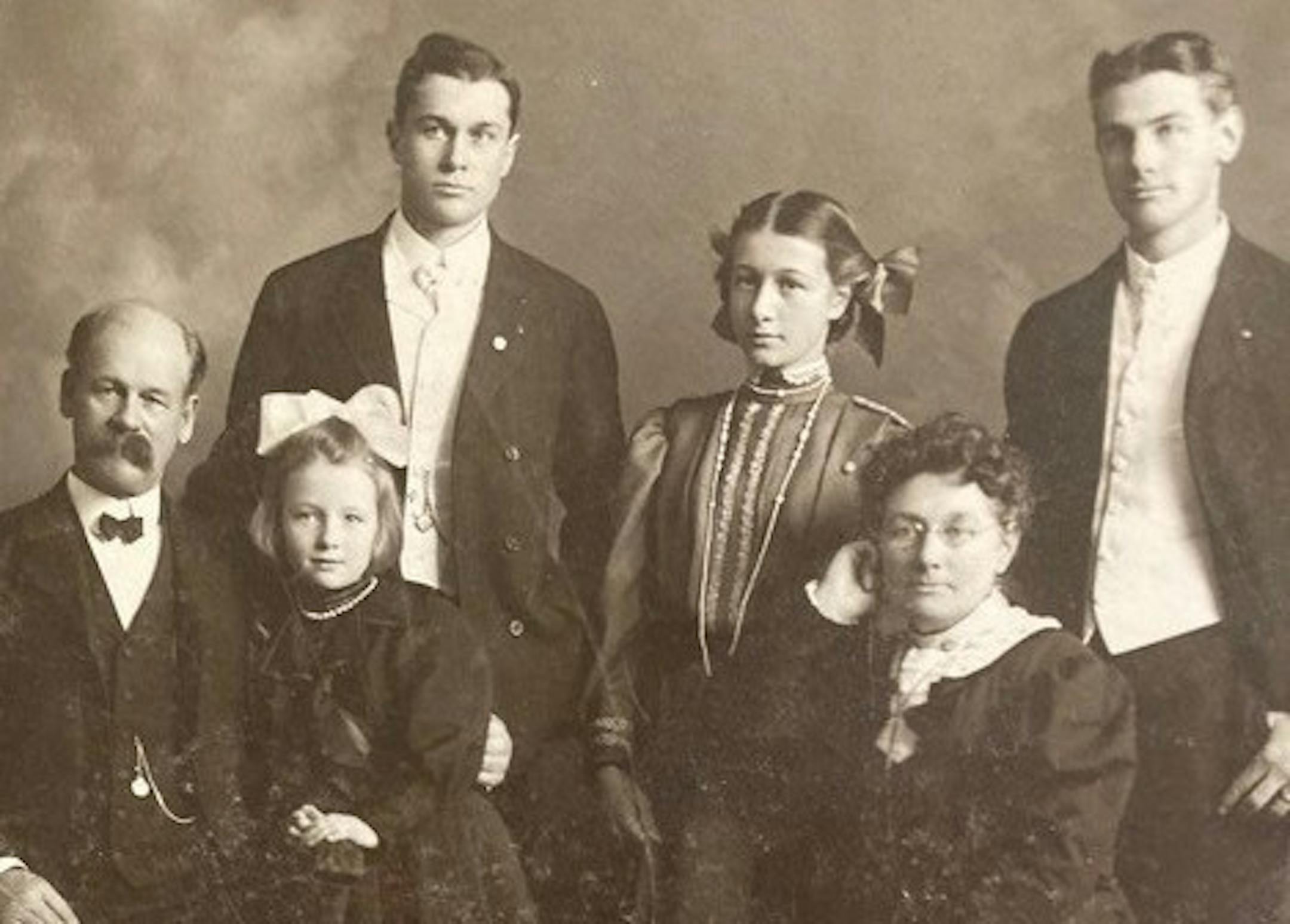
unsung hero This family photo from the 1890s shows Lillian Fairchild, about 6 years old, in the front with a bow in her hair. She would grow up to marry Raymond Read in 1917 in Grand Forks, N.D. The couple later moved to Minneapolis. The two of them recorded World War II prisoner messages in Hopkins and sent them to worried families. (Courtesy of ALBERT FAIRCHILD./The Minnesota Star Tribune)
Advertisement

Raymond and Lillian Read were a couple of the unsung heroes of World War II. From the powerful shortwave radio in the hobby room of their Hopkins cottage, the pair in their early 50s recorded prisoner-of-war broadcast messages and sent transcripts to more than 1,350 families across the country.

Their tireless work, the Associated Press reported in 1944, became "a gigantic contribution to bolster morale in the homes stricken by the disasters of war."

There was the West Virginia mother who took a record of her son's message sent by the Reads to a nearby five-and-dime because she didn't own a phonograph. But they had to turn the record player off at the store when friends there were overcome with emotion at hearing his voice from a Japanese prison camp.

Closer to home, Brig. Gen. Lewis Beebe of Faribault, Minn., and Air Corps mechanic Corp. Robert Amo from Black River Falls, Wis., were among 11,000 Filipinos and Americans taken prisoner following the 1942 surrender of the island of Corregidor in the Philippines.

A year into her husband's 40-month confinement, Dorothy Beebe was "overjoyed" to hear a message relayed from the Reads. Her 51-year-old husband had served as commandant at Shattuck Military Academy before becoming Minnesota's highest-ranking Army officer in the Philippines.

Bessie Amo said that the Reads' recording of her son gave her a renewed sense of hope for his well-being. Bob Amo would retire as the postmaster of Black River Falls in 1972, and lived 52 years after the war's end.

World War II researcher and writer Krista Finstad Hanson of Maplewood came across the newspaper reference to the Read and Amo families in a digital version of the July 24, 1944, edition of the La Crosse (Wis.) Tribune — on page 4 below the funnies. That led me to a 1943 Minneapolis Tribune story with a photo of Ray Read at his "listening post," a cigarette dangling from his lips amid his shortwave radio and a stack of boxed records, under the headline "Locating War Prisoners is Hobby of Hopkins Man."

Japanese authorities allowed American prisoners-of-war two chances a day to broadcast personal messages, before later using an English-fluent Japanese woman to read them over the air. Shortwave aficionados such as Ray Read could pick up the broadcasts just before noon and in the early evening.

Advertisement

"His hobby room resembles a miniature communications center with radio, recording machine, card index and letter and record files surrounding him," wrote Tribune scribe Irvin Rudick.

The article mentions that Lillian helped with much of the filing and correspondence as a dozen letters a day poured in from anxious families. Ray Read worked as the office manager at Gerard Motors, a Hopkins car dealership that was close enough to allow him to scoot home just before noon to pick up the first of the daily broadcasts. He made 138 master recordings by May 1943, and would increase that number nearly tenfold by the summer of 1944. "He devotes virtually all spare time tuning in broadcasts, handling mail and the recordings," all for free — and transcribing the messages in the process, the Tribune reported.

"The flood of mail is getting out of hand," the article said, creating a backlog of correspondence — something Lillian likely helped tackle.

She said the work had become so engrossing that Ray was refusing any social engagements that might interfere with the two daily broadcasts from Tokyo.

Ancestry.com helped fill in the back story of the Reads, who were childless. Ray Read was born in Buffalo, N.Y., in 1891, and Lillian Fairchild was born six months later in South Dakota. They were married in 1917 in Grand Forks, N.D., where Ray worked as a product buyer, and by 1920 they had moved to Minneapolis. Ray's jobs ranged from sales to excavating, while Lillian taught speech therapy for Minneapolis schools.

By the late 1950s they were living in Pompano Beach, Fla., where Lillian died in 1972. Ray died four years later, and they're buried together at Lakewood Cemetery in Minneapolis.

Advertisement

Ancestry.com helped me track down a great-nephew in Maryland who remembers a childhood visit to Ray and Lillian at a motel they managed near Fort Lauderdale, Fla., in the early 1950s.

"I have no idea how they met and I vaguely remember his ham radio," said Albert Fairchild, 79, a retired foreign service officer living in Bethesda, Md. His grandfather and Lillian were siblings.

"My brother and I remember visiting them in Florida when we were 12 and 10 and having to be respectful to our great aunt and uncle," said Fairchild, who recalled the Reads' Southern Comfort Motel near Fort Lauderdale.

Fairchild was thrilled that Hanson had unearthed a link to the Reads' volunteer work for prisoner-of-war families in the 1940s. He sent along a family photo from the 1890s, showing Lillian, about 6 years old, with a big bow in her hair.

Curt Brown's tales about Minnesota's history appear each Sunday. Readers can send him ideas and suggestions at mnhistory@startribune.com.

about the writer

about the writer

Curt Brown

Advertisement