

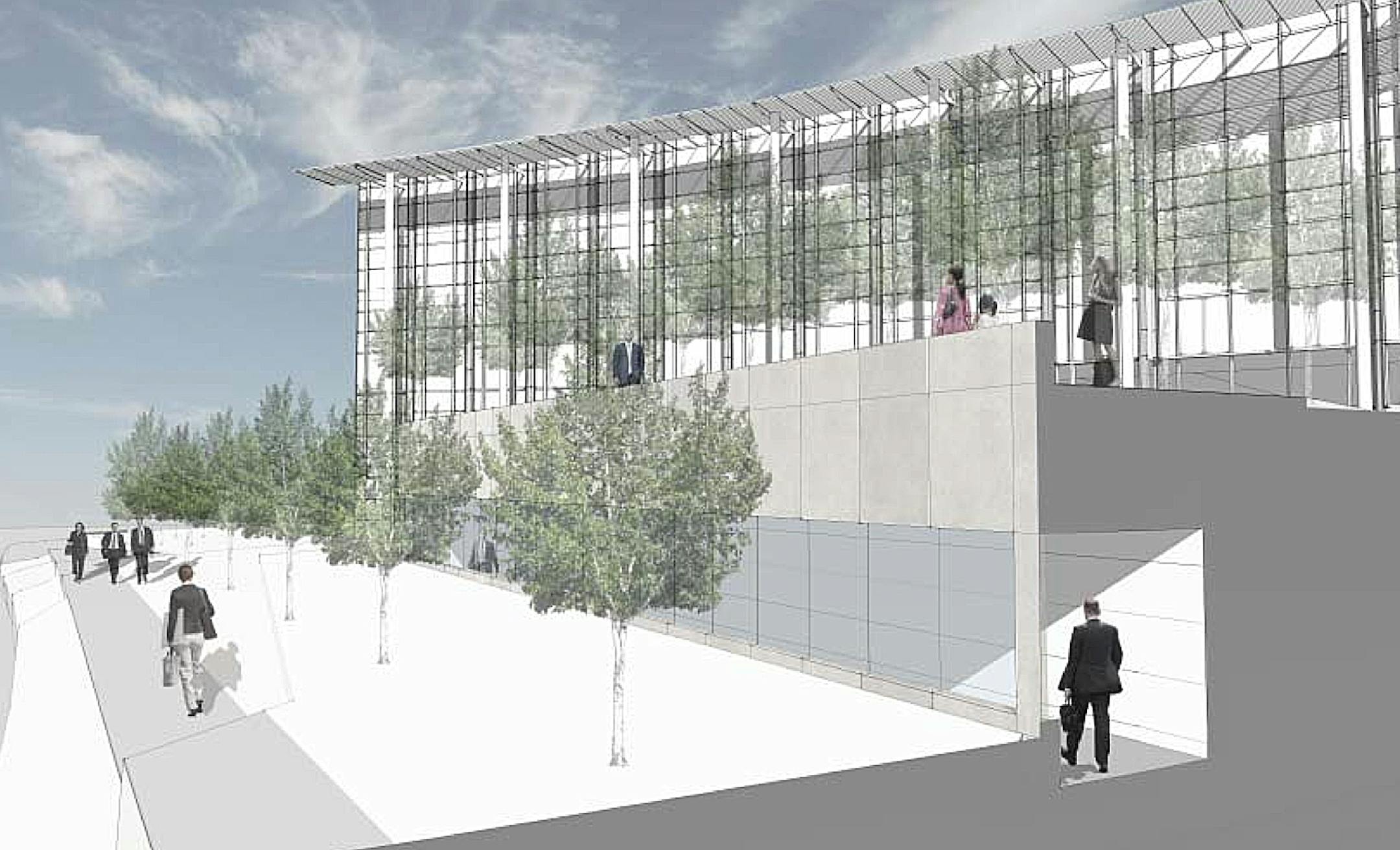
The Minnesota House Rules Committee is set to do something on Thursday that should have been done a year ago — publicly hear the case for and against construction of a $63 million Senate office building across University Avenue from the Capitol in St. Paul.
The delay represents no dereliction of duty on the part of the 2013 House. Rather, it is the consequence of the unusual procedure the Senate engineered to authorize the new building. Its green light was tucked into the 2013 tax bill in a way that gave most House members and Gov. Mark Dayton little opportunity to question or remove it.
That procedure makes this year's House Rules Committee the new building's final permission step before construction, unless a lawsuit to stop the building filed by former GOP Rep. Jim Knoblach of St. Cloud succeeds on appeal. A Ramsey County District Court judge turned thumbs down on Knoblach's arguments earlier this month.
House members — and fans of regular order and transparency in lawmaking, including this newspaper — have reason to dislike the way the proposed building came to this point. But Rules Committee members should spend little time grumbling about procedure. A decision on the project's merits is urgent. The committee should bore into the case for the building to determine whether it serves the public's need for an accessible and functional legislative branch of government for the next several generations — at a reasonable cost.
We think it does. Here's why:
• The Capitol can no longer be the primary Senate office building — not under the current reconstruction scheme. The four-year reconstruction of the 109-year-old "people's palace" that's now in year two will permanently deprive the Senate of 23,000 square feet of space. That shrinks the maximum number of Senate offices in that building to 23 — and that may be too many for a building whose primary purpose is public gatherings, not private offices.
That means that the practice of the past 40 years of housing the entire Senate majority caucus — 34 or more senators — under the marble dome must end. Where should they go?
• The existing State Office Building cannot reasonably house more senators. It's not functioning well with the Senate minority offices it contains now. House leaders say their operations are too crowded on the House's three floors of the 1932 building.


