

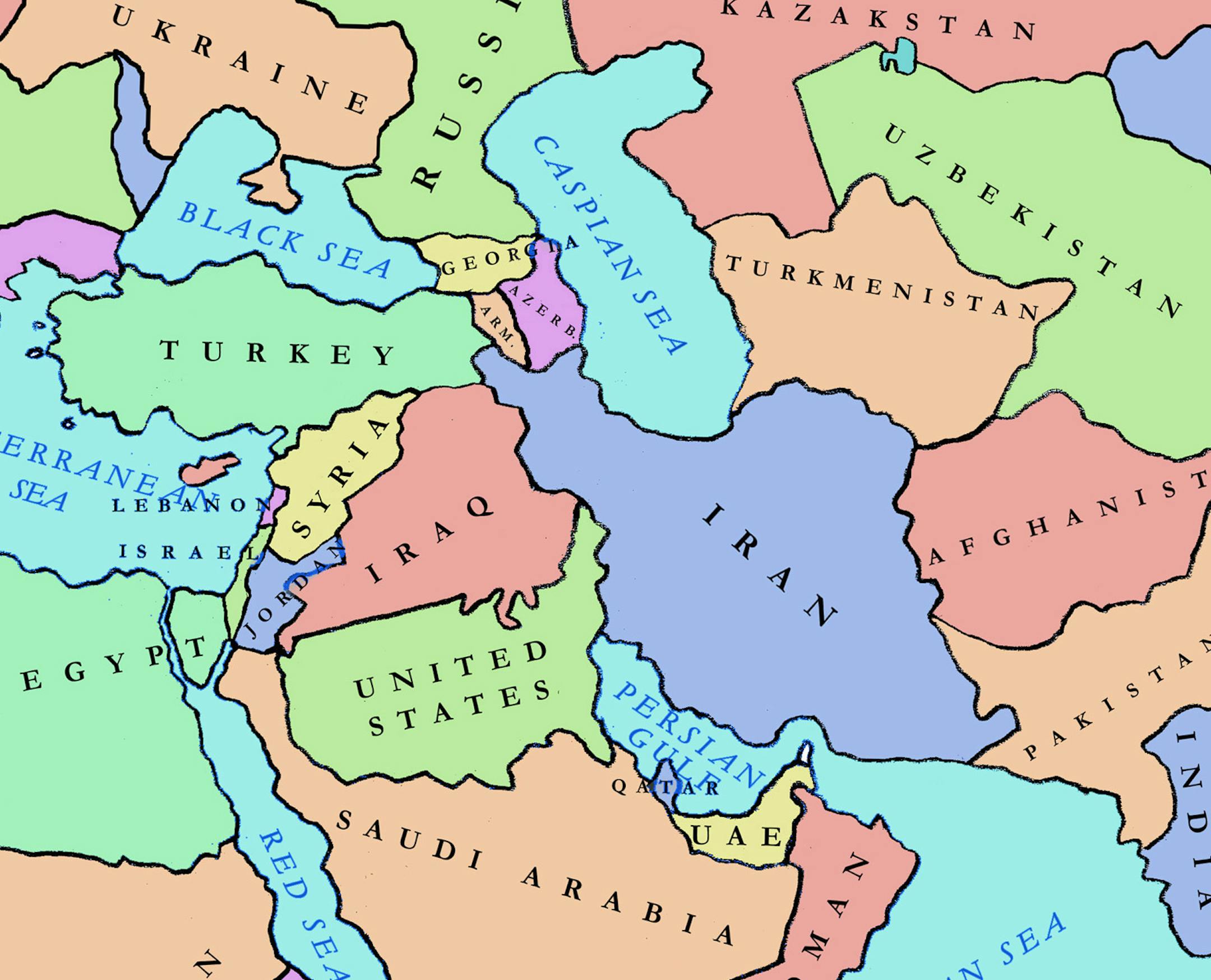
Sectarianism in the Middle East — this month's Minnesota International Center's "Great Decisions" dialogue topic — manifests itself in multiple conflicts. The latest epicenter is Yemen, often portrayed as a proxy war between Iran and Saudi Arabia, the Shiite and Sunni regional behemoths.
But it's more complex than that, and analysts — including and especially the news media — risk reducing complicated conflicts to singular factors. "We tend to oversimplify, and in the case of sectarianism we see that happening in a few ways," said David Rothkopf, editor of Foreign Policy magazine. Rothkopf is quick to concur that "traditional sectarianism" is a key conflict component. "But it's never the only factor. There are people involved, tribes involved, politicians and political parties involved, special interests involved. All of whom want to see outcomes that ensure that not just their religious goals are achieved but that their personal goals are achieved, their nationalistic goals are achieved." And the Sunni-Shia split is accompanied by a Sunni-Sunni divide between extremists and moderate states, some with "troubling profiles as partners."
Indeed, the Mideast "has a strange alchemy right now," said former Middle East envoy Dennis Ross. Much of this is because of an elemental identity struggle. "What we see in the region is a lack of institutions, the lack of basic legitimacy, and the tendency to fall back on the most fundamental forms of identity and security, which are tribe, sect and clan. These are so fundamental and yet they produce these atavistic kinds of conflicts, which are why the conflicts are so terrible, because they're at such a base level."
Understanding these dynamics, as well as avoiding ethnocentrism, is important for foreign policy analysts considering Iran. While the nuclear negotiations are newsworthy and crucial, Rothkopf also thinks that policymakers — and the media — need to ask deeper questions, including what threat a potential program poses compared to what "a lot of people would argue: That the primary threat Iran poses is the one they've had for 35 years without nuclear weapons, which is regional destabilization."
Ross said there is a "legitimate fear the Saudis and others have that the regional balance of power is changing even as we are talking to them."
It's also important to internationalize the Iran issue instead of narrowing it into the domestic debate that has gripped, and gridlocked, Washington.
"National narcissism is one of the realities that really hurts the United States on a regular basis," Rothkopf said. Sanctions were successful because they were multilateral, and accordingly the "outcomes have to be acceptable to the European Union, the Russians, the Chinese, all of whom have different and evolving points of view regarding Iran, America's role, the West's role, the International Atomic Energy Association. We have to remember our limitations and international obligations while pursuing this."
And if contextual coverage of the nuclear negotiations is able to prod policymakers and the public to expand their analysis, Rothkopf said a regional rethink and, in fact, a geostrategic reassessment are in order, too.


