

When President Joe Biden announced the end of America's 20-year war in Afghanistan, he also vowed that the fight against terrorism would continue, in Afghanistan and across the globe. For Americans, this may be reassuring.
For civilians in at least seven countries where we are waging this campaign, the president's vow is not so much assuring as terrifying. With America's weaponry and resources today, these wars, fought from a distance, are meant to be precise and low risk. And they may be — for Americans. But the potential for mistakes and collateral damage is massive.
The United States has conducted more than 91,000 strikes in 20 years of the war on terror. Afghanistan, Iraq, Syria, Somalia, Pakistan, Yemen and Libya have all been part of the conflict zone.
According to a new report by Airwars, a U.K.-based monitoring group, the number of civilians killed directly by U.S. airstrikes in the past 20 years falls somewhere between 22,000 and 48,000.
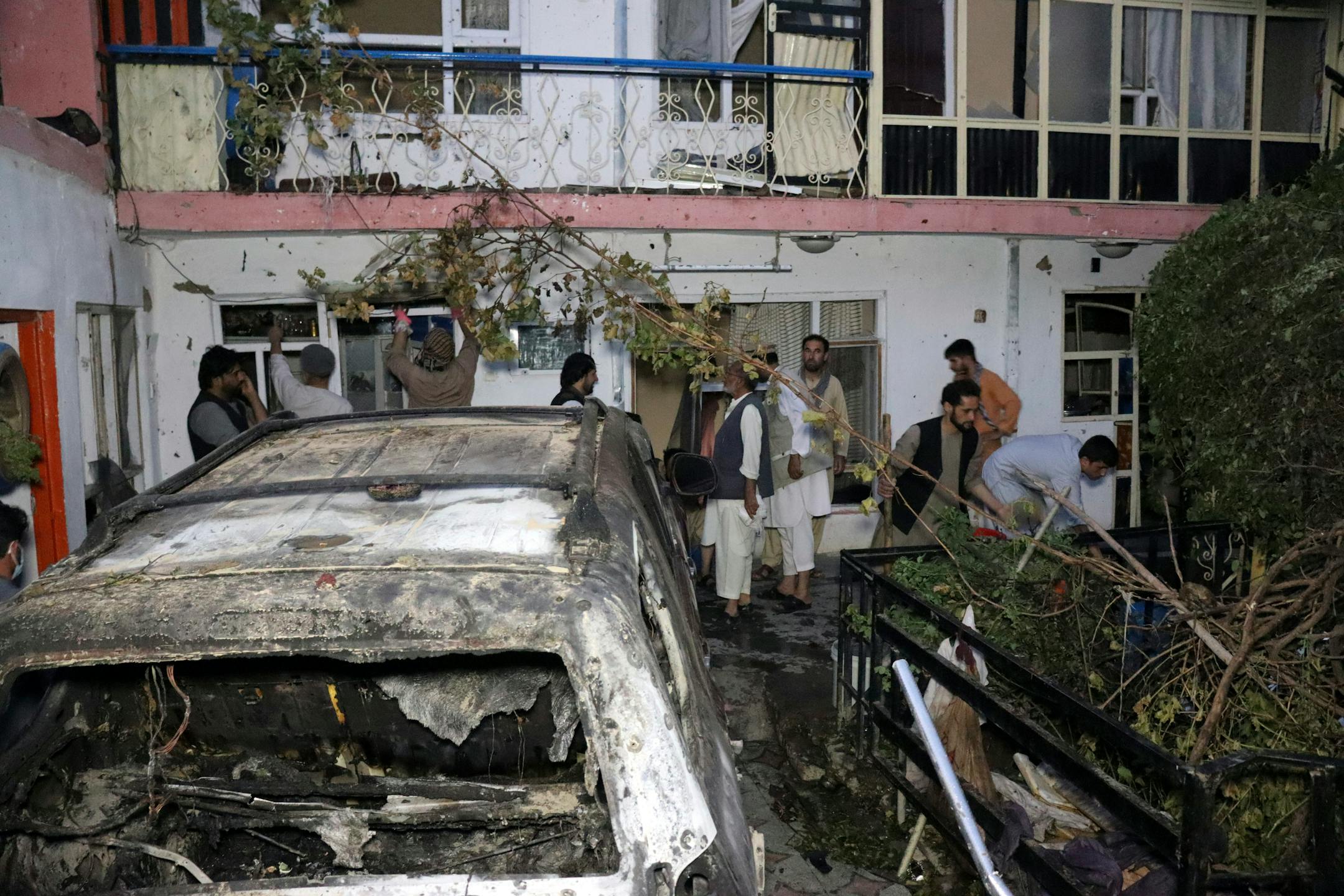
For most Americans, this air war is invisible. But we got a glimpse of it on Aug. 29, when a U.S. drone strike in Kabul killed 10 civilians, including seven children. The U.S. military insists it was a "righteous strike" on a car laden with explosives on its way to Kabul's airport. This may be true, but the evidence so far is inconclusive. The current official assessment is "possible to probable" that the strike really did avert an attack.
The Pentagon has admitted that civilians may have died but places blame for those deaths on the supposed explosives in the car, not the missile that struck it. We may never know whether the strike averted a major attack.
But even if it did, it caused tremendous harm too. Seven children. A father. A fiancé. A narrow neighborhood street. A small community blown to bits by a bomb from the sky.
Try to imagine what that would do to your community. How understanding would you be if this happened to your family? What must the remaining family members think of America now? Who harmed them? Who is now their enemy?


