

Kiev, Ukraine
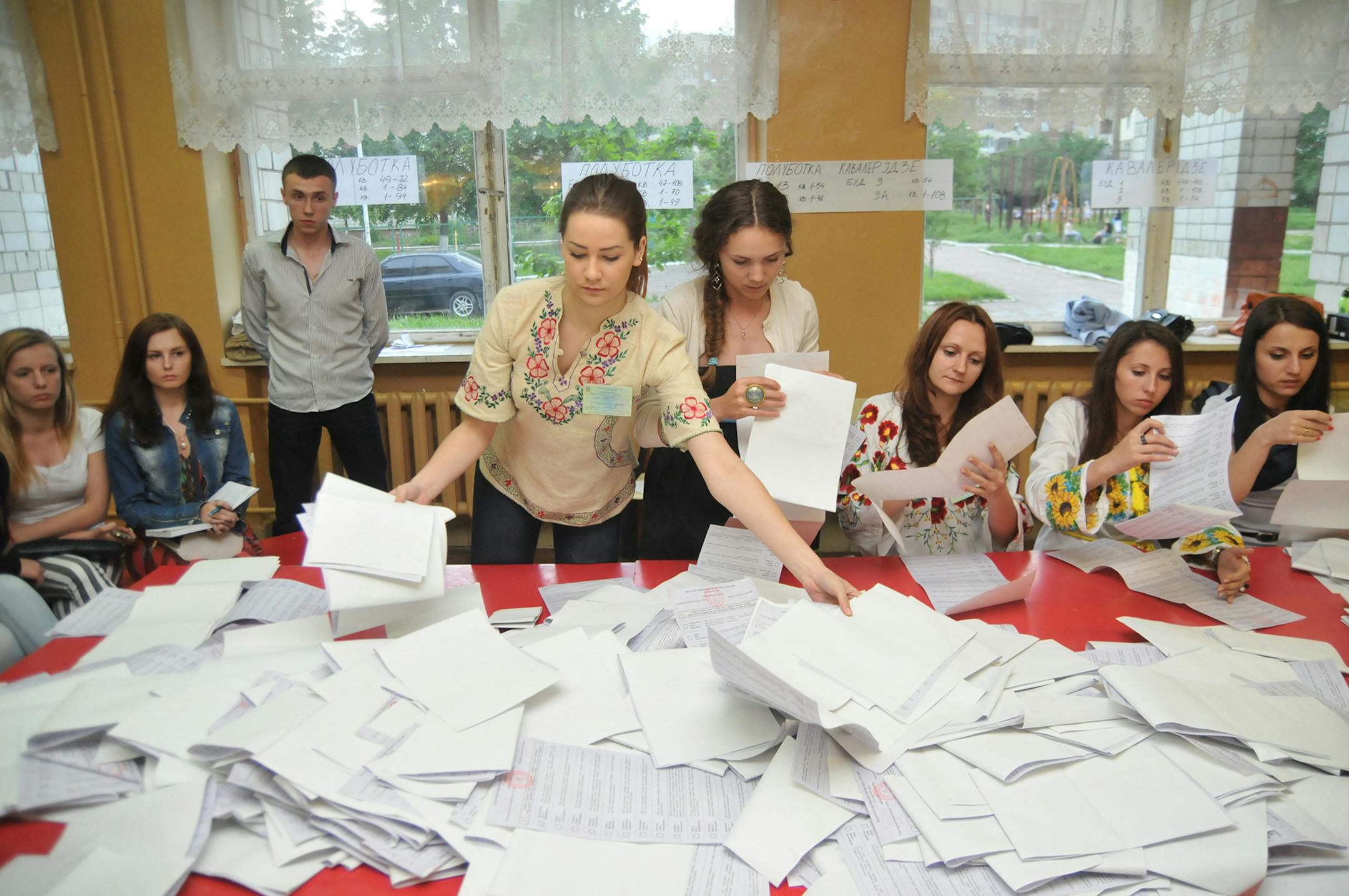
I was one of thousands of international observers to the May 25 Ukraine election. The world's attention was less focused on the voters' choices than on the prospects for violence in the Russian-speaking East and Vladimir Putin's appetite for negotiations with a newly legitimized government. Separatists in the East managed to stop the vote in two oblasts (districts), killing an Italian journalist in the process. Nonetheless, there can be no doubt that the voters of Ukraine turned out in sufficient numbers to give themselves a legitimate president.
Our delegation listened to the people of Ukraine in meeting halls, government offices and polling places. Their voices came through loud and clear. They voted to declare their capacity for sovereignty and they did so with determination. They wanted the world to know that Ukraine could not be intimidated by external threats. We conclude that they achieved their purpose.
Many told us that they were not happy that the world viewed Ukraine mainly as a geopolitical issue. We were reminded time and again that those who sacrificed everything in the "Euro-Maidan" revolution did so to retrieve the soul of their country from those who saw political life as an opportunity to extract wealth from the society rather than to serve the people. Many with whom we spoke, particularly the young, were skeptical that this election would in itself produce an inclusive democracy. They voted with the hope that reform would follow, but not with the full confidence that it would.
We come away from this experience in Ukraine with great admiration for those who have sacrificed so much for a better future. They deserve an accountable government. They deserve social and governmental institutions that will enable their voices to be heard between elections, institutions that will channel peaceful dissent and assure that debate and action will be taken.
This will mean more transparency in all matters of public life. It will mean — as we have heard here many times — an open and fair judicial process, an electoral system that encourages new faces and new ideas, and a legislative process that is based on consultation, open debate and lawmaking that serves the general public rather than special interests. This is an ideal to which even established democracies aspire, but this is a moment in history when Ukraine can make much progress.
Some of the most successful democracies in today's world have emerged from violent revolutions. The 19th century saw some that lasted for decades. That is not a good option for a modern society in a globalized world. It would be sad indeed if the people of Ukraine felt the need once again to take their grievances to the streets. This election and the parliamentary election to follow offer an opportunity to bring about peaceful change. Some meaningful reforms have already been enacted, but many more are needed if Ukraine is to begin to meet its wonderful potential. We have great hope that political leaders have heard this message. Their challenge is to act before it is too late.
Many will now focus on Putin's next move: Will he urge the separatists to disarm? Will he negotiate down the extortionist price of energy? Will he encourage a dialogue between East and West? Or will he continue to discourage the unification of the country?


