

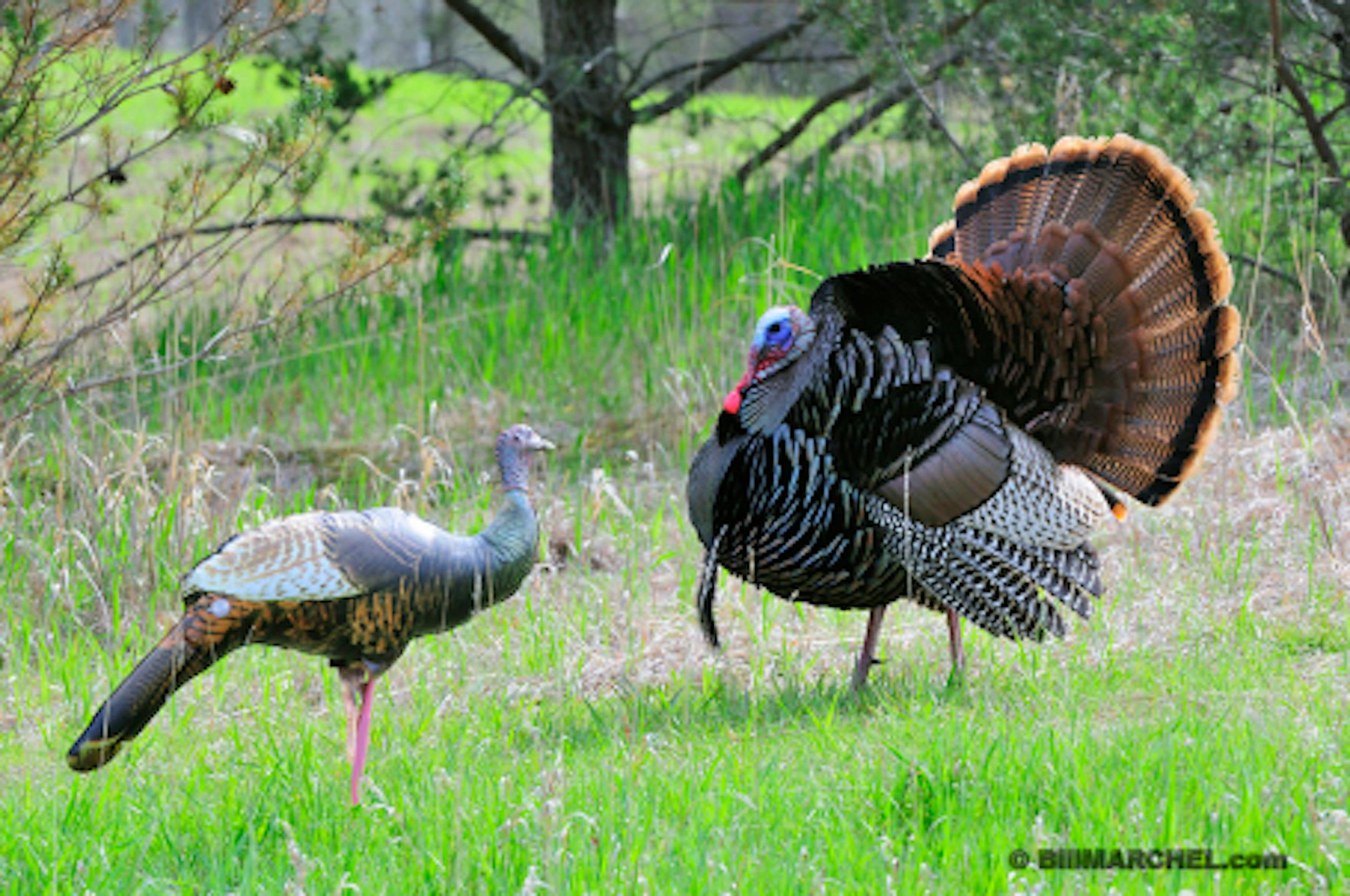
When Minnesota's wild turkey season opens Wednesday, hunters will celebrate one of the biggest wildlife success stories ever. Turkeys, a native species once exterminated here, were reintroduced in the southeast tip of the state almost 40 years ago. Since then, with the help of wildlife officials, gobblers have spread to two-thirds of the state and thrive farther north than anyone thought possible.
Those 29 birds released in Houston County in the early 1970s have become a population estimated at about 70,000.
"It really has been remarkable," said Bill Penning of the Department of Natural Resources. "Nobody in their wildest dreams in 1975, when we were releasing turkeys, thought we'd have the turkey population we have now."
For decades the DNR, with critical financial help from the National Wild Turkey Federation, trapped turkeys in their southeastern stronghold and transplanted birds ever farther away, testing the northern limits of the turkey range. The birds took hold in the southwest and north-central regions and now thrive as far north as Duluth, Park Rapids and Detroit Lakes.
"They are much more adaptable than we gave them credit for when we first started doing this," Penning said. "Our 1980 turkey plan said you need a minimum of 1,000 acres of hardwood forests to have a viable population of turkeys. We now know that's not true. All you need is a woodlot and a bunch of corn."
The DNR suspended its trap and transplant program in 2009, so barring a change, Minnesota's turkeys will determine how far north they will go and how high their population will reach.
"We think we've put birds into all of the suitable remaining habitat," Penning said. "So if turkeys want to move farther north, that's up to them."
Early efforts failed


