

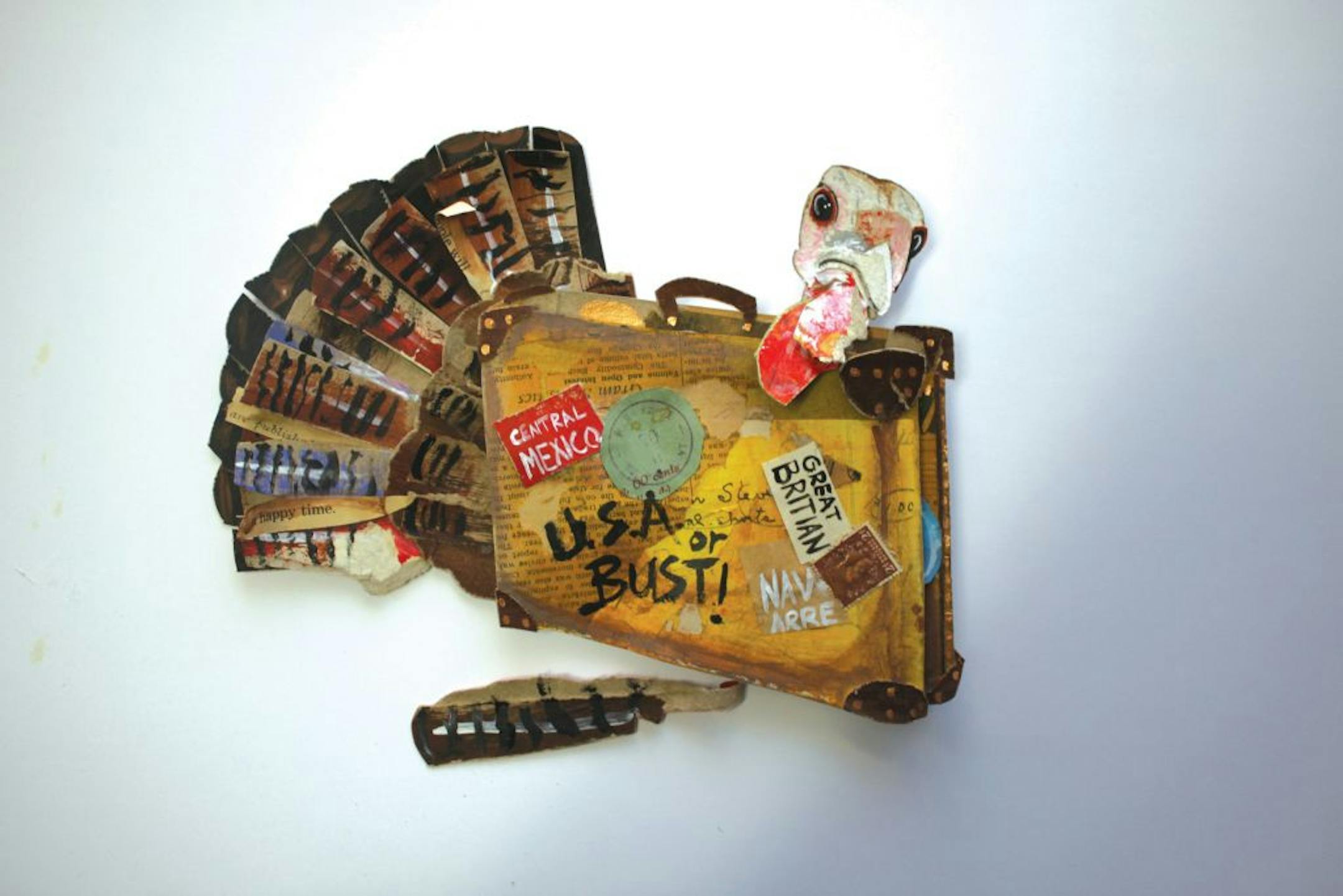
Never mind the hours of basting. Or the perils a cook can encounter while wrangling the turkey to the table.
The bird itself has endured a remarkable journey -- spending several millenniums traveling thousands of miles, from the Americas to Europe and back again -- before arriving on your plate.
The turkey is native to North America. It was domesticated at least 2000 years ago in what's now Central Mexico. By the time Spanish conqueror Hernando Cortés darkened the courts of Montezuma in 1519, he saw vast flocks of turkeys being raised for consumption by Aztec royalty.
In 1529, Bernardino de Sahagún, a Franciscan missionary who wrote extensively on Aztec culture, noted that the turkey was "fat and savory." Turkey tamales were a staple in Aztec kitchens, and turkey mole was on its way to becoming Mexico's unofficial national dish.
Along with the gold they plundered, Spanish conquerors were anxious to present the turkey to their Spanish lords. Europeans treated many New World imports with great suspicion. But the turkey suffered no such indignity. While potatoes and tomatoes languished in ornamental gardens, Europeans gobbled up the turkey.
By 1534, Queen Marguerite of Navarre (who played prominently in the French Renaissance) had established a well-tended flock, and it's reported that 66 turkeys were served at a banquet for Catherine dé Medici in 1549. Italian chefs devised elaborate preparations in which turkeys were stuck with cloves, encased in a crust, and baked with their heads exposed. Turkey, it seems, was quickly displacing the showy (but less tasty) peacock on royal menus.
A bird by any name is ...
How the turkey got its English name is a matter of sheer confusion. In the English lexicon, turkeys were lumped in with the much-loved Guinea Fowl (an African bird), which had come to them by way of Turkish traders.


