

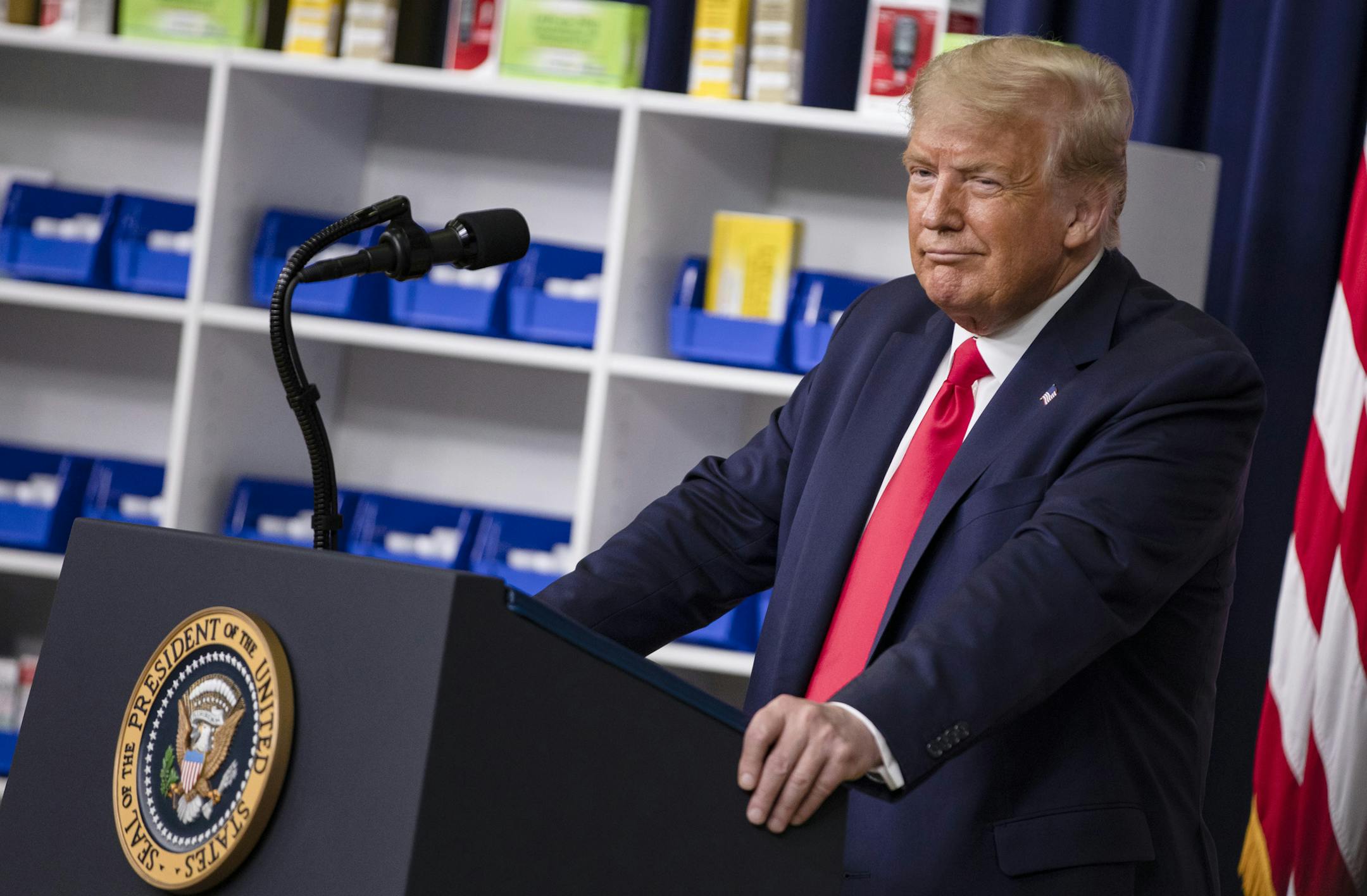
If the Trump administration succeeds in lowering the prices of some popular prescription drugs this year, you can apparently thank the Supreme Court and its decision to restore the Deferred Action for Childhood Arrivals program.
This was the bizarre and disturbing position that President Donald Trump advanced Monday when chatting briefly with reporters on the White House lawn. The president signed four executive orders last week that aim to slash the premium prices that Americans pay for insulin and other medications, a laudable goal that has met with stiff resistance from elements of the pharmaceutical industry. Although all of these proposals have been in the works for years, they have foundered in the face of industry objections and, more notably, serious implementation challenges.
Which is not to say that the ideas are bad. The goals are solid, even if the means to reach them are debatable. The issue is the legal basis Trump is citing for them.
One order aims to force insurance companies to pass along to consumers the rebates their agents negotiate with drugmakers, addressing one of the thorniest problems in the effort to hold down drug costs. The problem is finding a way to do so without ending the rebate system that, according to some analysts, lowers insurance premiums — particularly in the Medicare Part D program for seniors. That's the main reason the administration abruptly pulled the proposal from consideration last year.
Other orders would allow drugs to be imported if they're produced in countries with regulatory systems deemed safe by the U.S., or reimported from foreign countries if they were produced here; permit low-income Americans to buy deeply discounted insulin and injectable epinephrine from federally supported health centers; and require certain drugs to sell for the same price in the U.S. as they sell for in other major developed nations (although drugmakers would have a month to negotiate an alternative way to lower prices).
I'll just note here that the distance between these proposals and the usual free-market-centric Republican approach is vast. So vast, in fact, that the Wall Street Journal's editorial board, which spends much of its time apologizing for Trump's policies, blasted the executive orders Monday in a piece titled "Trump's Drug Price Panic." Although I don't share the Journal board's abundant faith in free-market forces to cure the manifest ills in the health care industry, I do share its skepticism about the effectiveness of price controls.
But even if you think these four orders are the best thing Trump has ever done on health care, you have to be disturbed by Trump's explanation for why he's moving ahead now.
Commenting on how he had the authority to control those prices unilaterally, without Congress passing a law or an agency completing a formal rulemaking process, Trump said, "I was given that right because of the DACA decision. The DACA decision allowed me to do things that some people thought the president didn't have the right to do. I was given that right. Drug prices will be coming down very, very substantially. No other president has been allowed to do that. No other president has been able to do that."


