

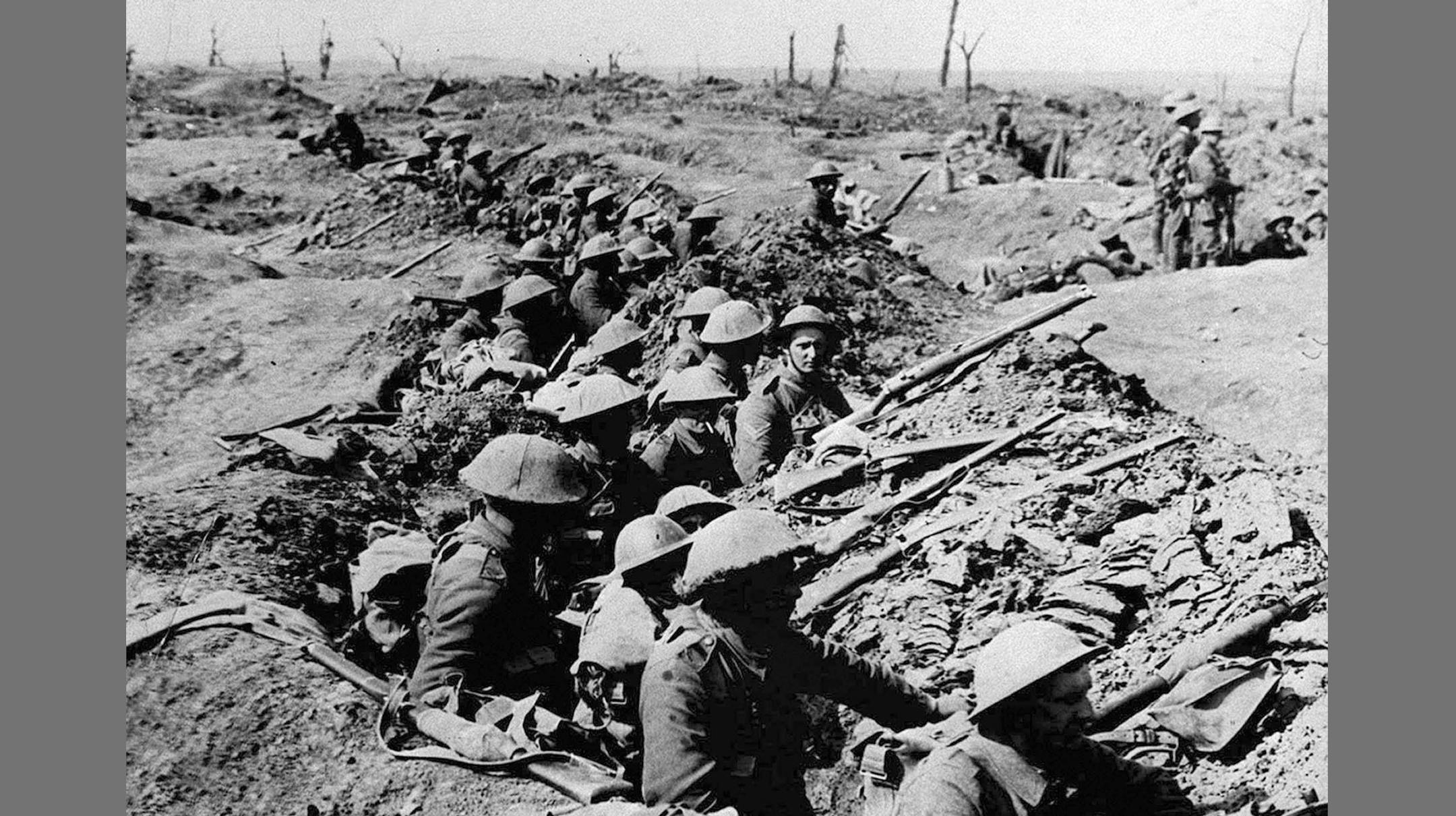
The mine exploded on schedule at 7:20 a.m., 100 years ago, July 1, 1916. British sappers had tunneled for months under the no man's land separating the Allied British-French trenches from those of the Germans, and placed 40,000 pounds of high explosive under the German redoubt on Hawthorn Ridge. A British cameraman filmed the explosion, which can be viewed today on the internet.
Like so much else that day, what then unfolded followed months of meticulous planning, with disastrous results.
The Allies chose the Somme River region of France for their 1916 offensive on the Western Front mainly because that was where the British and French trench lines met. But while intended from the beginning as a joint effort, by the time it was launched the offensive had become predominantly a British one. The Germans had upset plans by their earlier unleashing of a fierce offensive against the French at Verdun.
So on July 1 the first waves of 120,000 infantrymen from Britain and her dominions climbed out of their trenches and walked closely abreast in long lines toward the German trenches. They "walked" because generals and infantry alike were certain that the seven-day artillery bombardment preceding the infantry attack had left no German soldiers still alive in their first-line trenches. They were wrong.
The Hawthorn mine killed and injured hundreds of Germans — and alerted all the others along the 18-mile Somme front that the long-expected infantry attack was imminent. The preliminary bombardment had not destroyed the German dugouts, some 60 feet deep, or their inhabitants. By the time the British infantry left their trenches, German troops had already reached the parapets of theirs, with machine guns hauled up and readied for action.
The no man's land the infantry had to cross ranged from 200 to 1,500 yards across. The Germans' Maxim machine guns, firing 500 bullets a minute, were deadly accurate up to more than 2,000 yards. German artillery now also crashed down on the exposed infantry. Meanwhile, according to plan, the British had lifted their artillery fire off the first-line German trenches.
On that first day, few of the infantry reached a German trench. The British-led forces suffered more than 57,000 casualties, with nearly 20,000 deaths. Some isolated objectives were achieved, but most were lost following German counterattacks.
Despite all, however, the Somme battle slogged on until Nov. 18. No general breakthrough was attained, and the territory gained by the end amounted to a few square miles.


