

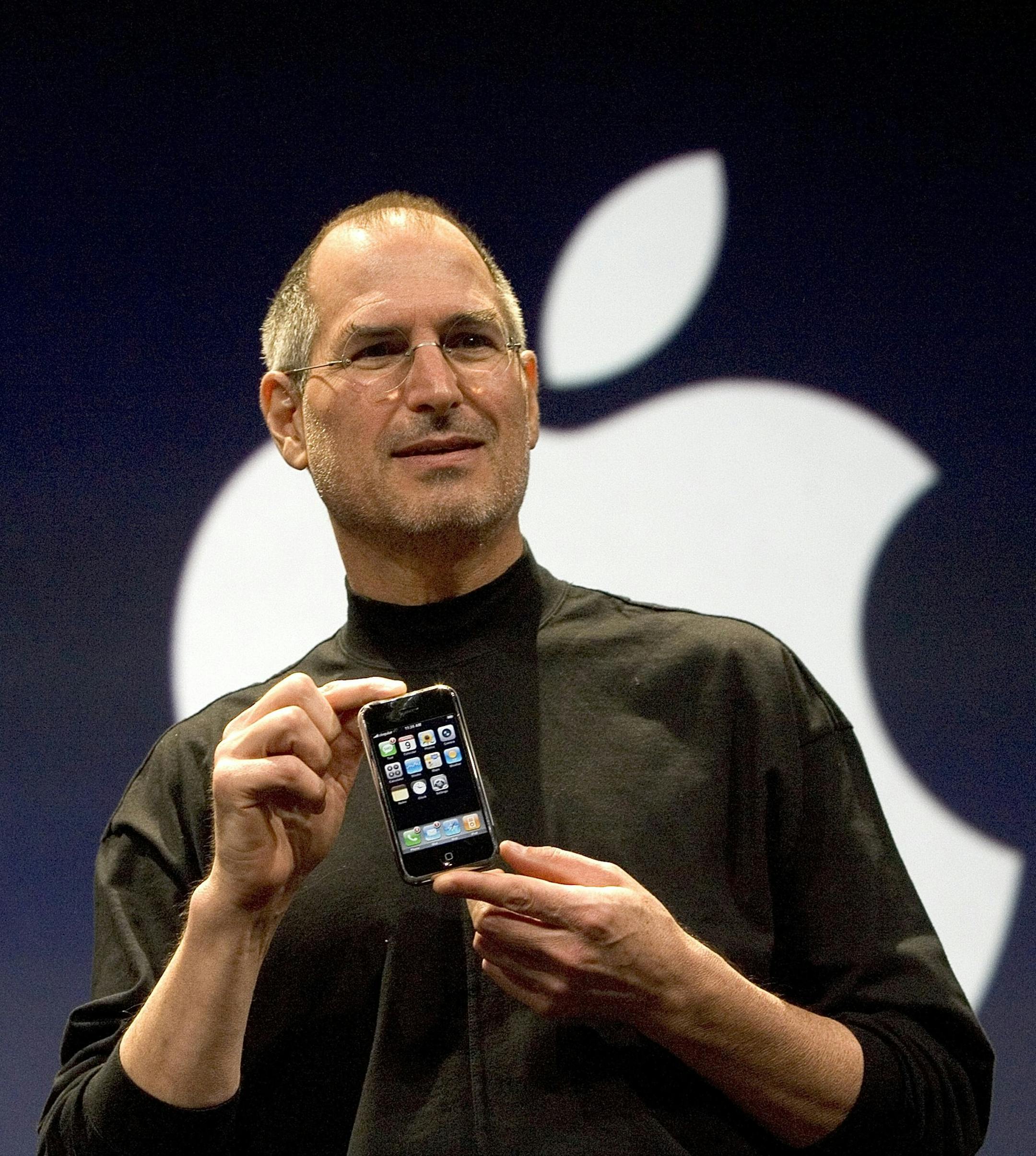
The dawn of the planet of the smartphones came in January 2007, when Steve Jobs, Apple's chief executive, in front of a rapt audience of Apple acolytes, brandished a slab of plastic, metal and silicon not much bigger than a Kit Kat. "This will change everything," he promised. For once there was no hyperbole. Just eight years later, Apple's iPhone exemplifies the early 21st century's defining technology.
Smartphones matter partly because of their ubiquity. They have become the fastest-selling gadgets in history, outstripping the growth of the simple mobile phones that preceded them. They outsell personal computers four to one. Today about half the adult population owns a smartphone; by 2020, 80 percent will. Smartphones have also penetrated every aspect of daily life. The average American is buried in one for more than two hours every day. Asked which media they would miss most, British teenagers pick mobile devices over TV sets, PCs and games consoles. Nearly 80 percent of smartphone owners check messages, news or other services within 15 minutes of getting up. About 10 percent admit to having used the gadget during sex.
The bedroom is just the beginning. Smartphones are more than a convenient route online, rather as cars are more than engines on wheels and clocks are not merely a means to count the hours. Much as the car and the clock did in their time, so today the smartphone is poised to enrich lives, reshape entire industries and transform societies — and in ways that Snapchatting teenagers cannot begin to imagine.
The transformative power of smartphones comes from their size and connectivity. Size makes them the first truly personal computers. The phone takes the processing power of yesterday's supercomputers — even the most basic model has access to more number-crunching capacity than NASA had when it put men on the moon in 1969 — and applies it to ordinary human interactions.
Because transmitting data is cheap, this power is available on the move. Since 2005, the cost of delivering 1 megabyte wirelessly has dropped from $8 to a few cents. It is still falling.
The boring old PC sitting on your desk does not know much about you. But phones travel around with you — they know where you are, what websites you visit, whom you talk to, even how healthy you are.
The combination of size and connectivity means that this knowledge can be shared and aggregated, bridging the realms of bits and atoms in ways that are both professional and personal. Uber connects available drivers to nearby fares at cheaper prices; Tinder puts people in touch with potential dates. In future, your phone might recommend a career change or book a doctor's appointment to treat your heart murmur before you know anything is amiss.
As with all technologies, this future conjures up a host of worries. Some, such as "text neck" (hunching over a smartphone stresses the spine) are surely transient. Others, such as dependency — smartphone users exhibit "nomophobia" when they happen to find themselves empty-handed — are a measure of utility as much as addiction. After all, people also hate to be without their wheels or their watch.


