

By Harlan Jacobson
Special to the Star Tribune
PARK CITY, UTAH — Film festivals love panels. It's the abiding insecurity of the film world that somehow it's a shallow platform unjustly compensating a collection of ridiculous narcissists. And so when it comes to a festival like Sundance, which is the epicenter of independent films that pride themselves on not having to dumb themselves down like those super-hero loving franchise mastodons from Hollywood, it's only fitting to have panels that bring together filmmakers and rocket scientists.
Well, not rocket scientists precisely, but how about a neuroscientist, a theoretical particle physicist, and a rocket scientist's kid?
That last would be Scott Z. Burns, screenwriter of "Contagion" and producer of "The Inconvenient Truth," who held his end up on a panel here, mounted by the festival for the Alfred P. Sloan Foundation, in its 10th year of sponsoring a prize at Sundance for scientific based filmmaking, to explore the ways science and filmmaking fit together.
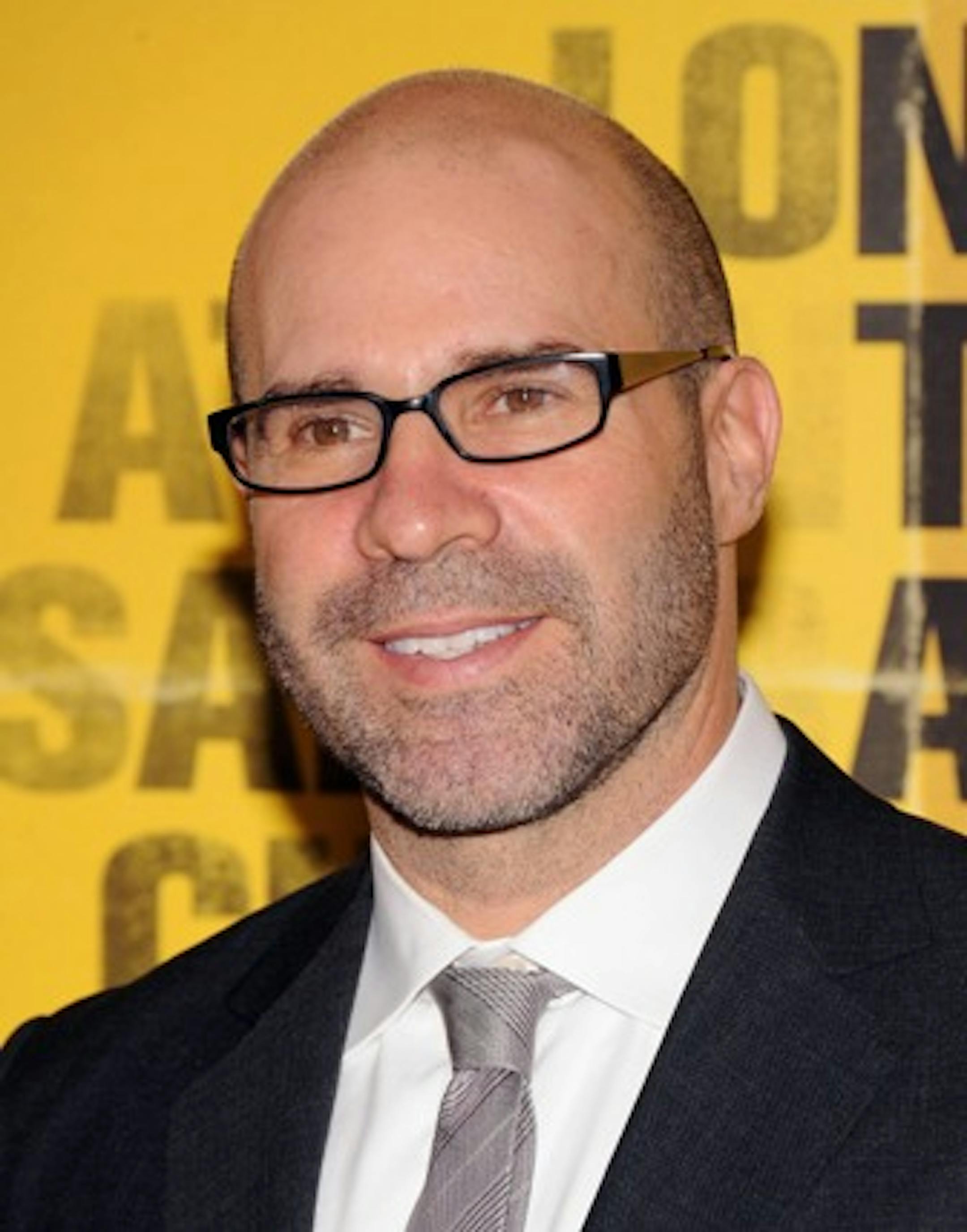
Up on stage at the Egyptian Theatre, one of those olde-tyme restorations that feature 290 beautiful but back-breaking wood lecture hall seats and a design motif suggesting King Tut used to hang here watching silent movies, Burns joined a panel moderated by Paula Apsell, senior producer of PBS' "Nova" series, and including star scientists Dr. Lisa Randall, Harvard physics professor and author of "Knocking on Heaven's Door" (Echo Press), Dr. Andre Fenton, a New York University professor of neural science, and filmmaker Jon Amiel, whose last film, "Creation," put a human face on Charles Darwin.
This is good for Burns, who is a proud dropout of Golden Valley High School in his junior year, whose best memory of life in the Minnesota of his youth was batting 4 for 4 in a Little League championship game that he saved with a diving over-the shoulder-catch in shallow right. He is technically a rocket scientist's kid. His father, Neal, a Honeywell research psychologist, worked on various Defense Department contracts, including how people perform in sensory deprived environments, and had a hand in designing the lunar lander. His mom was a psychologist.
For Burns, who went on to earn a B.A. in English in 1985 from the University of Minnesota, his parents "taught me their respect for scientific discipline and the empirical method," he said in the Egyptian's upstairs green room, waiting for the panel to begin. Just when you think your kids never listen to you, Burns turned all those object lessons over the orange juice into the point of his screenplay of "Contagion" (2011), in which director Steven Soderbergh captured the nearly three-decades-old fear of infection. Burns also laced in the scientific trappings of "The Informant" (2009), "The Bourne Ultimatum" (2007) and the all out assault on the body politic that was former Vice President Al Gore's "The Inconvenient Truth," which rocked Sundance and later the country in 2006. That was Burns' last visit to Sundance.
"Science has as many great stories as anywhere else. As a writer I look for stories that have stakes, characters and consequences," Burns said, likening his process to the scientist's asking "What if …?" Which was how he got to writing the script for "Contagion": "My father is a hypochondriac and kept asking: What if one of those viruses jump into humans any day now?"


