4:15
4:15It was a busted play or a thing of beauty depending on one's perspective — and there are plenty of them.
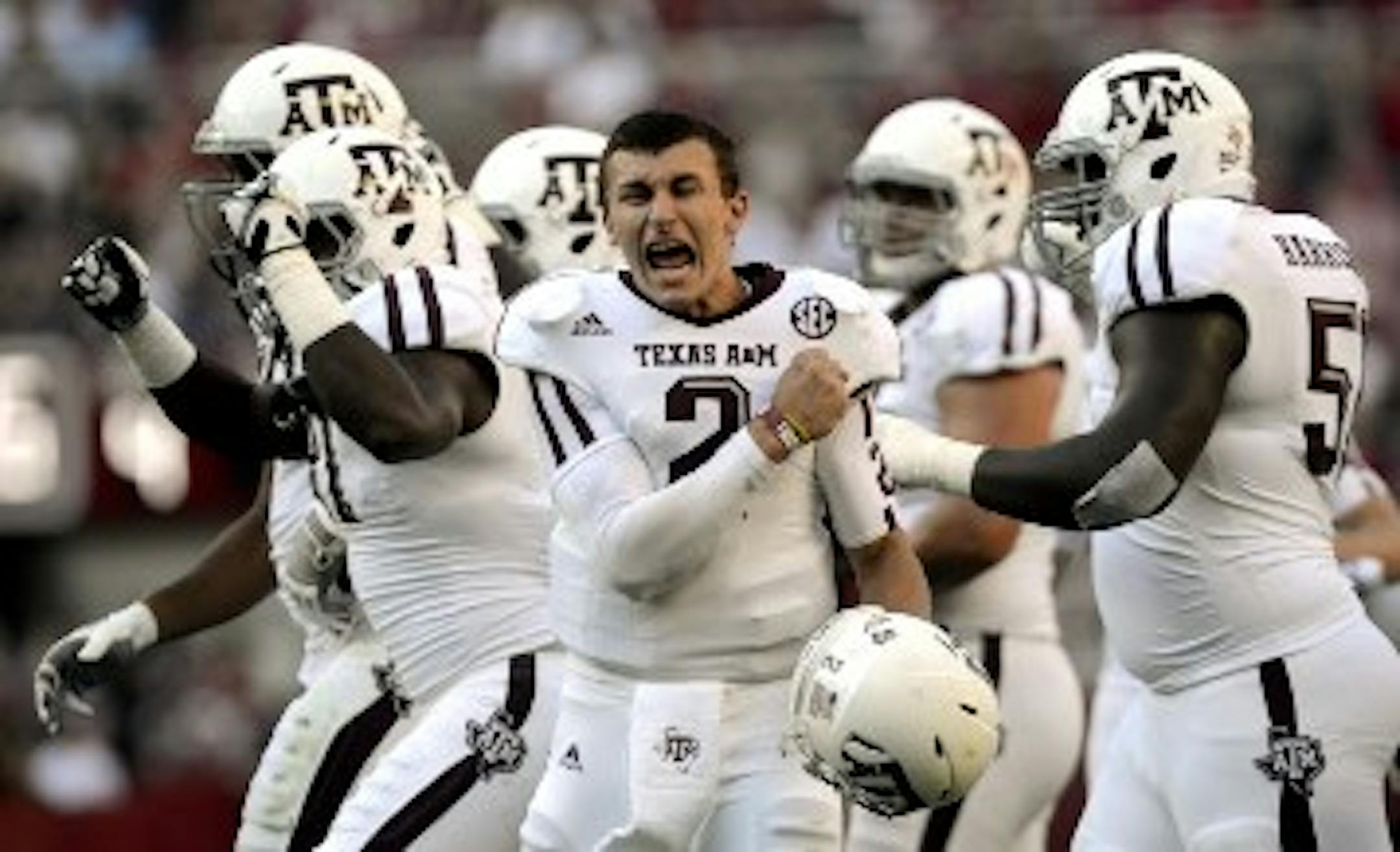
Staring down the fearsome Alabama defense in Tuscaloosa as a redshirt freshman, Johnny Manziel caught a shotgun snap, ran into his right tackle, bobbled the ball as he stumbled back into the pocket, then rolled to his left to casually toss a touchdown pass.
It wasn't how the Texas A&M coaching staff drew it up, but that was the signature play in an upset win that transformed "Johnny Football" from a cult hero into a household name.
Seventeen months, one Heisman Trophy, several school records and countless web clicks later, Manziel is the most polarizing prospect entering the NFL draft. Some analysts project the scrambler as a top-five talent, while others knock him for his lack of size, improvisational playing style or perpetual presence in the spotlight off the field.
If Manziel still is fidgeting in the green room when the Vikings are on the clock at No. 8 overall the night of May 8, the organization faces a quandary: Is Manziel a transformative player who is entering the NFL at the perfect time or is he an overhyped, overexposed celebrity quarterback whose unusual skill set won't transfer to the pros?
"You're going to hear from a lot of people that the game is changing," said Greg Cosell, longtime senior producer for NFL Films. "Are we saying now that pocket play is down the list of attributes that you're looking for? Is that no longer a strong requirement to play the position in the NFL? These are just questions, and smart, reasonable people will have different answers."
Manziel breaks the mold of top quarterback prospects, and it's not only because he likely will become the first quarterback shorter than 6 feet to be drafted in the first round since 1953.
For decades, teams coveted pocket passers such as Peyton Manning and Drew Bledsoe, players who stood tall and strong-armed the football to open receivers. But thanks to Michael Vick and a wave of mobile quarterbacks who have come in his wake — along with the infiltration of spread offenses and read-option concepts in the NFL in recent years — general managers such as Rick Spielman of the Vikings are forced to reconsider the future of the position.