

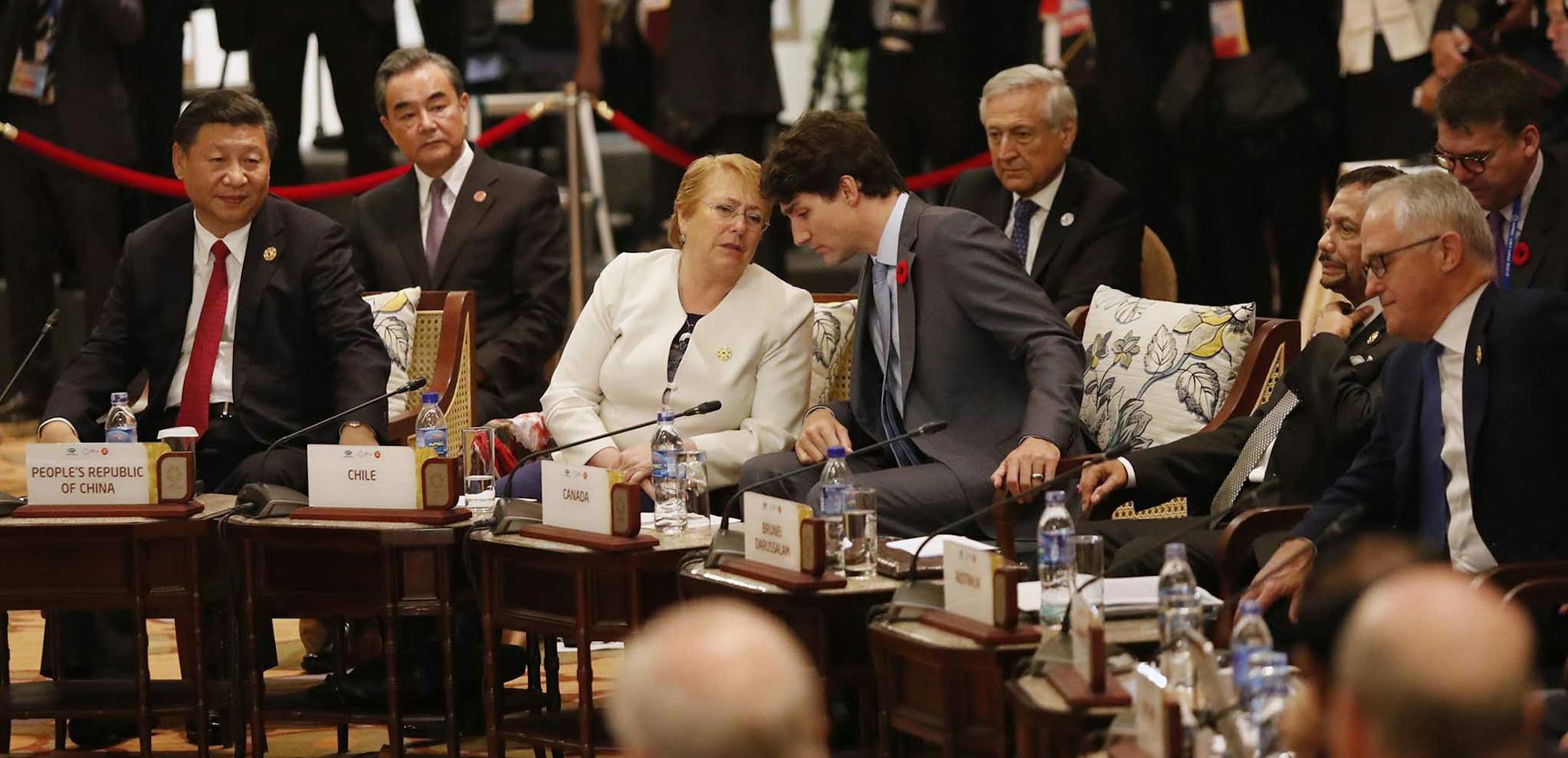
"America First does not mean America alone," Trump administration officials have said in response to President Donald Trump's policies. But it sure seems that way regarding global trade, and that posture will have a negative economic and geopolitical impact on the United States.
That much was apparent during Trump's trip to Asia, where the president pronounced support for bilateral trade deals but dismissed multilateral trade pacts such as the Trans-Pacific Partnership, which was to bind 12 Pacific nations in a mutually beneficial trading protocol. Trump, acting on his demagogic denunciation of the TPP, the North American Free Trade Agreement (NAFTA) and other deals negotiated by Republican and Democratic presidents alike, pulled out of TPP negotiations. Last week, the remaining 11 TPP nations decided to forge ahead without the United States.
More than nine of 10 global consumers live outside the U.S., and America's manufacturing, agricultural and service sectors — let alone its own consumers — benefit from lower tariffs and global trading protocols reflecting and often set by U.S. standards. Bypassing these deals sidelines the U.S. in the world's most dynamic region.
"Our allies and trading partners in the region with whom we worked on TPP very much value the high standards that we all designed together and want to see those put in place with or without the United States," Michael Froman, U.S. trade representative during the Obama administration, told an editorial writer.
"From a geostrategic rationale in terms of solidifying U.S. leadership in the region, it's very much been undermined by the Trump administration's decision to withdraw," added Froman, now a distinguished fellow at the Council on Foreign Relations.
That's true in part because China has moved so aggressively to fill the trade void with the Regional Comprehensive Economic Partnership — its own even larger trade pact that would bind 16 nations totaling nearly 40 percent of global GDP.
China also has moved to fill the superpower void that's being created by the American retreat not just on trade but on other essential issues such as climate change, nonproliferation efforts and the Iran nuclear deal.
American foreign policy needs multilateral approaches to the North Korean crisis as well as to other nation-state and transnational challenges. But it's much harder to rally national leaders — and especially their citizens — if America rejects trade partnerships.


