

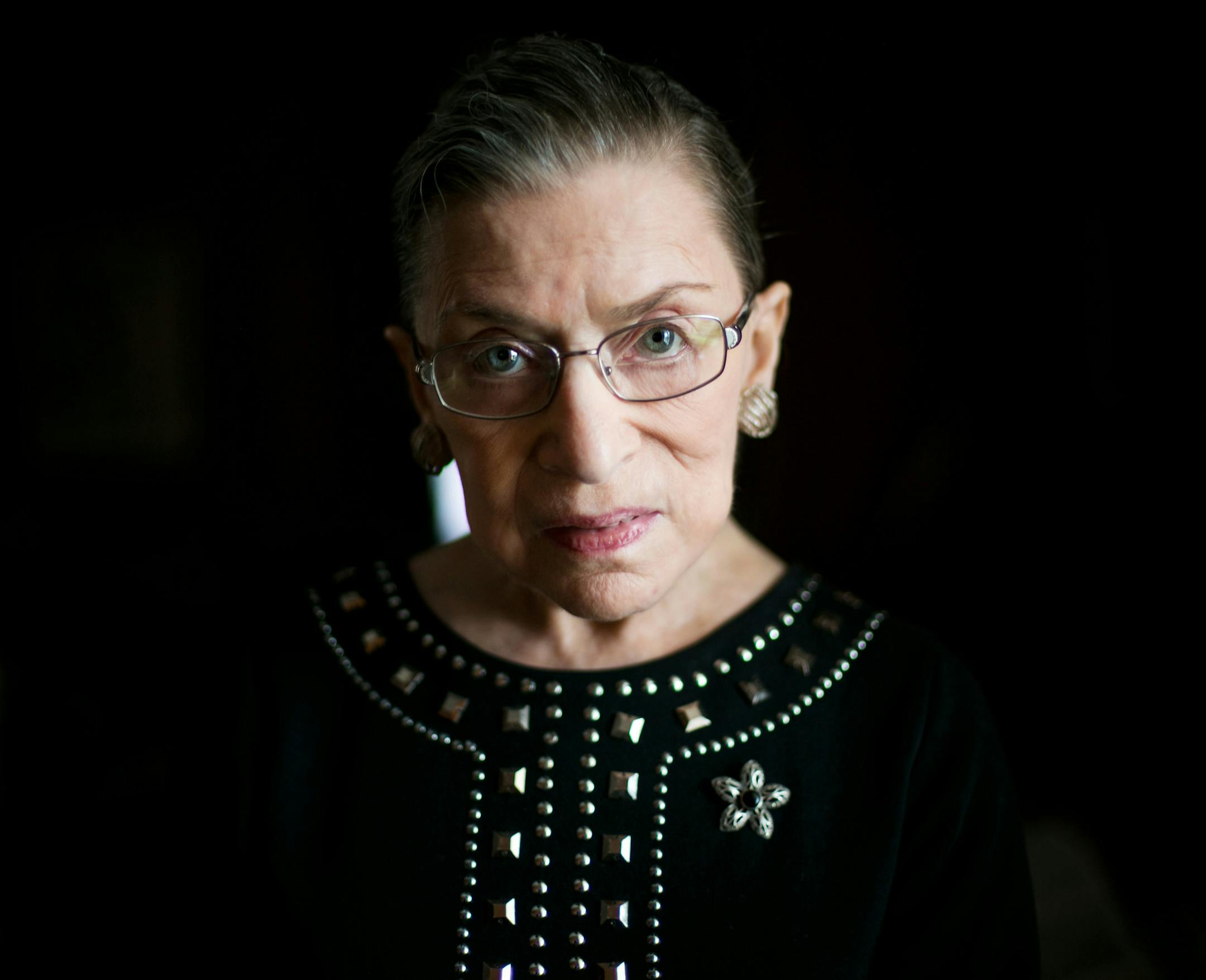
"What is the difference between a bookkeeper in the Garment District and a Supreme Court justice?" Ruth Bader Ginsburg would ask, pausing before answering, "One generation."
Ginsburg, 87, died Friday from complications of metastatic pancreatic cancer — one of five bouts with cancer she endured during the last two decades of her extraordinary life.
Nominated to the court in 1993 by President Bill Clinton, she was a standard-bearer for women's rights and the second woman to be named to the court — and, in her later years, a pop culture icon.
Her death just six weeks before the Nov. 3 election will launch a high-stakes push by President Donald Trump and the Republican-majority Senate to nominate and confirm her successor in the face of fierce opposition from Democrats.
Just days before her death, National Public Radio reported, Ginsburg dictated the following statement to her granddaughter: "My most fervent wish is that I will not be replaced until a new president is installed."
Her plea won't matter to Senate Majority Leader Mitch McConnell or to Trump, who recently listed Republican Sens. Ted Cruz and Tom Cotton and other potential candidates for any court vacancies under his watch.
McConnell wasted no time, issuing a statement Friday evening saying that Trump's nominee would receive a vote on the Senate floor. Yes, that's the same Mitch McConnell who sat on President Barack Obama's nomination of Merrick Garland after Justice Antonin Scalia died in an election year.
The bitter fight over that plan will unfold in the weeks ahead. Before it heats up, Americans should pause to reflect on a life that could only have been lived in America.


