

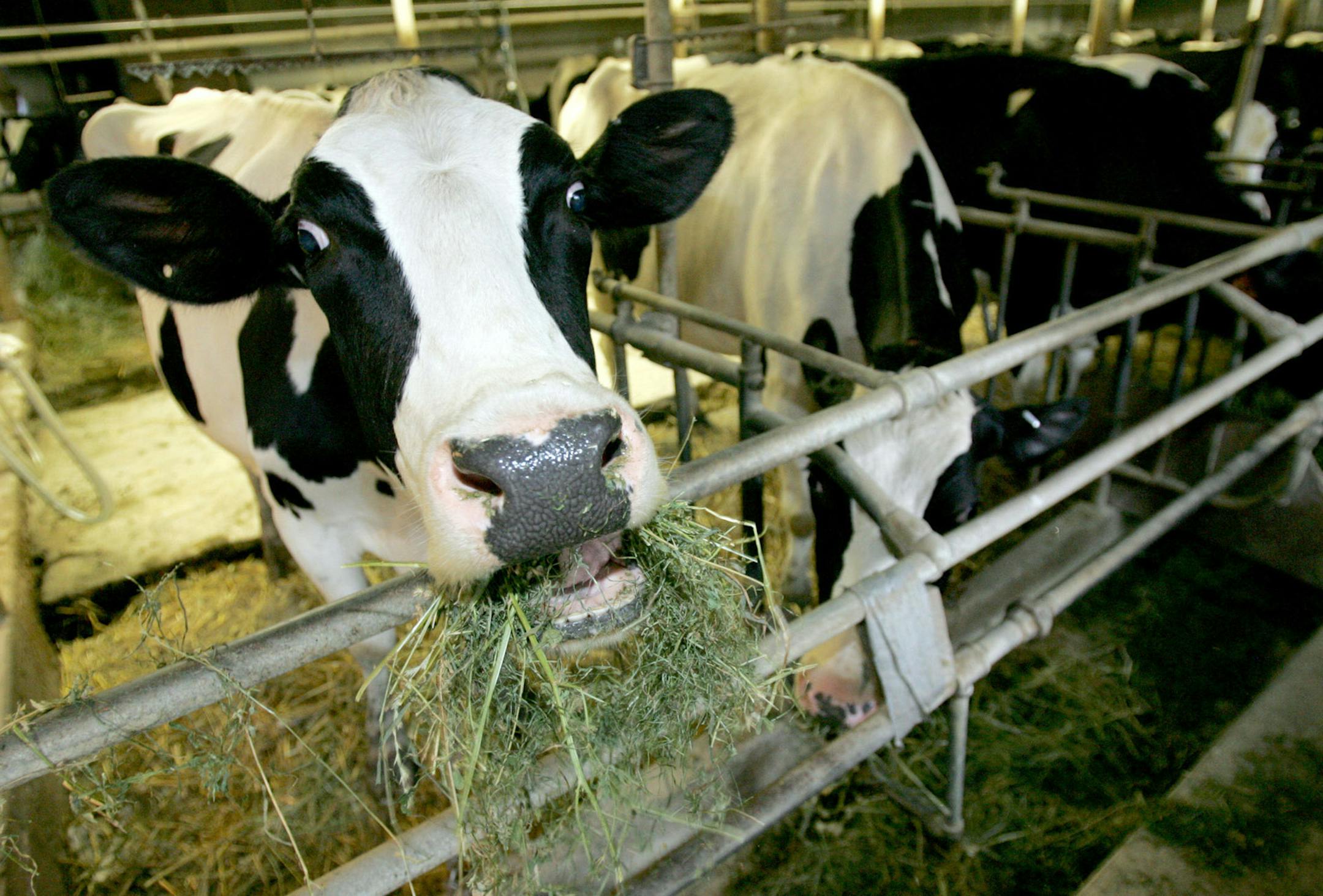
SAN DIEGO – Those concerned with climate change may soon feel less compunction about biting into a cheeseburger.
Researchers have recently discovered that feeding cattle and other livestock a specific type of seaweed — known as Asparagopsis taxiformis — can dramatically reduce the massive amount of planet-warming methane such farm animals pass into the atmosphere through burps and flatulence.
Scientists from San Diego to Vietnam to Australia are now working overtime to figure out how to best cultivate the underwater plant — which a growing number of private aquaculture companies are seeing as a potential cash cow.
Whether motivated by profits or global warming, the race is on to patent recipes for growing the seaweed and then figuring out how to ramp up production. Global demand is expected to far outstrip the capacity to harvest the subtropical seaweed from the wild.
In California alone there are 1.8 million dairy cows, with farmers of the greenhouse-gas-spewing animals facing a state mandate to slash their methane emissions 40% by 2030. Experts also expect that agricultural businesses may adopt the practice regardless of government pressure in order to market themselves as more environmentally friendly.
"Every time I talk about it, I get goose bumps," said Jennifer Smith, a marine biologist at UC San Diego's Scripps Institution of Oceanography, who said she can envision the university spinning off a startup to help meet local demand for the seaweed. But first, she has to dial in the recipe.
For several months, Smith has been experimenting in her lab with cultivating the seaweed to, among other things, maximize concentrations of bromoform — the compound that blocks the production of methane in cows, sheep, goats and other ruminant animals.
"This is the sporophyte," she said at her lab in La Jolla, holding one of a dozen flasks filled with the red algae, dancing in aerated seawater.


