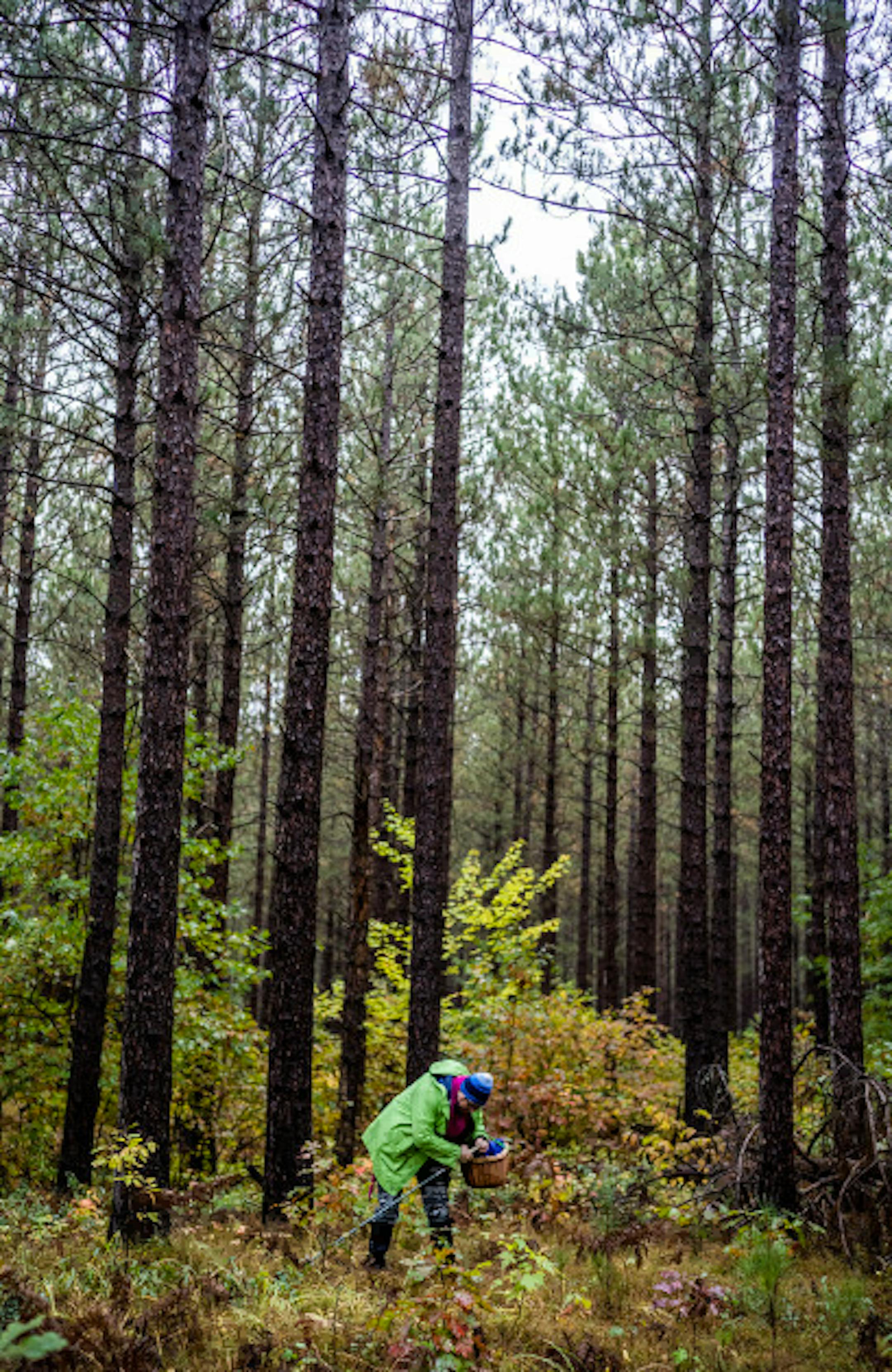
![Ukrainian mushroom forager Olena Johnson has a knack for finding the edible boletes which pop up in pine forests.] Second part in our occasional series about mushroom hunters and foragers, representing different ethnic communities in the metro area. RICHARD TSONG-TAATARII ¥ richard.tsong-taatarii@startribune.com](https://arc.stimg.co/startribunemedia/5SCBCWNRFS2YMEKOXU52OWRRVI.jpg?&w=1080)
Note: This is the second part of a three-part series about Minnesota communities and their enthusiasm for wild edibles.
NEAR HINCKLEY, MINN. – Olena Johnson has just parked at the forest road turnout when a pickup eases past her spot, idles briefly, then roars off.
"Russian," she says, unpacking her mushrooming gear. "I know the haircut."
We've just arrived at a stand of second- and third-growth pine on state forest land. A night of heavy rain has left the air eerie and thick with suspended precipitation.
The only sound is the wind hissing through the high pines and our soft footfalls on the thick layer of pine needles and moss.
Beneath our feet, however, the forest is a riot of life. Lichen colonies exploding off tree stumps. Bright yellow fly agaric poking up from hummocks. Yellow and red russulas knocked over by those who came before us, and, if we're careful enough to spot it, the mahogany-brown glisten of a pine porcini cap.
Johnson isn't alone in the autumn woods, however. Far from it. Long after peak camping season, the fall rains come, and with them, a dedicated group of mushroom hunters, many with roots in the boreal forests of Russia and Eastern Europe.
This year, the inundation of rain from late summer on has led to a stampede to Minnesota's northern forests.