

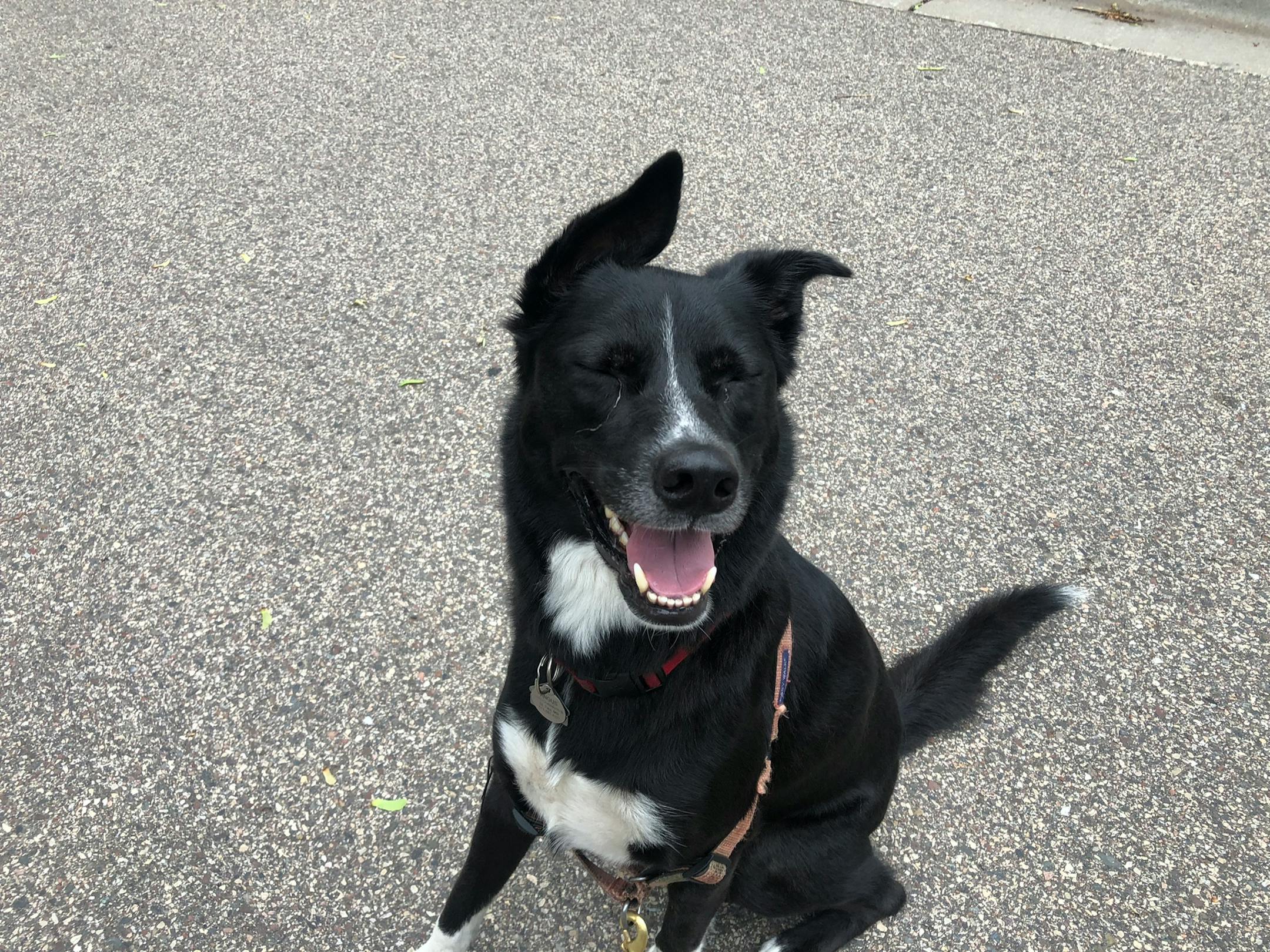
Ever since Angus went on medication to help with his extreme reactivity, just about everything about him is better. He's easier on walks, he's more engaged at home, he's less anxious overall. He seems happy. But he doesn't want to eat.
Most dogs get excited at mealtime — our 11-year-old Lab mix Rosie, for instance. She loves food, all food. She moans with anticipation when we scoop out the kibble, drools in a most disgusting way when we hold up a treat.
Angus, on the other hand, runs out of the room. Sometimes he dives under the bed and hides.
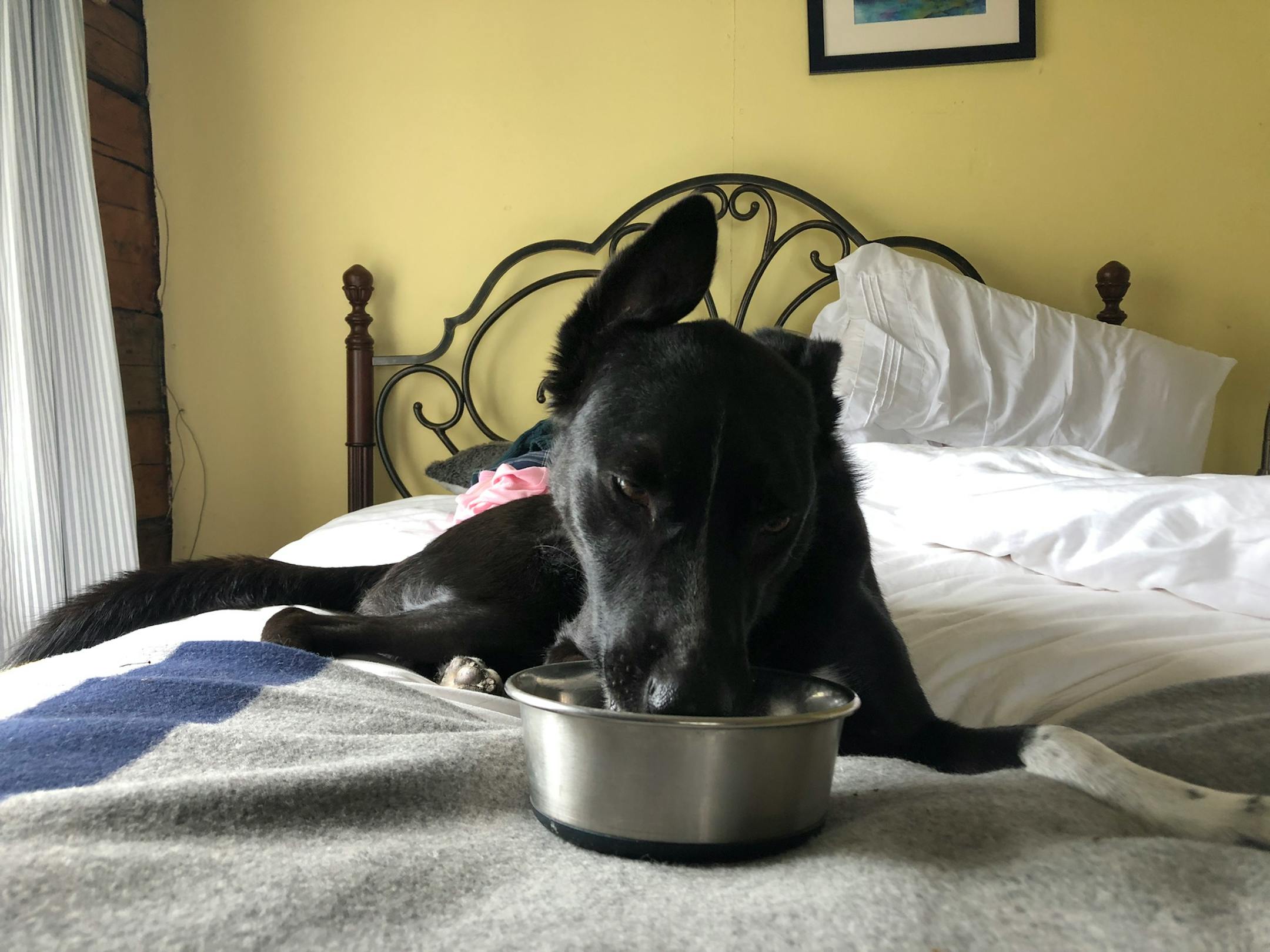
It is perplexing. I realize that the combination of Gabapentin and fluoxetine can dull the appetite, but Angus acts like we are trying to poison him.
I worried about him taking powerful meds on an empty stomach, so for a long time I resorted to bribery.
At first I tried a dollop of canned food on top of the kibble. That worked — for a while. Then I tried heating the canned food, to bring out the fragrance. That also worked, for a while. Then I rooted through the refrigerator, pulling out leftovers: plain yogurt, chicken breast, feta cheese, soft roasted sweet potato.
Getting Angus to eat usually required hand feeding for the first few bites, and sometimes I nearly wept in frustration when he turned away, but whenever he finally ate, I felt happy. He will not starve on my watch, I vowed.
In March, Angus was due for his annual exam. We muzzled him and gave him extra meds, and he trotted off happily with the vet tech as though she was his best friend.


