

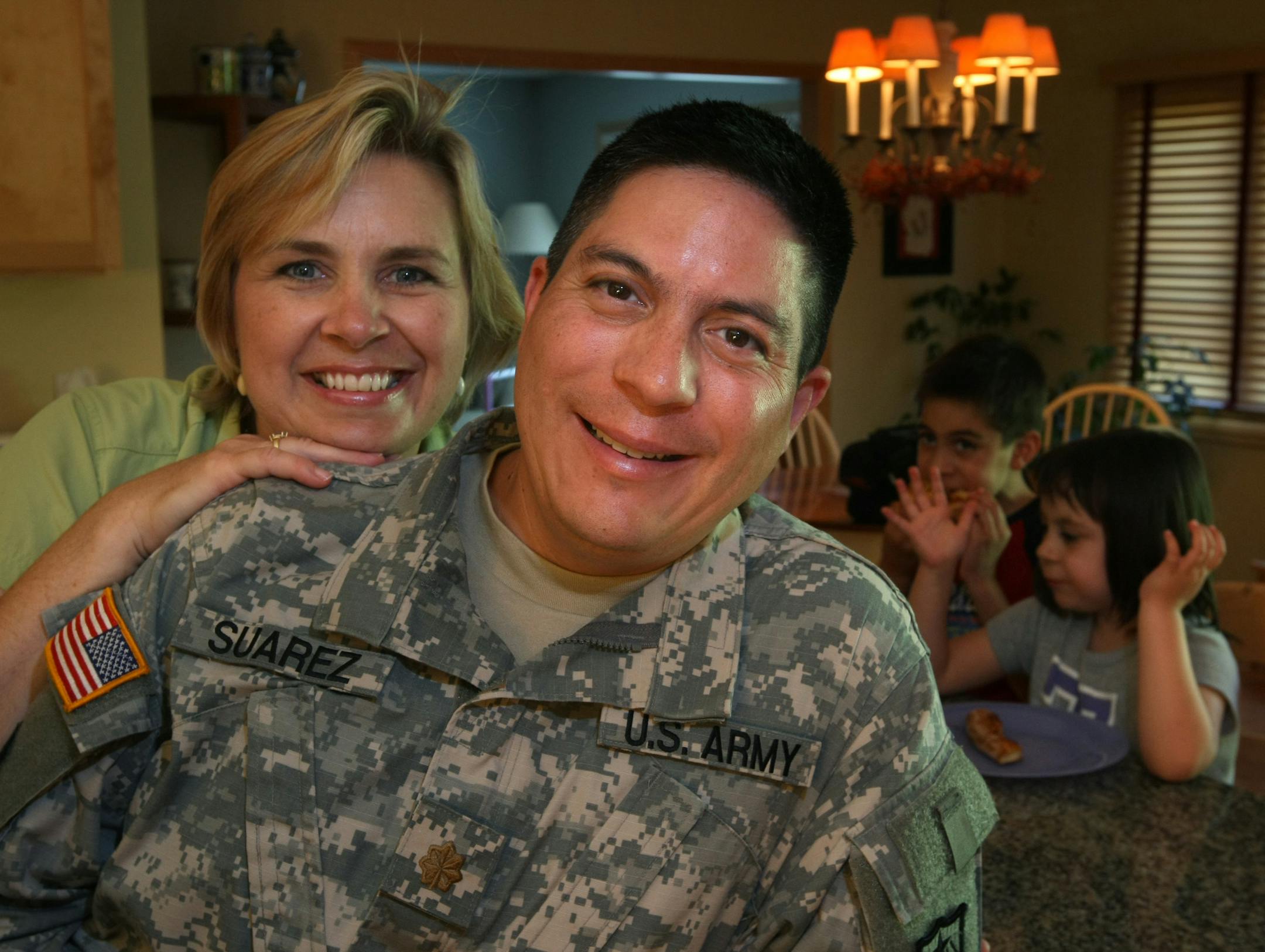
Mike Mills didn't look in a mirror for two months after a land mine blew him out of his truck near Kirkuk, Iraq, in June 2005, cracking his clavicle, shattering his hip "like a jigsaw puzzle" and burning off half of his face. When he did, only one word came to him: "Freak."
Recovering at Brooke Army Medical Center in San Antonio, Mills worried about his two kids in Freeport, Minn. He worried about making a living. Mostly, he worried about Suhanna -- Suki -- his wife of nearly 20 years, who would surely leave him.
"How can I expect her to stay with me anymore?" said Mills, 43, a member of the Minnesota Army National Guard for 18 years. "She's not going to want to be intimate with a freak. Elephant Man. That's the way I saw myself."
Suki, 43, didn't leave.
"I'm too old to train in another one," she joked.
She changed her husband's pus- and blood-soaked bandages, and helped him relearn how to shave and brush his teeth.
As the Mills family moves forward, the U.S. Defense and Veteran's Affairs departments are acknowledging that the physical and emotional scars that troops carry home present a sensitive challenge: sexual intimacy and body-image issues that most couples' therapists are ill-prepared to treat.
Many factors play a role. More than half of the troops -- 56 percent -- are married, many for decades. That means lots of spouses issuing ultimatums to get help or get out.


