

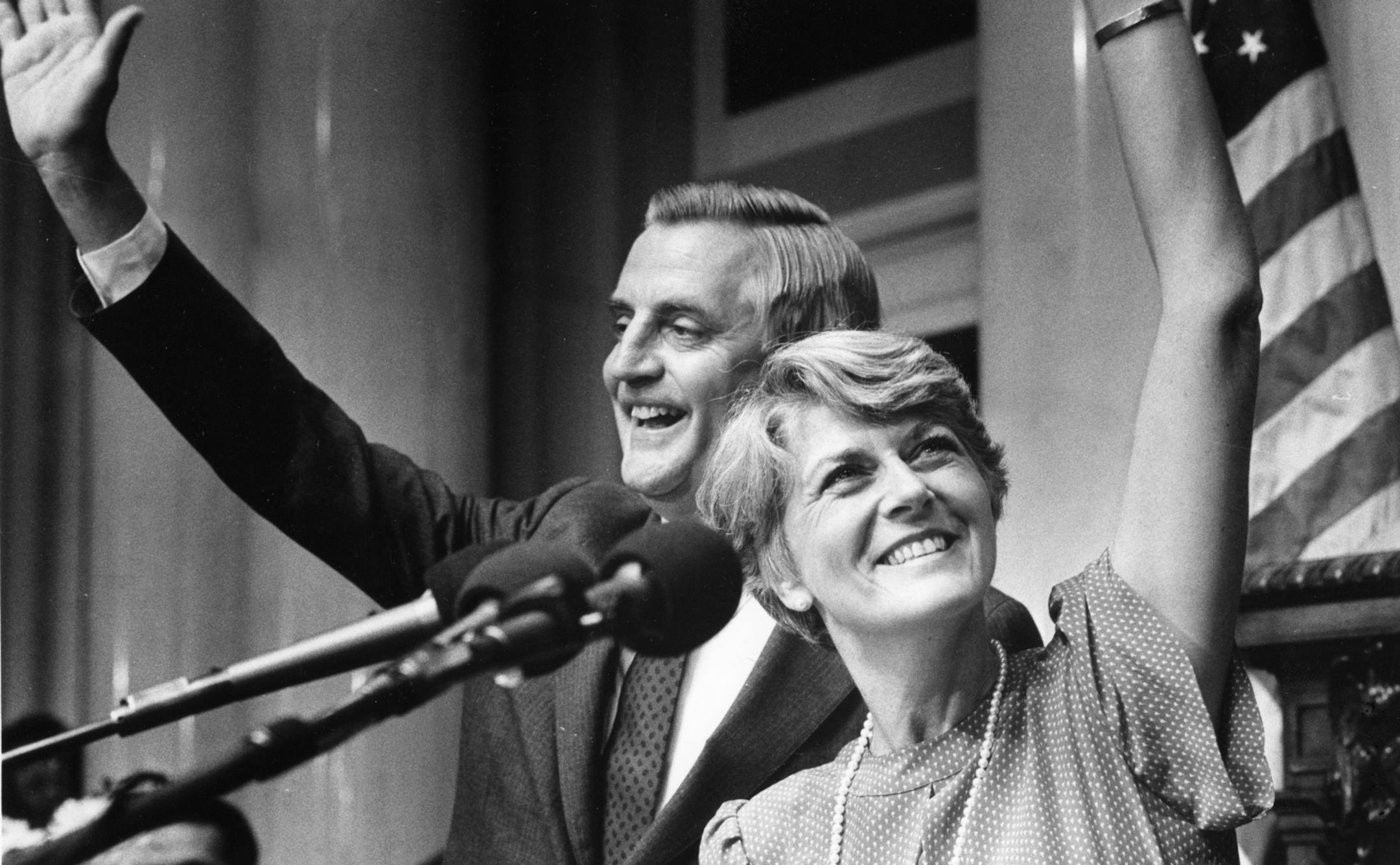
On Friday, the Showtime cable-television channel will air "Geraldine Ferraro: Paving the Way," a documentary about her 1984 race for vice president. Although she was defeated, it was a seminal moment in politics that was validated by the subsequent extraordinary leap in the number of female officeholders.
In three decades, political women have gone from anomalies to mainstream, though they still are underrepresented. The odds are the Democrats will nominate a woman for president in two years, and there's an even chance the Republican candidate will tap a female running mate.
The best research on these issues is from the Center for American Women and Politics, a unit of the Eagleton Institute of Politics at Rutgers University.
When Ferraro was picked as Walter Mondale's running mate, she was one of only 22 women among the 435 members of the House of Representatives. There were only two senators: Republicans Nancy Kassebaum and Paula Hawkins.
Now, there are 79 female representatives and 20 female senators. In 1984, there was only one female governor, Martha Layne Collins of Kentucky. It was only 10 years earlier that Americans elected the first female governor who didn't succeed her husband: Connecticut's Ella Grasso. Since then, 29 women have served as governors.
California and New York (and Minnesota, too) have never had a female chief executive, while Arizona has been governed by women for the past 17 years. There are almost twice as many female state legislators today as there were in 1984.
Yet for all that progress, women occupy only 24 percent of state legislative seats and 10 percent of the governorships, and they account for less than 20 percent of Congress. They make up 51 percent of the population.
A study of more than 2,000 college students by political scientists Jennifer Lawless and Richard Fox shows that despite the presence of such high-profile figures as Hillary Rodham Clinton and Nancy Pelosi, young women still are less likely to evince an interest in politics. Men are more likely to be encouraged by their parents and peers and to think of themselves as more qualified. Another factor: More men than women participate in athletics, and the psychological and verbal similarities between politics and sports are striking.


