

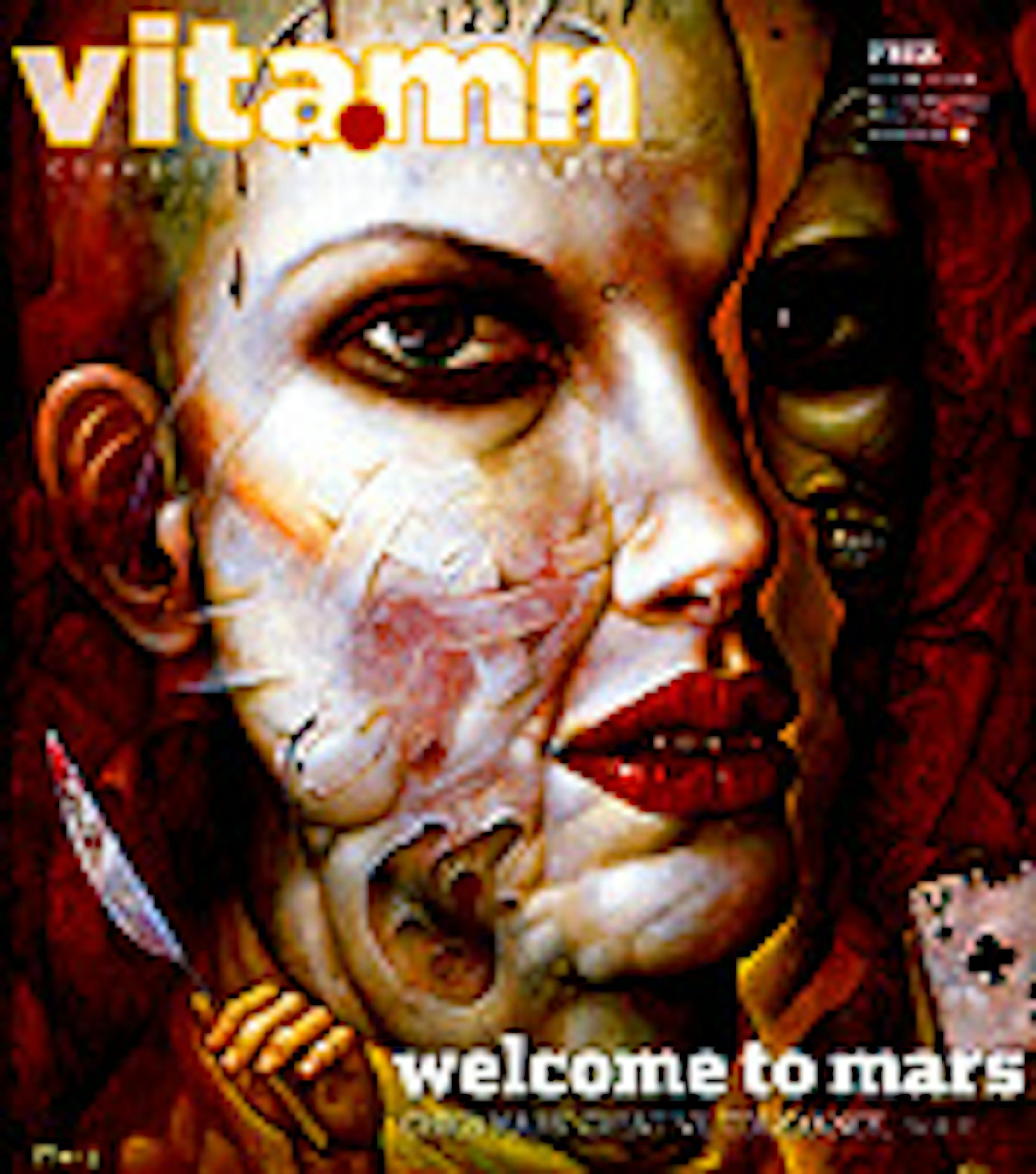
"Tolerance." The title of Chris Mars' hefty new book of illustrations is not a warmhearted holiday wish. It's a terse warning. Think of it as a hissed whisper from a mother to her youngster as she yanks him past a crippled panhandler on the street. It isn't nice to gawk at the freaks, Mars reminds us. And if you are going to look, you'd better make damn sure you do it with some compassion. For those brave enough to peek behind the cover of his book -- a portrait of a dagger-wielding corpse, ashen skin peeling away from its face -- a parade of torture and misery awaits. The image sets the tone quite plainly. Mars isn't requesting sympathy for the wretched victims in his paintings. He's demanding it at knifepoint.
Although many will remember Chris Mars as the drummer for the Replacements in the 1980s, he earns his fame these days as a painter. And though glory-days nostalgists won't want to hear it, his spectacular talent as a visual artist dwarfs anything he's done on an album. His blend of aching beauty and stomach-churning gore sends a cocktail of guilt and revulsion straight to the gut. Full of festering sores, smashed teeth and bruising alienation, Mars' creep-show aesthetic haunts and horrifies. By trafficking in extreme ugliness, he elevates suffering to a religious experience.
And that, ultimately, is the strange thing about "Tolerance." Paging through the book is like sitting through a somber Catholic rite. Redemption and violence intermingle to create a "Passion of the Christ" feel -- a marathon of suffering anchored by a pious lesson. The viewer can't help but feel browbeaten by the book's moralizing iconography.
Mars is the art world's patron saint of monsters. In interviews, he frequently cites his older brother Joe as the inspiration for his work. At age 15, Joe was institutionalized for schizophrenia, and Mars grew up watching him endure the brutal humiliations of the 1960s mental-health system. Deeply troubled by how willing society is to cast away its misfits, Mars has made it his mission to win back dignity for anyone who's been labeled a freak. In his paintings, he celebrates the disfigured, using startling effects of light to anoint them as angels.
As noble as this sounds, Mars can get out of hand with the martyr card. A hot vengeance contaminates his empathy, and sometimes his agenda seems as if it's coming from a pulpit. An artist statement, printed about a third of the way into the book, makes it clear that the guy has an ax to grind: "From my hands, my mission. To free the oppressed, to champion the persecuted and the submissive, to liberate through revelation the actualized Self in those proposed by some to have no self at all."
This is manifesto territory, for sure. It's also the overheated rhetoric of religion. And if Mars occasionally tips into proselytizing, he has a handy excuse: He spent nine years attending Catholic grade school. Visual parables -- the kind you might find in church windows -- have become part of his psyche.
Mars doesn't shy away from discussing his nonsecular upbringing, and he'll be the first to admit that religion may have crept into his work. "While going to church every Sunday, I couldn't help but notice the classically presented glass, sculpture and paintings," he says. "And yes, amid the beauty, the violence, torture and death of Christ was depicted vividly. Consciously or subconsciously, seeing this imagery contributed to the visual catalog I've collected over the years."
He adds, "I haven't been to church in decades and consider myself agnostic."

