

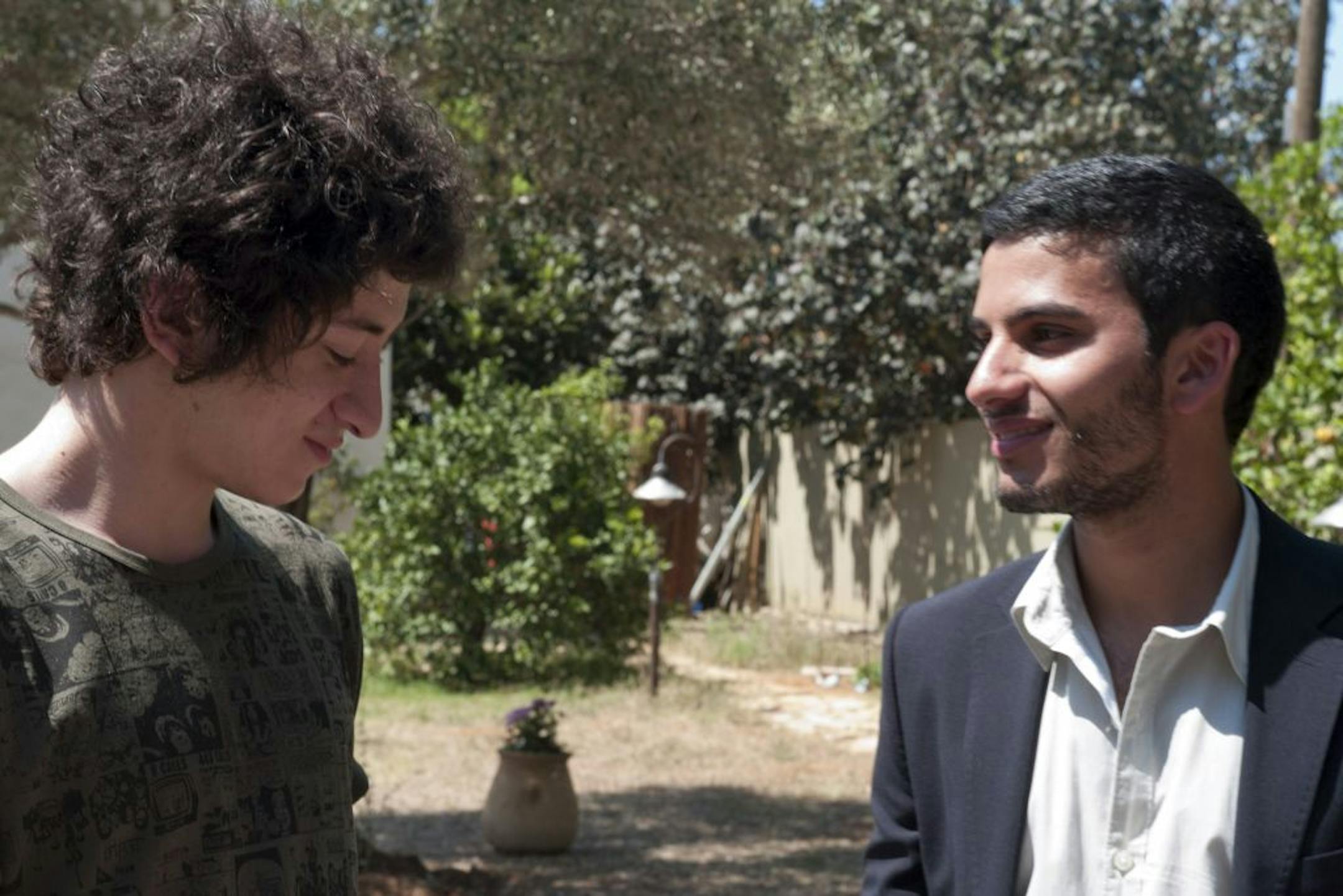
A sentimental Mideast drama. Two clans learn their infant sons were switched at birth in the chaos of a hospital missile attack in the first Gulf War, and deal with the resulting identity crises. The French-reared Israeli Silbermans (Emmanuelle Devos and Pascal Elbé) and the Palestinian Al Bezaaz family (Areen Omari and Khalifa Natour) attempt to make sense of complex issues of nationality, ethnicity, religion and belonging. Young Joseph Silberman, the Israeli-raised Palestinian, asks his rabbi if he's still Jewish, only to be offended by the legalistic reply. Yacine Al Bezaaz (Mehdi Dehbi), a medical student in France, returns to find his older brother glaring at him with anti-Israeli distrust. The boys meet and bond, each visiting the other side of the military checkpoint that separates their worlds and reaching out to the biological families they have never known. The women in this "Prince and the Pauper"-esque situation are quicker to open their hearts than the men, who are burdened by resentment, machismo and pride. When the families' young daughters beam at the unexpected gift of new siblings, you can almost hear director Lorraine Levy whispering, "Children are the future." A humane but emotionally anemic message movie whose dramatic craft doesn't live up to its good intentions. (Rated PG-13.) COLIN COVERT

about the writer

It’s too soon to tell how much the immigration crackdown is to blame.
