

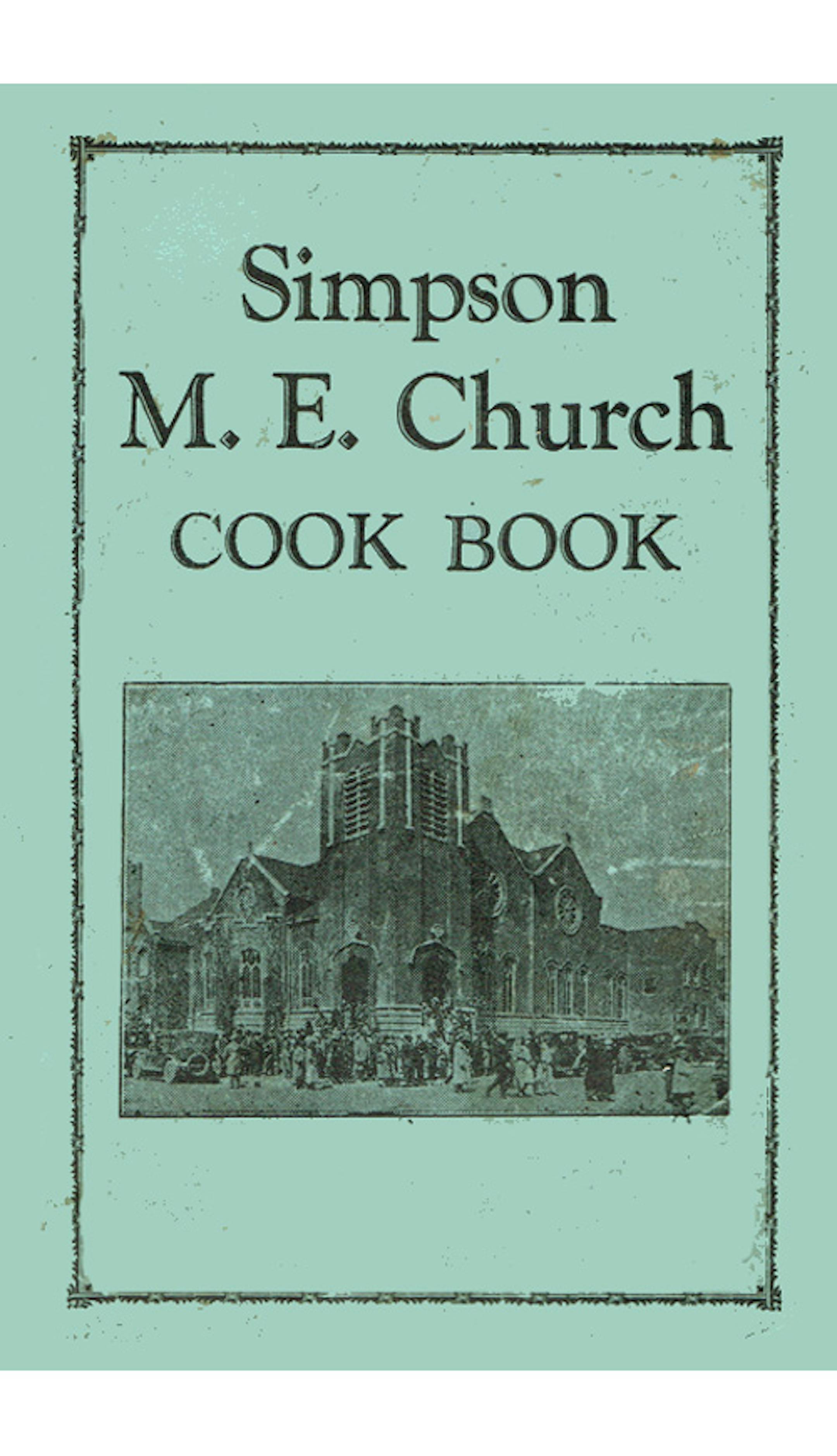
A reader sent this along:
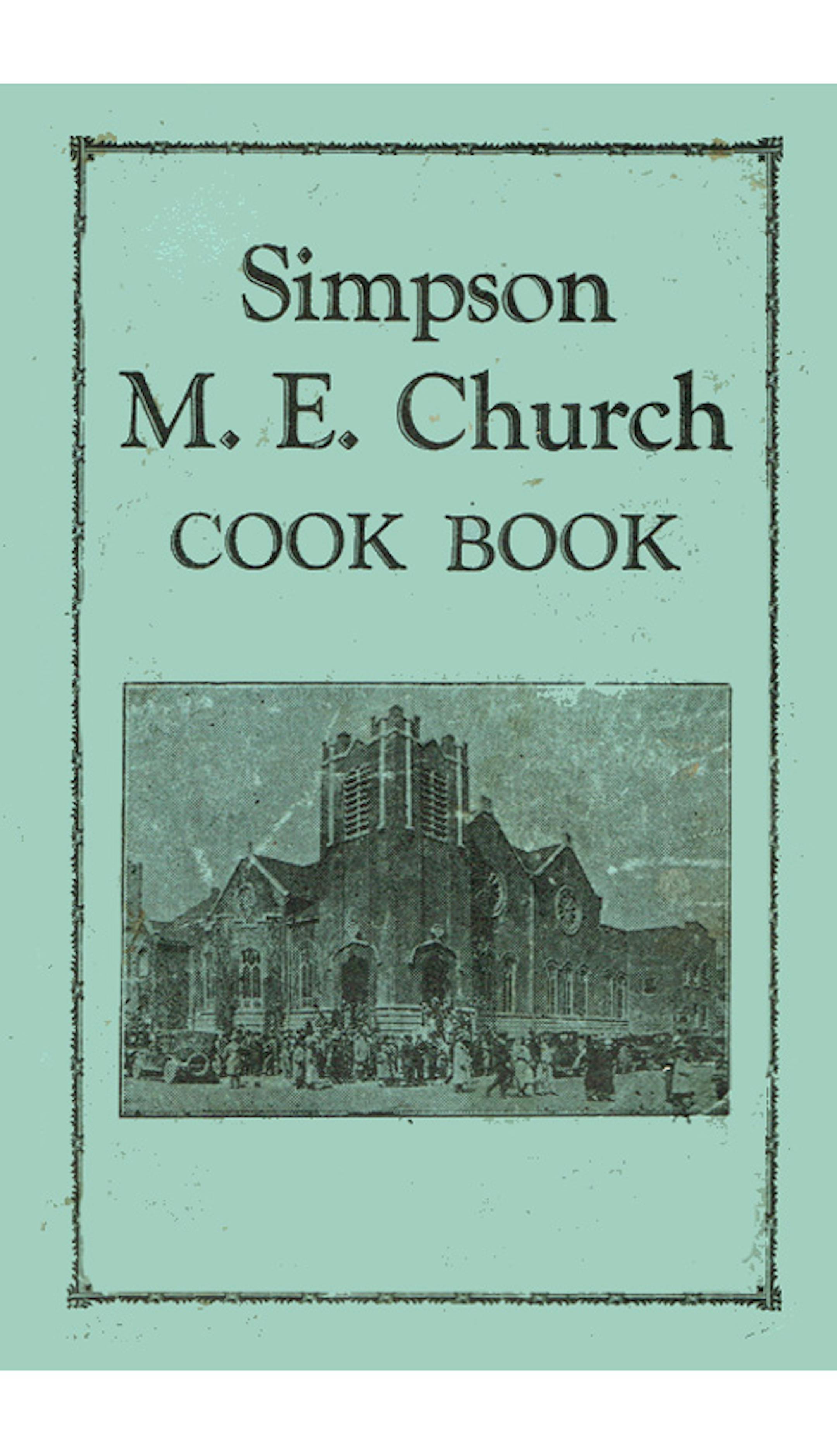
In case you're wondering if the church is still around, of course it is. Most are. Here it is:

It's an interesting place inside - almost a time capsule untroubled by modernization. It has a homeless shelter in the basement, with a kitchen that serves meals to anyone who shows up. More on its mission here, if you're interested.
Anyway: the note said the ads were interesting, and that's true. More so than the recipes. It's the usual - Pig Aspic, Cream of Acorn Soup, the usual stuff from the era before food got interesting. I'll be posting some ads now and then, for a few reasons: everything mentioned in the book is gone, but many of the addresses remain. The neutron bomb known as "Time" eliminated all the animate matter, and it was all so long ago that the grandchildren have probably thrown out the photos and receipts and scraps left behind by the business owners. The book has a date "1933" written on the inside cover, but the graphic style is still stuck in the 20s. And that's the real 20s, not the Gatsby-Deco style some people believe was the look of the decade. This was typical:
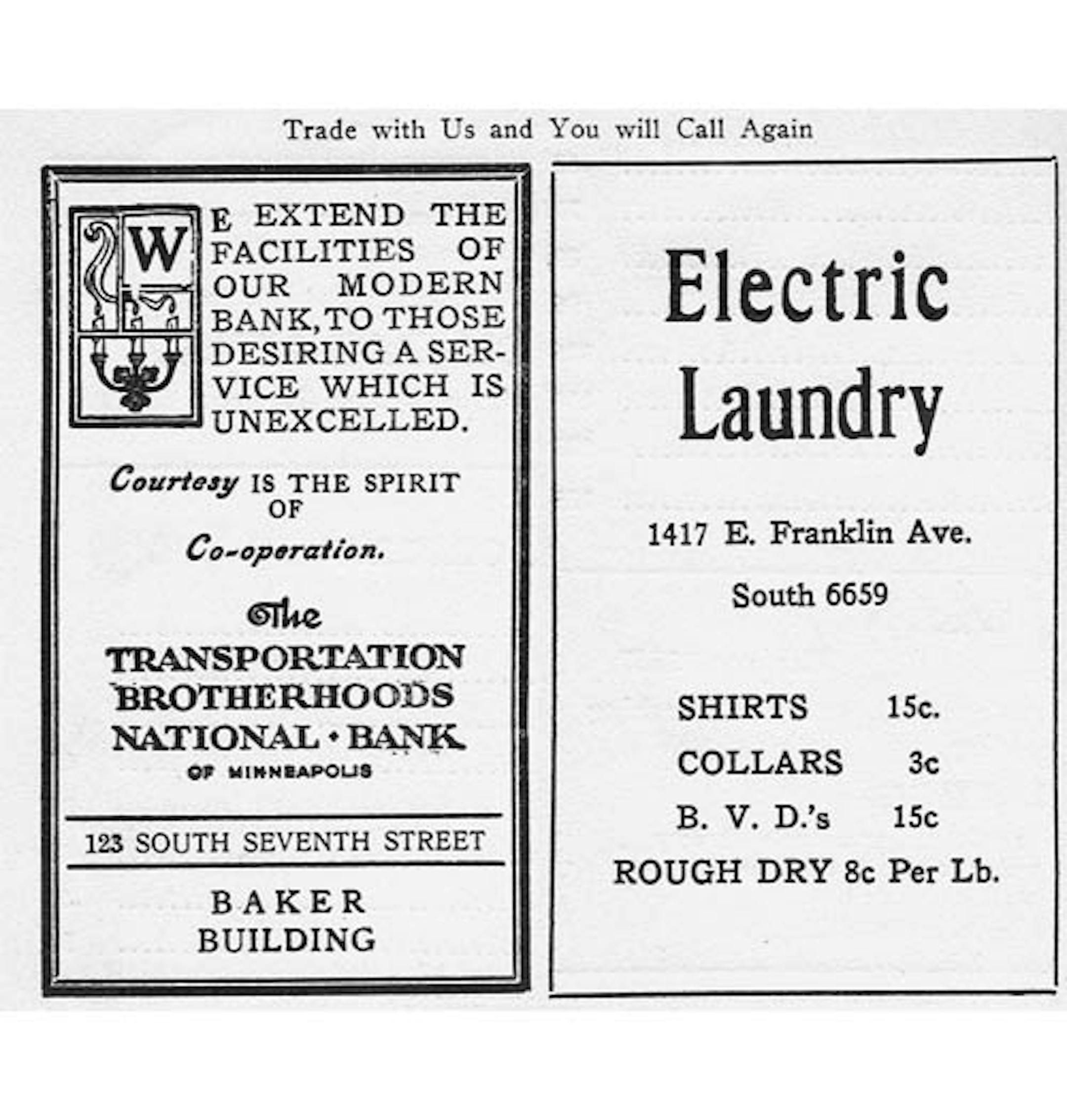
The Electric Laundry! Your clothes will be shocked into cleanliness. The Transportation Brotherhoods National Bank opened in 1922 and printed money for nine years; they could do that back then.
Also of note in the cookbook: some recipes cut out by the owner from a newspaper. It was the other side that got my attention:
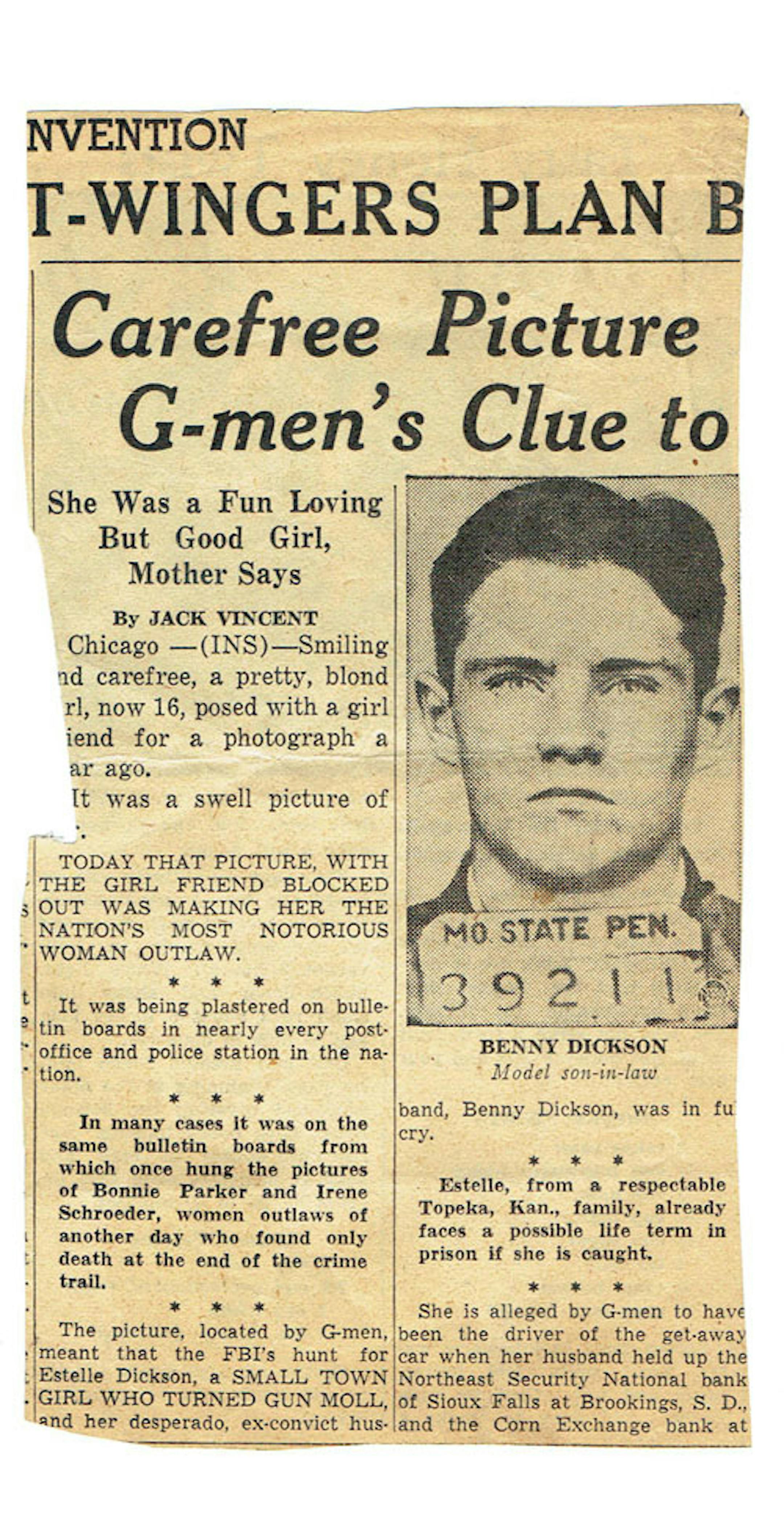
SMALL TOWN GIRL WHO TURNED GUN MOLL. Here's where Wikipedia comes in handy. Cue the banjos:
Much more here - seems Benny's family had a cabin Lake Benton. A 1939 Liberty Mag story here, with a picture of Stella. By the way, the first link has this assertion: " Descendants of Benny, who died at the age of 27, contend he was railroaded into crime. The couple were victims of the FBI public relations machine in the 1930s that ignored organized crime, instead focusing on small-time crooks the federal agents knew they could capture, a biographer of the Dicksons said."


