

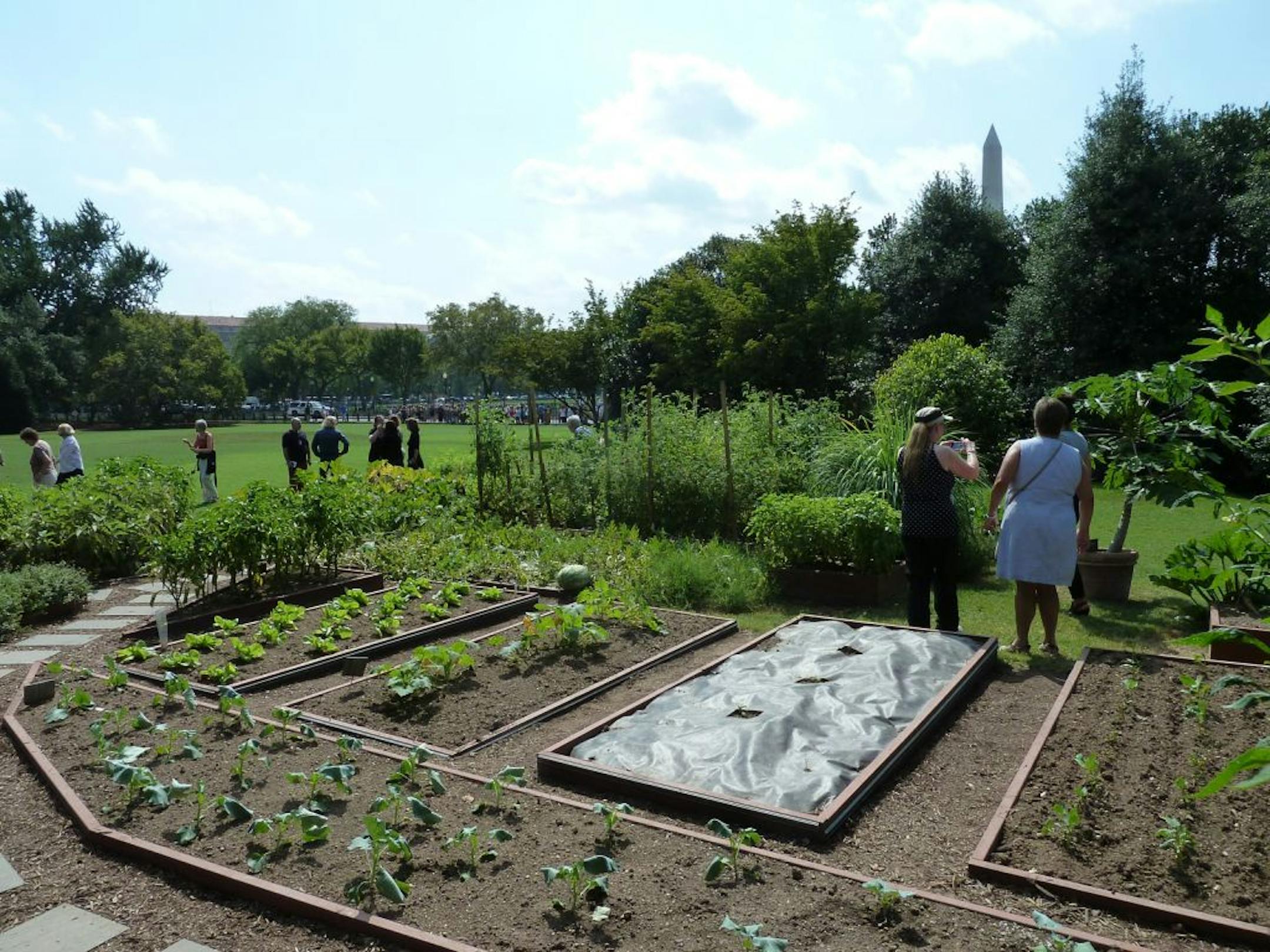
WASHINGTON, D.C. - "Do not swat the bees," Bill Yosses said calmly to the guests who nervously eyed the flying insects. "They won't sting. They're just curious, and you're wearing the right colors."
We were standing in the direct path between the beehive and the White House Kitchen Garden. The Washington Monument stood guard to the south, the big white house anchored the north; to the west, a garden still operated in full harvest mode.
Pumpkins and melons spilled out onto the paths. Chile peppers filled the bushes. Tiny yellow tomatoes beckoned, "Pick me, pick me." So we did, with the blessing of our guide, the White House's executive pastry chef.
He and Cris Comerford, executive chef for the White House, led the way for this gaggle of food writers in town for a conference of the Association of Food Journalists.
"There is no tweeting from the White House," Yosses had told us at the guard station. "No social media, at all." So we grabbed our notebooks and did the tour the old-fashioned way, with pen, paper and cameras.
Yosses walked past the scarlet runner beans and pointed out the sea kale from seeds Thomas Jefferson brought to America. He stepped around the Texas chile peppers and when he reached the lemon verbena, plucked a few leaves. "We love to use this in the kitchen."
The White House Kitchen Garden, planted in the spring of 2009, was initiated by First Lady Michelle Obama, who wanted fresh vegetables for her family meals -- and something more.
"I hoped this garden would help begin a conversation about this issue [children's obesity and health] -- a conversation about the food we eat, the lives we lead, and how all of that affects our children," she writes in "American Grown: The Story of the White House Kitchen Garden and Gardens Across America" (Crown Publishers, 271 pages, $30).


