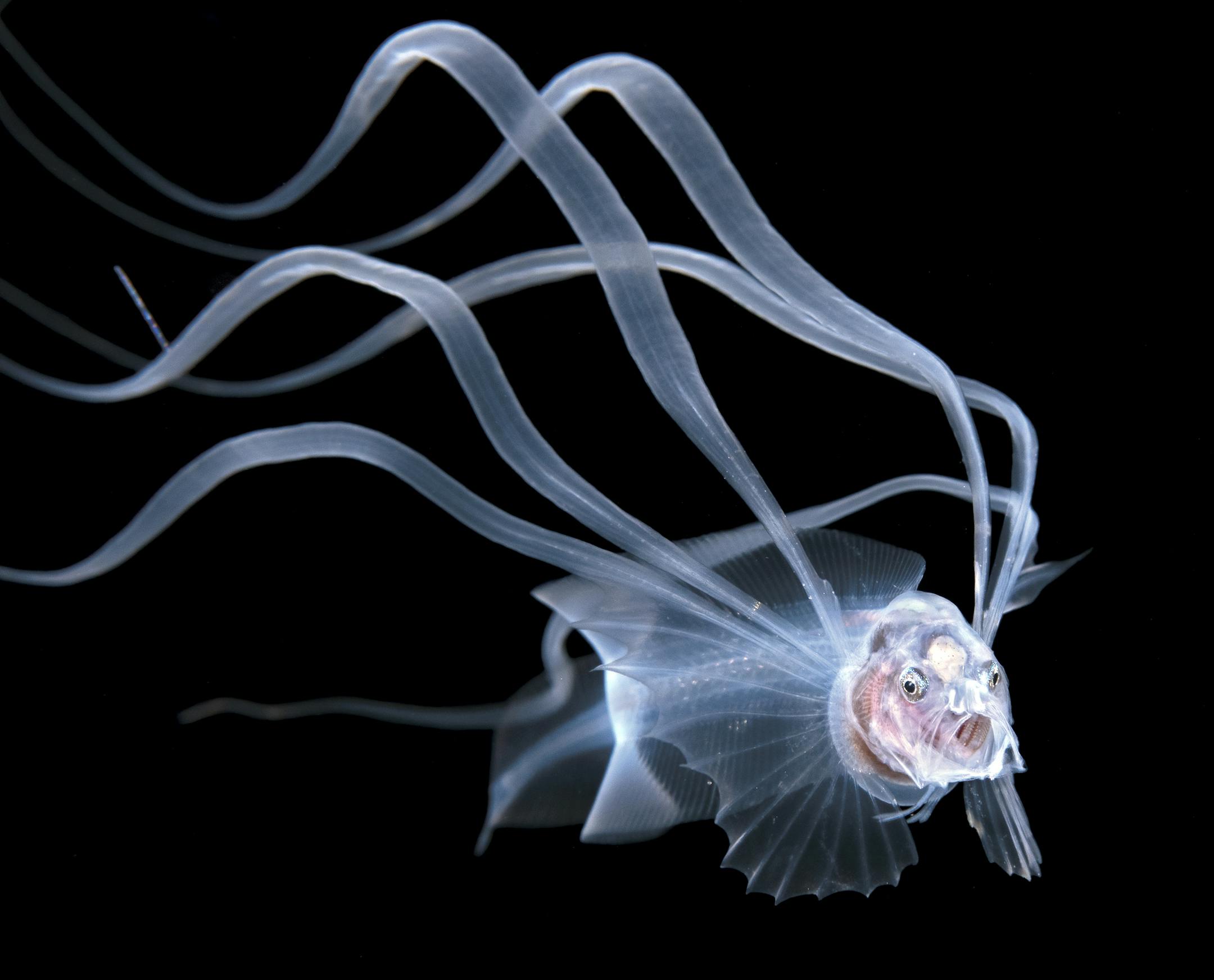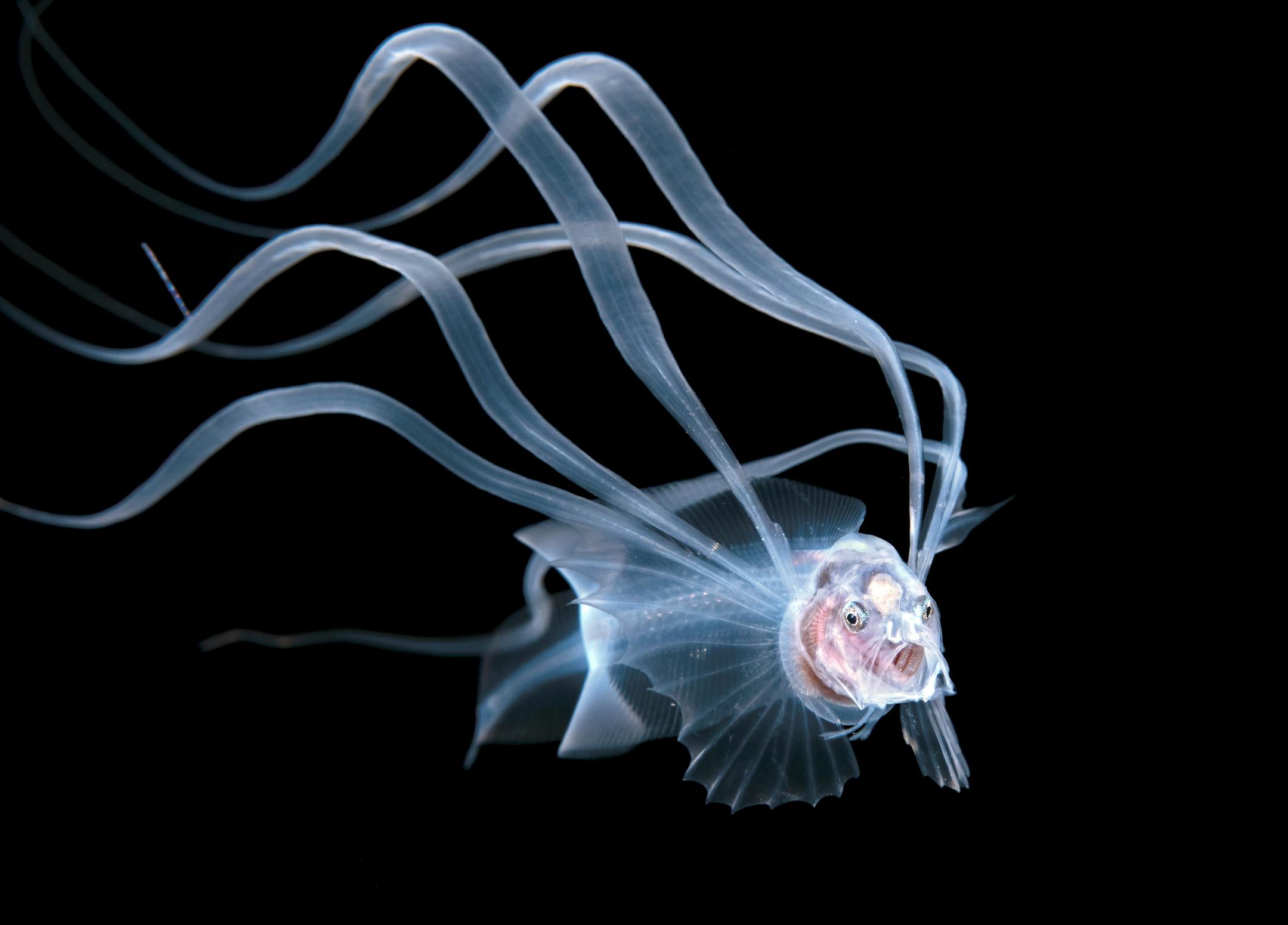
For most scuba divers, few places underwater match the visual thrill of a kaleidoscopic coral reef teeming with fish. For Jeff Milisen, a marine biologist and photographer in Kona, Hawaii, there is no better place to dive than an open stretch of deep ocean. At night.
"There's no bottom, no walls, just this space that goes to infinity," he said. "There are a lot of sea monsters there, but they're tiny."
Those tiny creatures are part of a daily movement of larval fish and invertebrates, which rise from the depths each evening as part of one of the largest migrations of organisms on the planet. And the emerging hobby of taking pictures of them is known as blackwater photography.
Most of the larvae are no bigger than a fingernail; others are even smaller. Up close, when captured with a camera using a macro lens, the animals can appear to loom as large as wild animals on a safari — a safari on another planet.
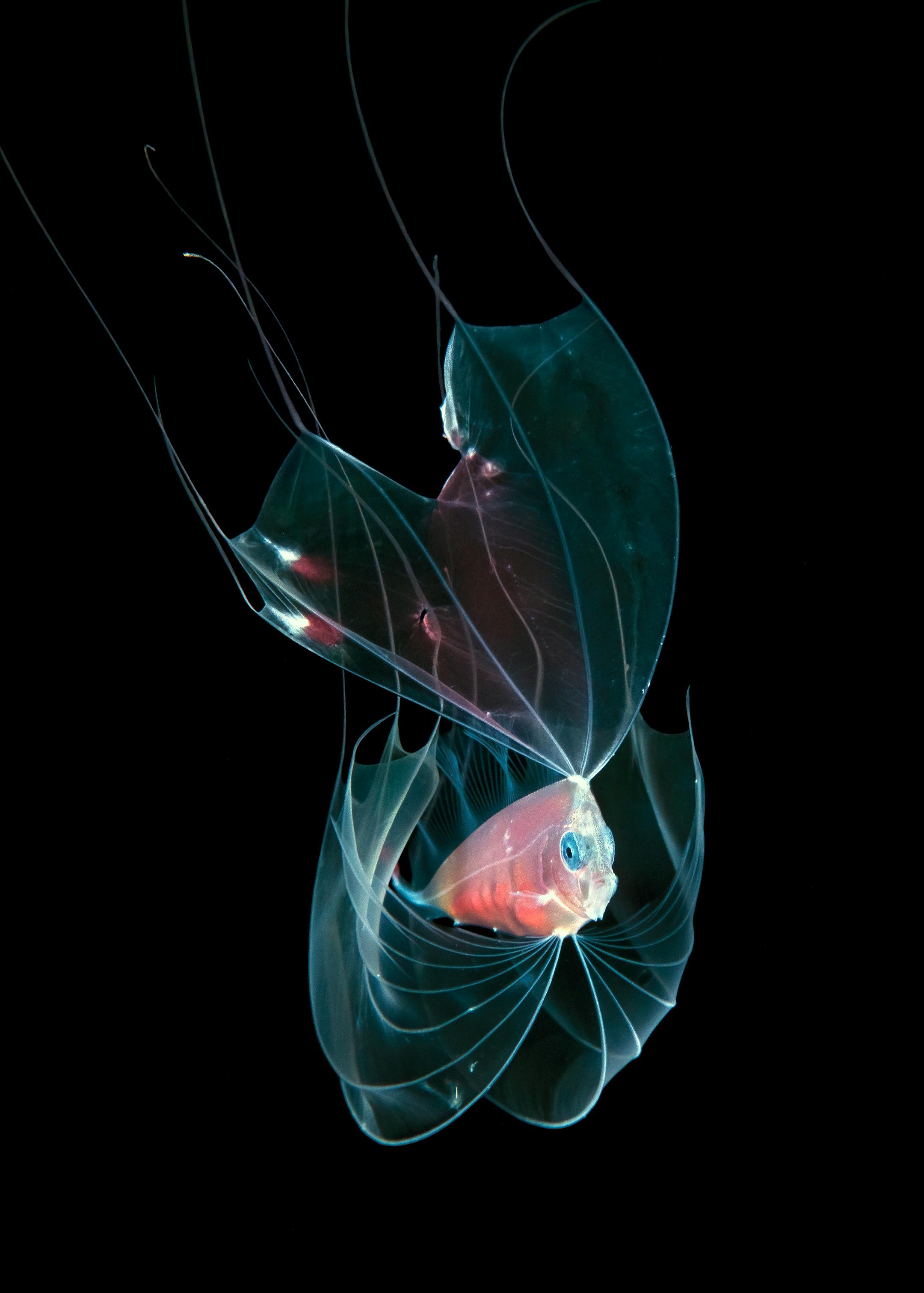
The images and videos are revealing a secret world that scientists have struggled for decades to better understand. Now, scientists want to formalize the collaboration with blackwater photographers, most of whom have no scientific background, to participate in marine research.
"It really is a great advance in terms of what we can learn about the early life history of fishes," said David Johnson, a curator at the Smithsonian National Museum of Natural History.
If the photographers could collect specimens of the tiny animals they photograph, DNA could be extracted and analyzed, scientists wrote in a paper published in the journal Ichthyology & Herpetology. So far, the scientists leading the effort have recruited about a dozen divers, who have collected more than 60 specimens for analysis. More are in the pipeline.
"We're building a collection that for the first time has a live image," Johnson said. "We get the specimen and create a DNA record tied to it."