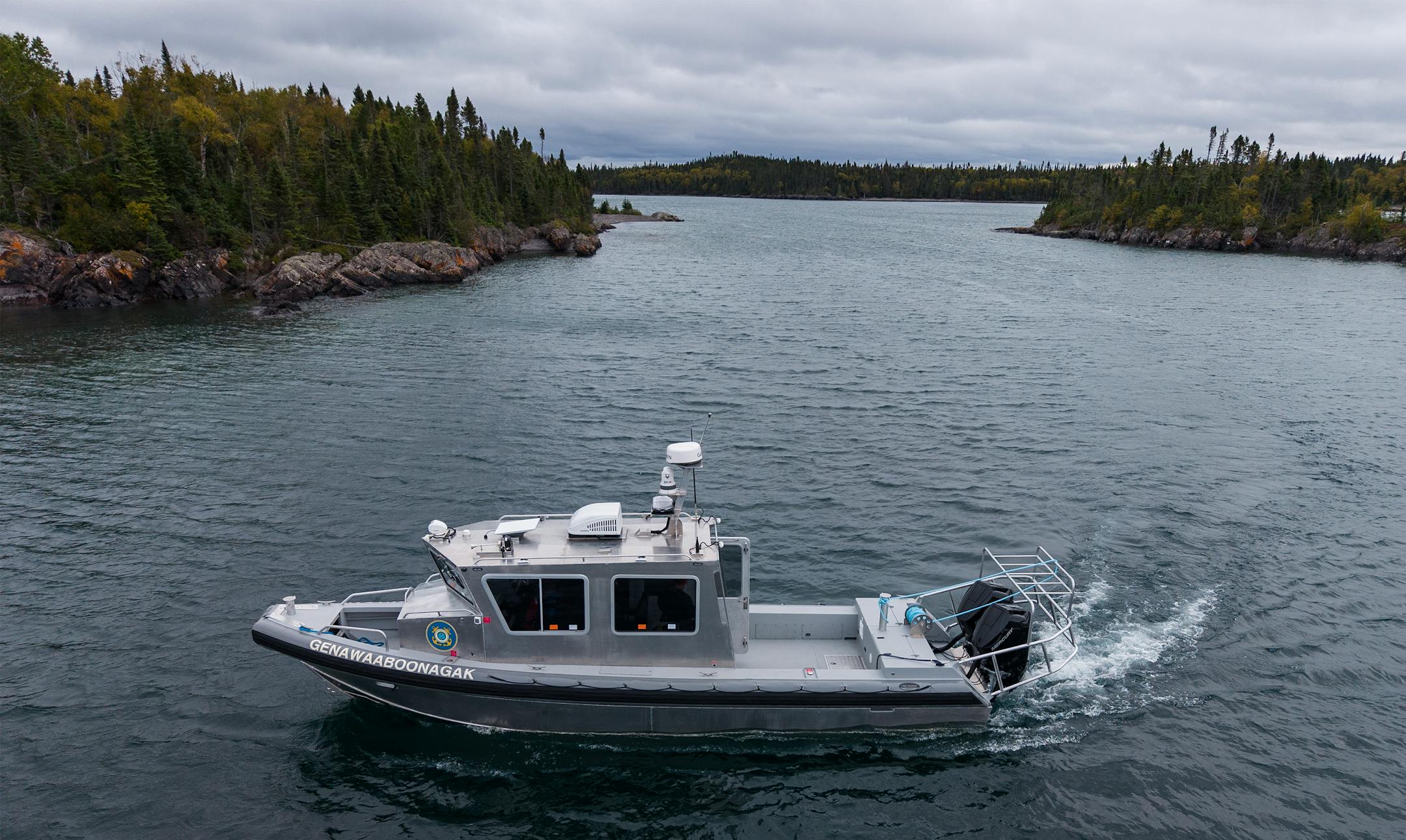
GRAND PORTAGE, Minn. – An SOS came barely a day after delivery of a new marine rescue boat to the Grand Portage Reservation — a 25-footer near the Rock of Ages Lighthouse off Isle Royale had lost propulsion in waves swelling up to 7 feet.
A Grand Portage Band of Lake Superior Chippewa rescue crew headed out Sept. 6 on what became a six-hour operation towing the boat and its four passengers successfully back to land in choppy waters.
It was the maiden rescue for what the tribal nation says is both the first Indigenous marine rescue unit in the United States and the first partnership of its kind with Cook and Lake counties. Born from the void left in Grand Marais with the closure of its U.S. Coast Guard Station in 2022, four custom vessels will soon cover the section of Lake Superior between the Ontario border and Duluth.
“That is a vast amount of water” that lost search and rescue capabilities, said Seth Moore, Grand Portage natural resources department director.
And it’s especially critical given the nature of Lake Superior.
“You have to give this lake some respect, because it can change in a heartbeat and it can change drastically,” said Cook County Sheriff Pat Eliasen.
The Duluth, Houghton, Mich.-area and Marquette, Mich., Coast Guard stations are simply too far away to reach most of the region’s emergency situations in time, especially in dangerous conditions, Moore said.
The boats Grand Portage has been using have helped them get by, but aren’t built for rescues. When the Michipicoten, a 700-foot-long taconite-hauling freighter, took on water near tribal waters last year, the band’s boats were not equipped to help evacuate, and they didn’t have the capacity to mitigate any potential hazardous spills the way they do now. A National Park Service crew from Isle Royale and the Coast Guard evacuated several passengers, and the freighter made it to Thunder Bay on its own to begin repairs.