

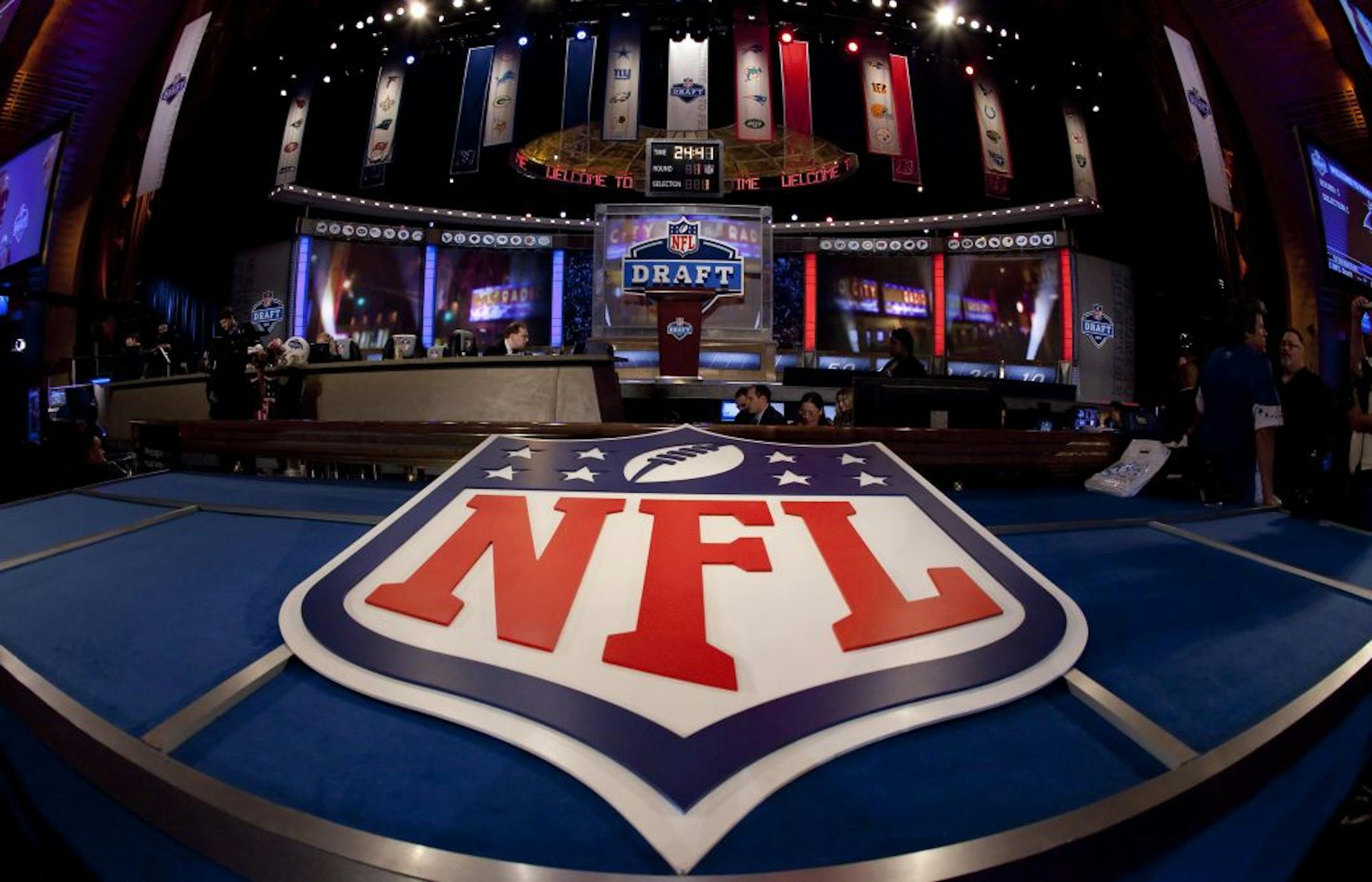
Once upon a time, in a world far different from ours, professional football drafts were held as people tended to other matters. Players were chosen without fanfare; without hugs from the commissioner; and without the instant analysis of 42 million television viewers with couch sores from watching seven rounds extended over not one but three days.
"My first job in football, I'm 13 or 14 years old and I'm a runner during the AFL draft in the early '60s," said Joe Horrigan, a vice president of the Pro Football Hall of Fame. "There were 28 rounds or whatever it was. And it was all held in one day, so I'm running the streets of New York at all hours of the morning."
It wasn't exactly glamorous work.
"I'd sit in [AFL Commissioner] Joe Foss' office until teams called their picks in to him," Horrigan said. "Every round, he'd write the picks on a sheet of paper, stick it in an envelope and hand it to me. I'd run over to the Waldorf Astoria to a room with maybe half a dozen newspaper reporters in it. I'd hand them the sheet of paper and, well, that was it."
The NFL wasn't any different. No Chris Berman. No squadrons of former players to break it all down. Heck, there wasn't even a senior version of Mel Kiper Jr.
The draft has come a long way since it was born in 1936. Player evaluation began to evolve in 1963 with a rudimentary precursor to today's scouting combine. Then came the 1970s and a Pittsburgh Steelers team that validated the increased emphasis on the draft by masterfully hand-picking the pieces that would form one of the most dominant dynasties the league has ever seen.
Things were progressing off the field, too. On Sept. 7, 1979, ESPN was launched. A few months later, the network asked then-commissioner Pete Rozelle if it could televise the 1980 draft in its entirety. Rozelle's answer -- "Why would you want to do that?" -- proved that not even a true league visionary could have anticipated this much hype.
Let history show ...


