

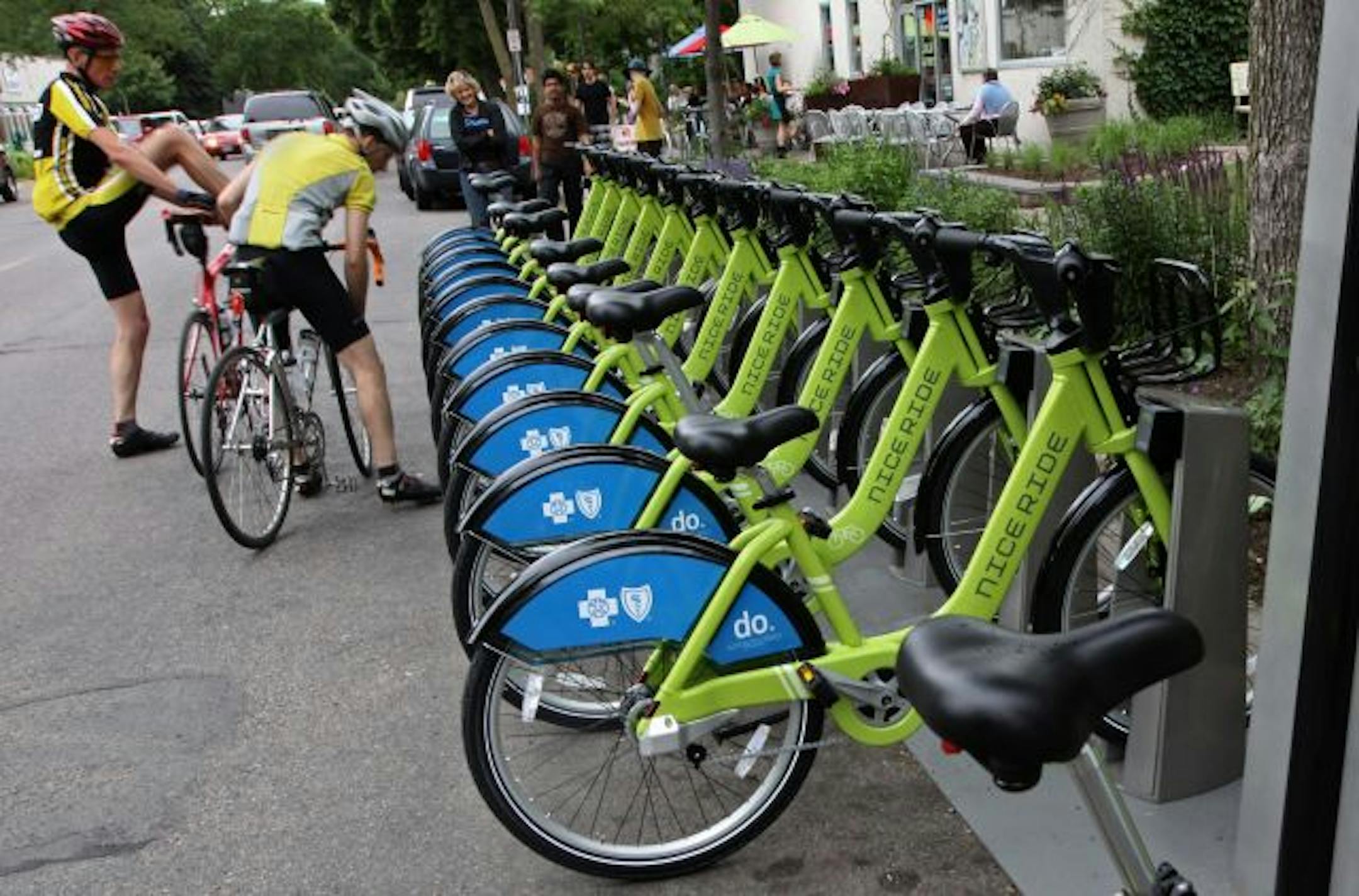
There are more bicycles in Minneapolis, but fewer bicycle-vehicle crashes. Think about that. The number of regular bicycle commuters has doubled in two decades, but the number of reported crashes has held steady at roughly 300 a year. How can this be?
A lot of the credit goes to the folks in the driver's seats. Bicycle awareness has increased as bicycling has become more widespread. Because many of us (including me) both drive a car and ride a bike, it is easier to see the world from behind a windshield and behind handlebars.
Creating a bike-friendly city has also helped. It alters the expectation of drivers and leads to the counterintuitive conclusion that more bikes equal safer streets.
A study of 68 California cities found that a motorist is less likely to collide with a person walking and bicycling when there are more people walking and bicycling. Intersections tended to be safer when there were more bicyclists and during peak cycling hours. This trend is particularly noticeable in Minneapolis. The streets that carry thousands of bicyclists each day have lower bike-vehicle crash rates than streets with fewer bicyclists.
While part of the solution to safer bicycling is more bicycling, it is not the entire solution. Minneapolis is ready for the 2.0 version of bicycling in which drivers and bicyclists alike are educated that the primary means of crash prevention happens through the individual choices people make on the road and trail. The Minneapolis Public Works Department has discovered three major findings by analyzing 3,000 bicyclist-motorist crashes from 2000 to 2011:
• First, there is no need for finger-pointing. Improved safety starts with all of us. Bicyclists and drivers are equally responsible for bicycle crashes in Minneapolis. Bicyclists contributed to 59 percent of crashes, while motorists contributed to 64 percent. (Sometimes both parties are to blame, which is why those figures add up to more than 100 percent.)
• Second, bicyclists can contribute to safety by following the rules and riding predictably. Most of us have been behind a red light and have seen a bicyclist weave through travel lanes, move to the front of the pack and run right through that red light. This tests our sense of fairness and can lead to crashes and injuries. One in three bicycle-vehicle crashes in Minneapolis are the result of a bicyclist running a red light, riding against traffic or failing to yield.
• Finally, drivers can contribute to safety by slowing down and watching for bicyclists. If you've biked along a street, you've likely had a car pass, then cut you off by making a turn right in front of you. This also tests our sense of fairness and, worse, leads to crashes. Two out of every five bicycle-vehicle collisions in Minneapolis are due to drivers not seeing or yielding to bicycles.


