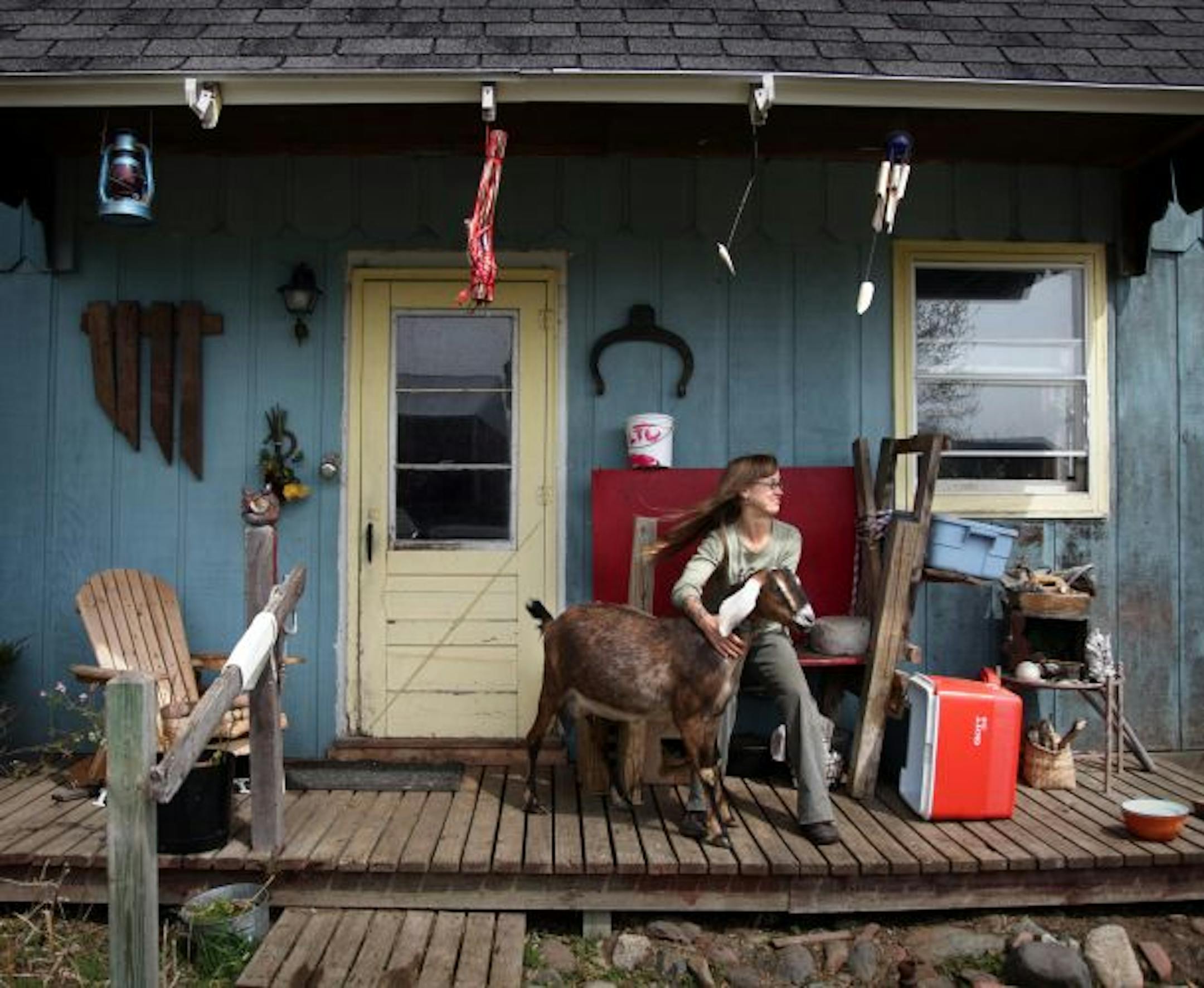
Like a lot of working people, the first thing Khaiti Khaleck does when she gets up is make some coffee. After that, her day goes to the birds -- and a bunch of other critters.
"First I have to collect the duck eggs, no later than 5 a.m. or the crows will steal them," she said. "Then I have to feed, water and love up the ducklings, turkeys, goats, chickens and dogs, and play with the pigs a little. Then water the garden, milk the goats, then go make goat-milk soap and some feta."
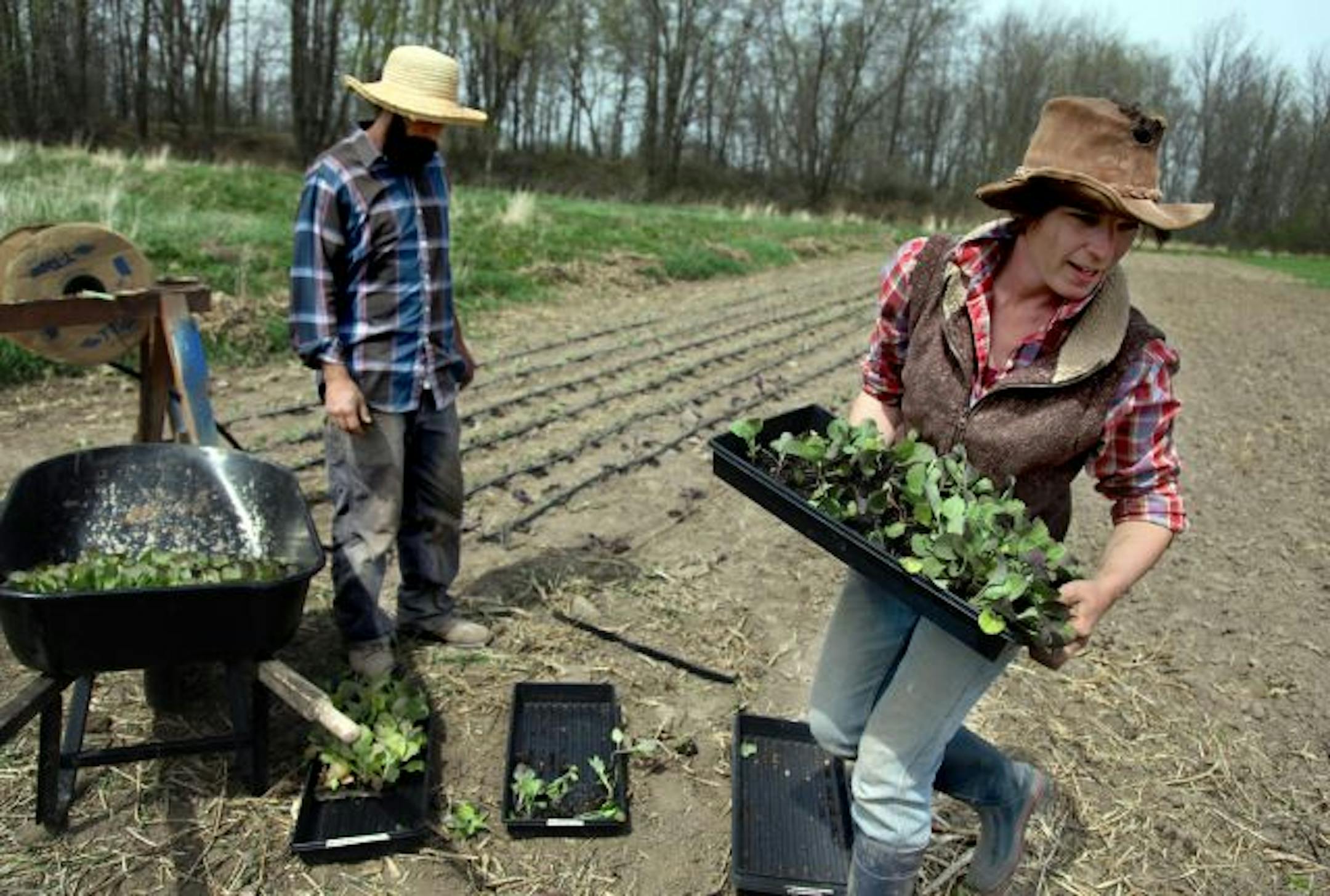
Khaleck, chief mother hen at tiny Living the Dream Farm outside Osceola, Wis., is one of a growing number of young adults who are ditching city careers in favor of the farming life -- the small, sustainable-farming life, that is.
For decades, rural families have worried about losing their young folk to urban temptations; 40 percent of farmers today are 55 or older.
But as the eat-local movement has mushroomed in the past several years, so have community-supported agriculture (CSA) farms, which provide weekly deliveries of produce, eggs and sometimes meat to nearby city dwellers.
Wisconsin ranks second among the states in number of organic farms, with 1,222, according to the USDA's first national survey of organic farmers, released in February. Minnesota is seventh with 550.
Twenty years ago, only two CSAs served the Twin Cities. This year, nearly 60 are listed with the Land Stewardship Project, a Minneapolis nonprofit that promotes and supports sustainable-agriculture efforts.
Keeping pace with enthusiasm for farmer-delivered foodstuffs is Generation Y's attraction to working the land. Many CSAs offer apprenticeships to greenhorns eager to trade in cubicles and team meetings for open sky and loamy soil. Some do it as a one-time-experience summer job, others with an eye toward a permanent livelihood.