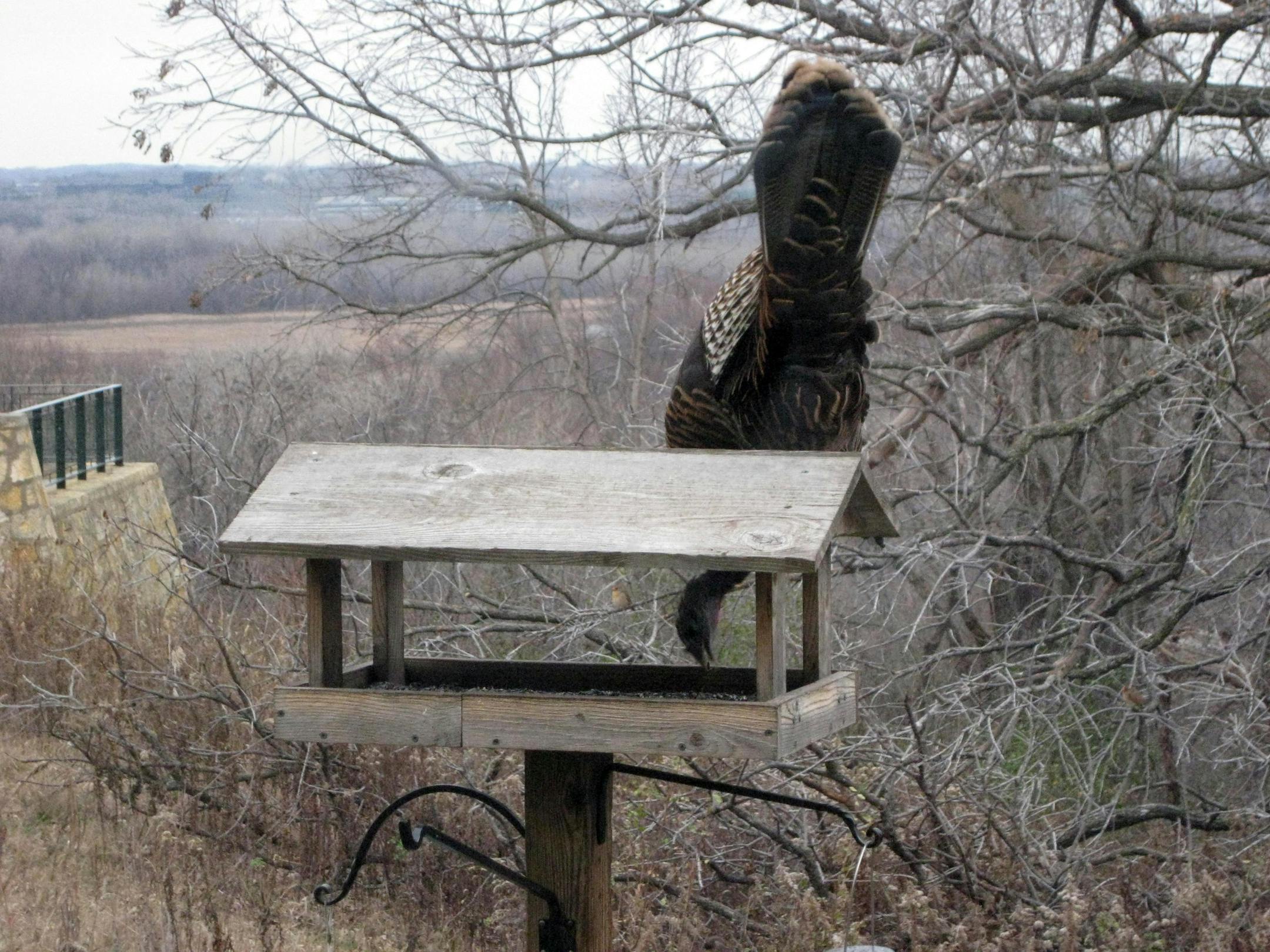
Lisa Stanford and her family were sitting down to Thanksgiving dinner at her mother's house in Bloomington a few years ago when they looked out the big window and witnessed a different sort of Turkey Day celebration in the back yard.
As they were preparing to dig into the roasted bird on the table, 15 wild turkeys boldly strutted around the bird feeder "as if to say, 'Nyah! Nyah! Nyah!" Stanford said. "The irony didn't go unnoticed."
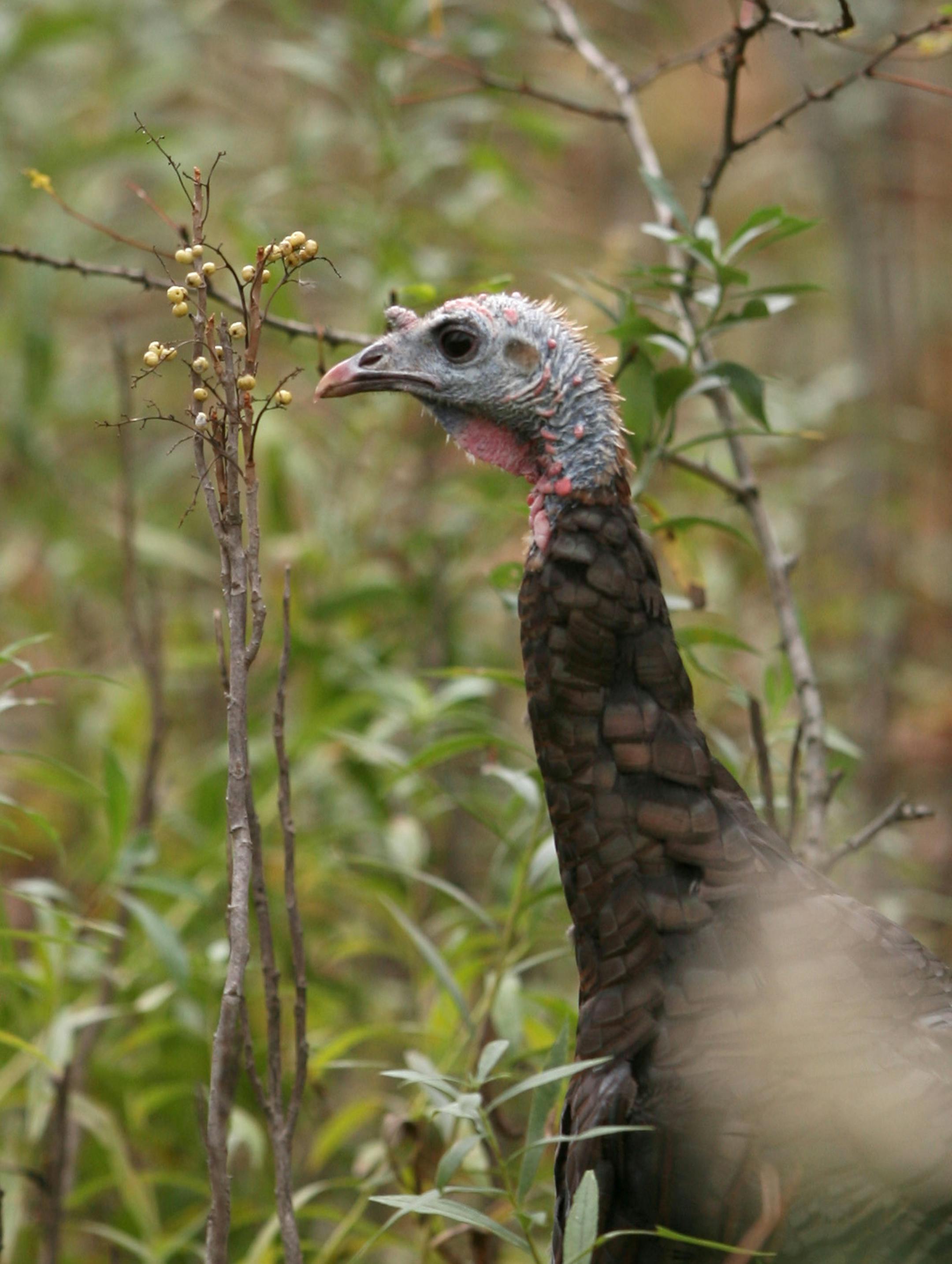
The restoration of Minnesota's wild turkey population is one of the state's great conservation success stories, according to the Department of Natural Resources. Thirty years ago, there were just a few birds in the state. Today there are tens of thousands, from Duluth down through the metro area to the Iowa border.
In the past two weeks, a gang of turkeys stripped crab apple trees on the grounds of Bloomington's airport Hilton Hotel of their fruit. Turkeys walk through back yards in Eden Prairie, eat grit on roadsides by Bush Lake and last year, pecked at car tires and chased children in Blaine and Maple Grove. In 2005, a turkey sunned itself on the busy brick plaza of Hennepin County Government Center in the heart of Minneapolis.
The birds are still rare enough that most people get a thrill when they spot one. Turkeys are unlikely to become the urban pest that Canada geese are, said Bryan Lueth, DNR wildlife officer for the metro area that includes Ramsey, Dakota and much of Hennepin County.
"They're a lot like other nuisance urban wildlife," Lueth said. "They're sort of generalists that do well as long as they have access to food. ... In urban areas, predators are almost nonexistent, except for coyotes. We leash our dogs. Turkeys learn that humans aren't much of a threat and they learn to ignore us."
But the birds don't do well in winters when the snow is deep. The high populations in the metro area may partly be linked to snow-scarce winters when turkeys could easily find acorns and other food on the ground where they feed, Lueth said.
On the rebound