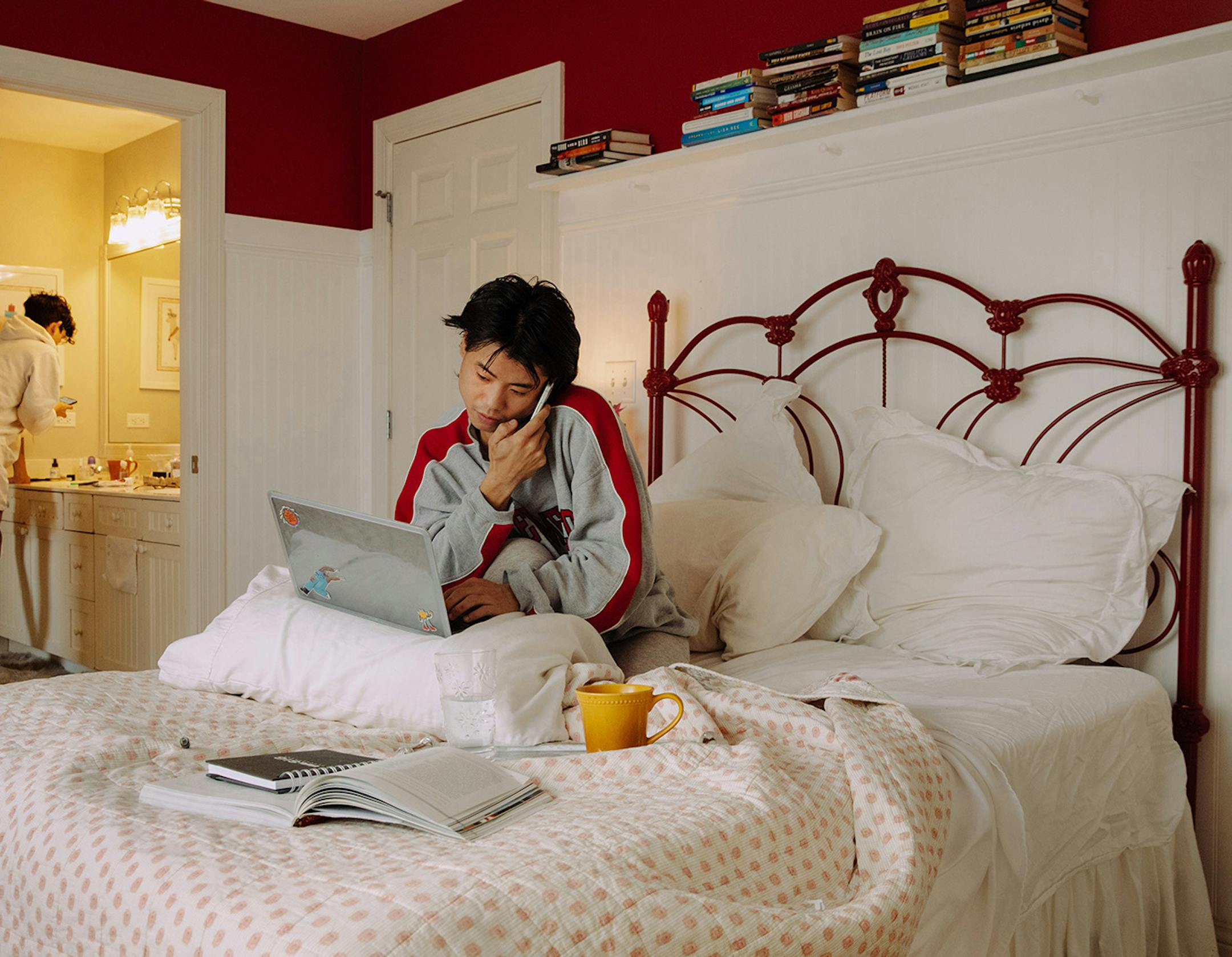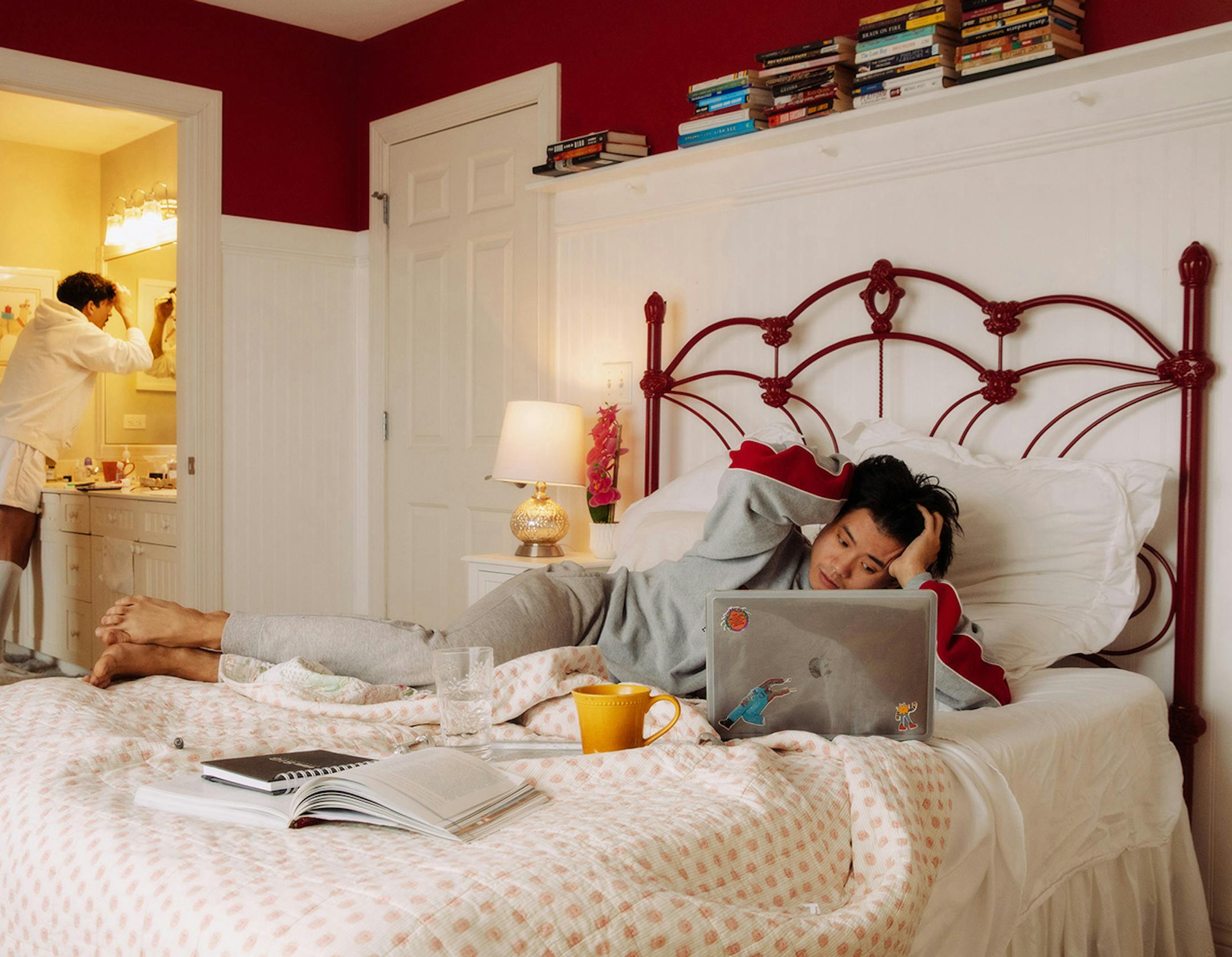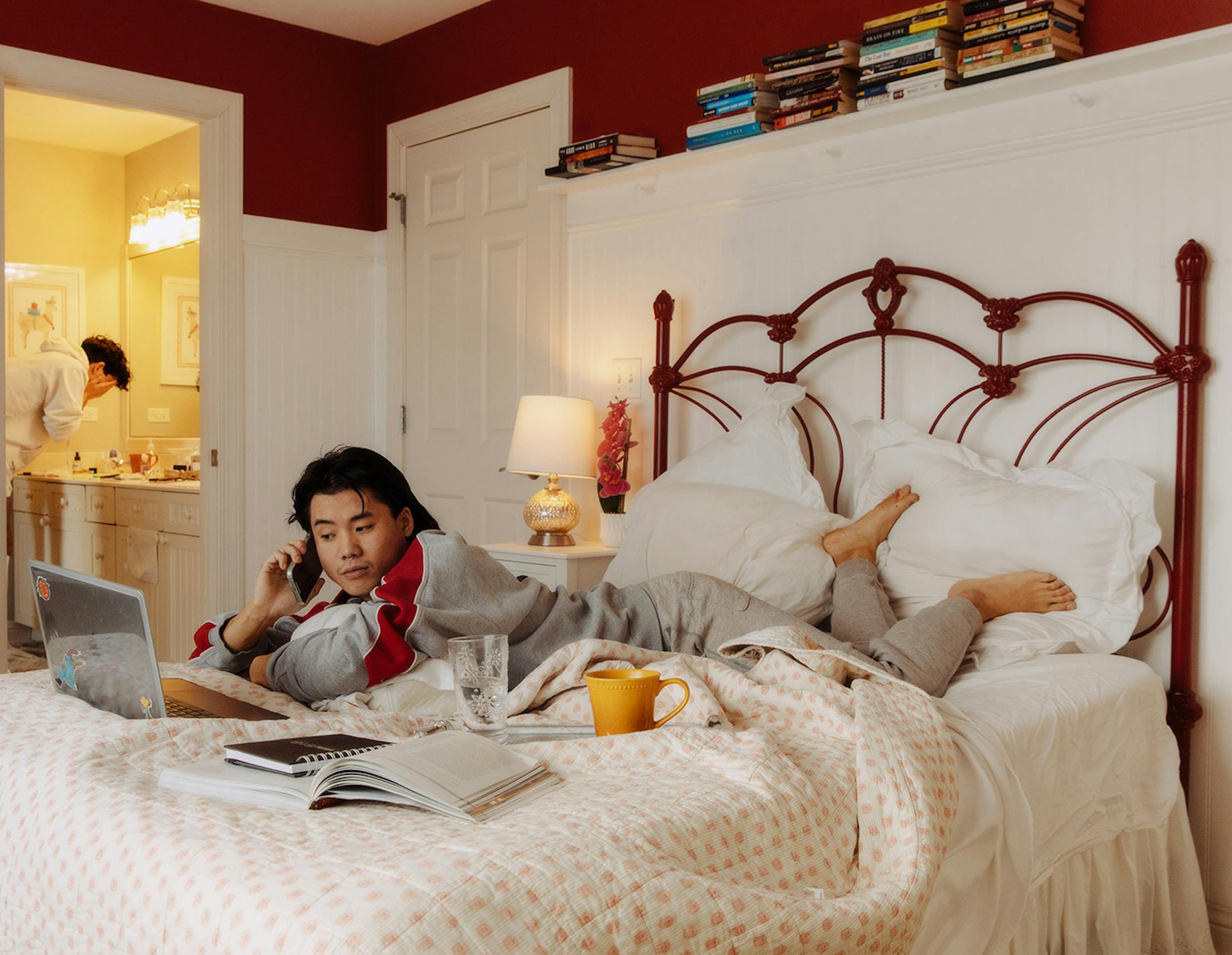
For years, sleep experts have held one piece of common wisdom above all else: Don't work from bed.
Yet since the pandemic began in March, millions of Americans have defied that guidance. They are drafting legal documents, producing events, holding client calls, coding, e-mailing, studying and writing, all from under the covers.
This wasn't always the plan. Early on, many of them invested in desks and other equipment meant to make their homes as ergonomically sound and office-like as possible.
When New York City shut down in March, Vanessa Anderson, 24, set up a desk for herself in her living room. She was working for an agency that manages private chefs and wanted to keep some semblance of separation between work and sleep. "For a while I was really committed to not working from my bedroom at all," she said.
In May, Anderson moved her desk into her bedroom for more light. "My bed was just sitting there, taunting me," she said. She set ground rules for herself: She'd get in bed only after 2 p.m., but that start time gradually moved earlier. By July, her bed had become her full-time office.
Talking to others, she's discovered how commonplace the practice is.
"I've been on calls with people where we were both in bed," she said. "At the end of the call it's like, 'How's the pandemic going? Oh, you're in bed right now, too? So am I!' "
Working from bed was embraced by some of history's most accomplished figures. Frida Kahlo painted masterpieces from her canopy bed. Winston Churchill, a notorious late riser even during World War II, dictated to typists while breakfasting in bed. Edith Wharton, William Wordsworth and Marcel Proust drafted prose and verse from their beds.