

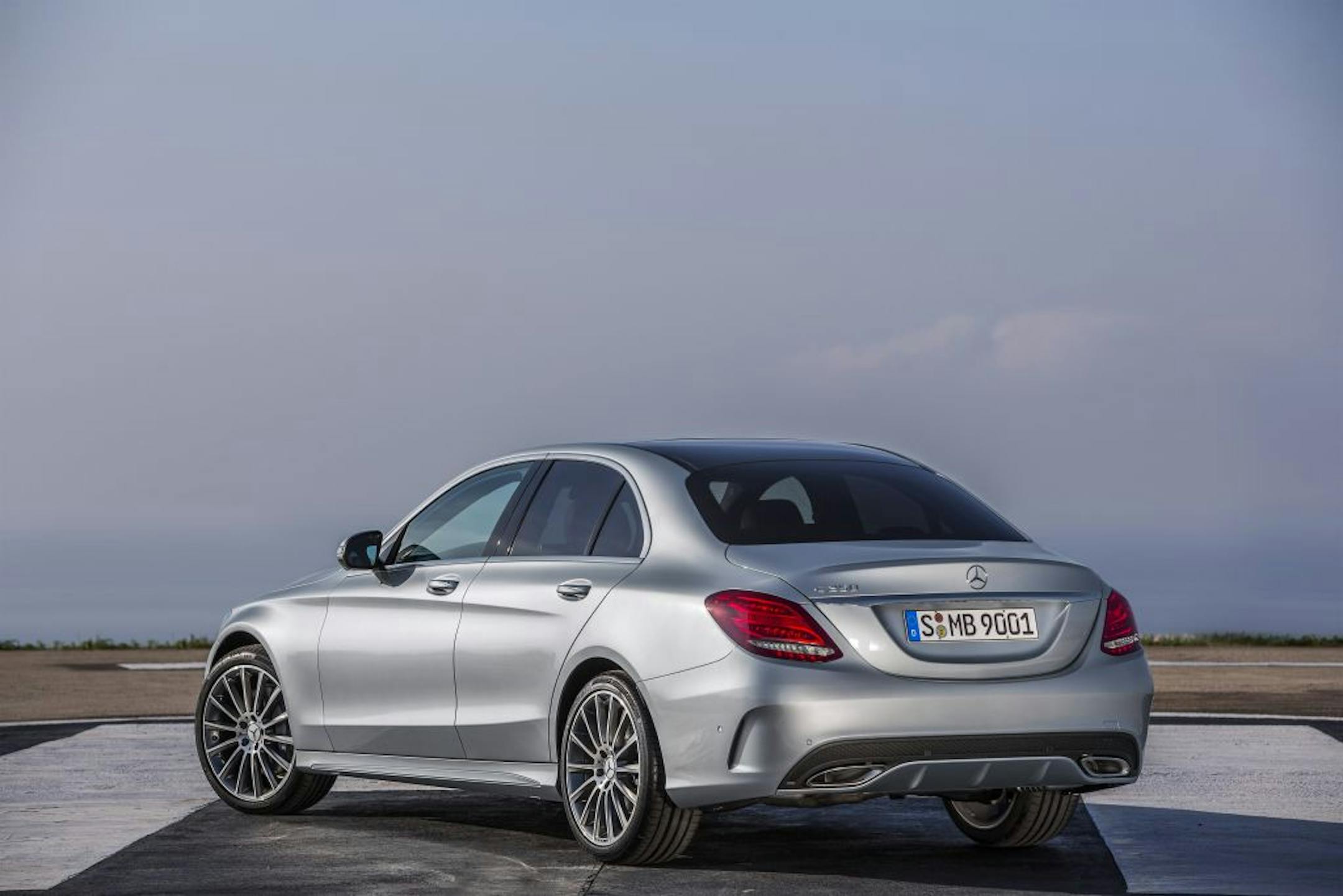
Mercedes-Benz has always had its particular mojo. Made up of precise engineering, often impressive quality, an epic racing history and a few Nazi parade cars, this mojo was scalable. Even the most ordinary diesel-powered Mercedes taxicab in Stuttgart had the same recognizable Germanic vibe as an SL roadster touring the Riviera or a Unimog multipurpose vehicle tilling a farm. A big Mercedes felt like a little Mercedes and also like all the Mercedeses in between.
But that mojo has been rattled lately. There are now so many Mercedes — the company sells five SUV models in the United States alone — that some dilution of the mystique can't be helped.
The company calls some of its four-doors coupes; there are hybrids and electrics to go with the diesels and gas burners; and when the cable guy comes over to rig up the Wi-Fi, there's a good chance he'll pull up in a Mercedes Sprinter van. Worst of all, there's the front-drive CLA "four-door coupe" that occupies the bottom of the lineup and drives an awful lot like a Hyundai Sonata with worn shocks.
Then, just when it seemed as if the Mercedes faithful would have to get used to the creeping ordinariness, along comes the 2015 C-Class sedan to restore the balance in the Benz universe. This is a real Mercedes: overengineered, overbuilt, somewhat overpriced — and over here.
At its core, the new C is a conservatively engineered car. Like the three previous generations of the C-Class (and the 190 series that preceded it), it's based on a straightforward steel structure with some aluminum panels and a rear-drive chassis. That means the engine sits under the hood longitudinally — north/south — feeding the transmission bolted behind it and then the rear wheels. However, at least initially, the two C-Class sedans currently offered here, the C300 and C400, will feature the 4Matic all-wheel-drive system that Mercedes offers on most of its vehicles. A rear-drive version of the C300 will go on sale early next year.
The C300 is powered by a two-liter turbocharged four-cylinder rated at 241 horsepower, and the C400 has a twin-turbocharged three-liter V-6 knocking out 329 horsepower under its hood. Both engines feature direct fuel injection, variable valve timing and other technologies aimed at ensuring plenty of torque at low engine speeds. And low-end torque is what they deliver, with the C300's four-cylinder producing a constant 273 pound feet from 1,300 to 4,000 rpm, while the C400's 6 makes 354 pound feet from 1,600 to 4,000 rpm. Each uses a seven-speed automatic transmission.
New four-link suspension systems, front and rear, hold up the new C-Class. A self-leveling air suspension with driver-selectable ride modes can be added as an option. Variable-ratio and variable-assist electric-power steering is also part of the mechanical package.
Most of the technology available on the S-Class can now be found on the C, either as a standard feature or an option. This includes the Intelligent Drive suite of technologies including standard Attention Assist, which monitors the driver for inattentive or drowsy behavior and can use the optional navigation system to suggest a rest stop. There's also an available Enhanced Active Lane Keeping Assist that can nudge the car back into its lane by applying the brakes on one side.


