

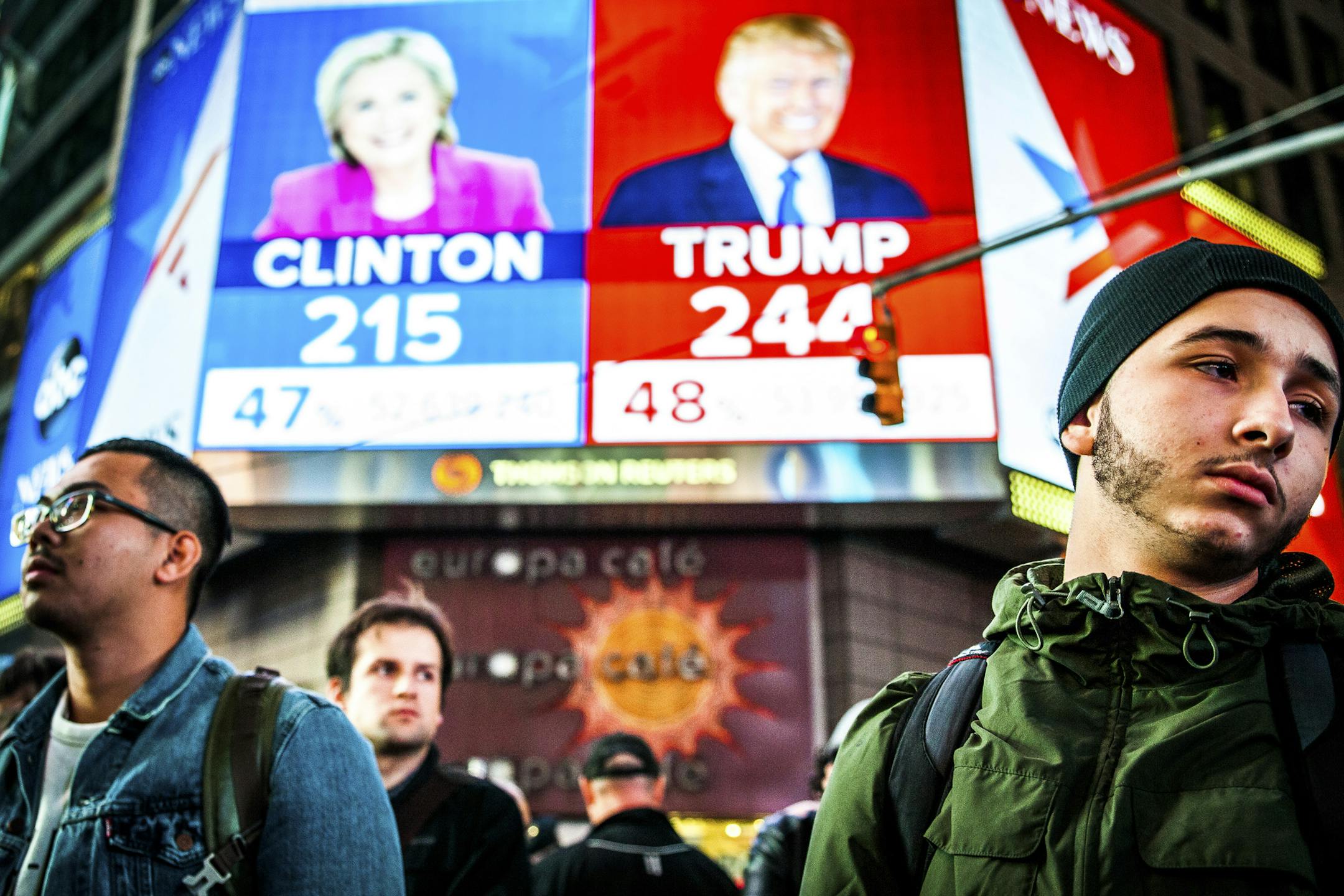
The 2016 election of President Donald Trump stirred many passions, not least heightened hostility to the Electoral College. A similar Trump win in 2020 would of course intensify that attack.
Such a victory would mark the fifth time in our history that a Democratic Party candidate was denied the presidency despite winning the popular vote. Would-be presidents Samuel Tilden (1876), Al Gore (2000) and Hillary Clinton (2016) all won the popular vote only to be defeated by failing to win a majority in this creation of our constitutional founders. The same fate befell incumbent President Grover Cleveland in 1888.
Does this mean that the founders had it in for Democrats right from the get-go? Not at all. There were no political parties when the Constitution was being drafted. And therein lies an important tale.
Democrats have in each case been tempted to declare Presidents Rutherford B. Hayes, Benjamin Harrison, George W. Bush and Donald Trump illegitimate, because each lost the popular vote. And yet each Electoral College victory confirmed a piece of the founders' wisdom.
The Electoral College was created for essentially two reasons. The first was to assure that the presidency would be occupied with someone who had general appeal throughout the country. As one of the authors of the Federalist Papers, John Jay, put it, the office of the presidency was designed to be occupied by leaders of the "most diffuse and established character." A presidential candidate who won the popular vote merely by carrying an overwhelming margin in a particular portion of the country was not what Jay had in mind.
But the creators of the Electoral College had another purpose as well, to put in place a kind of filtering system. The Constitution provides that if no candidate wins a majority in the Electoral College the final arbiter is the House, where each state delegation will cast a single vote.
That outcome did not seem unlikely to the founders. So why were they wrong? Why have so few presidential elections wound up in the House? What interfered with this piece of the plan to assure that presidential power would always wind up in the hands of those of the "most diffuse and established character"?
The answer is political parties — specifically, a two-party system.


