

Opinion editor's note: Star Tribune Opinion publishes a mix of national and local commentaries online and in print each day. To contribute, click here.
•••
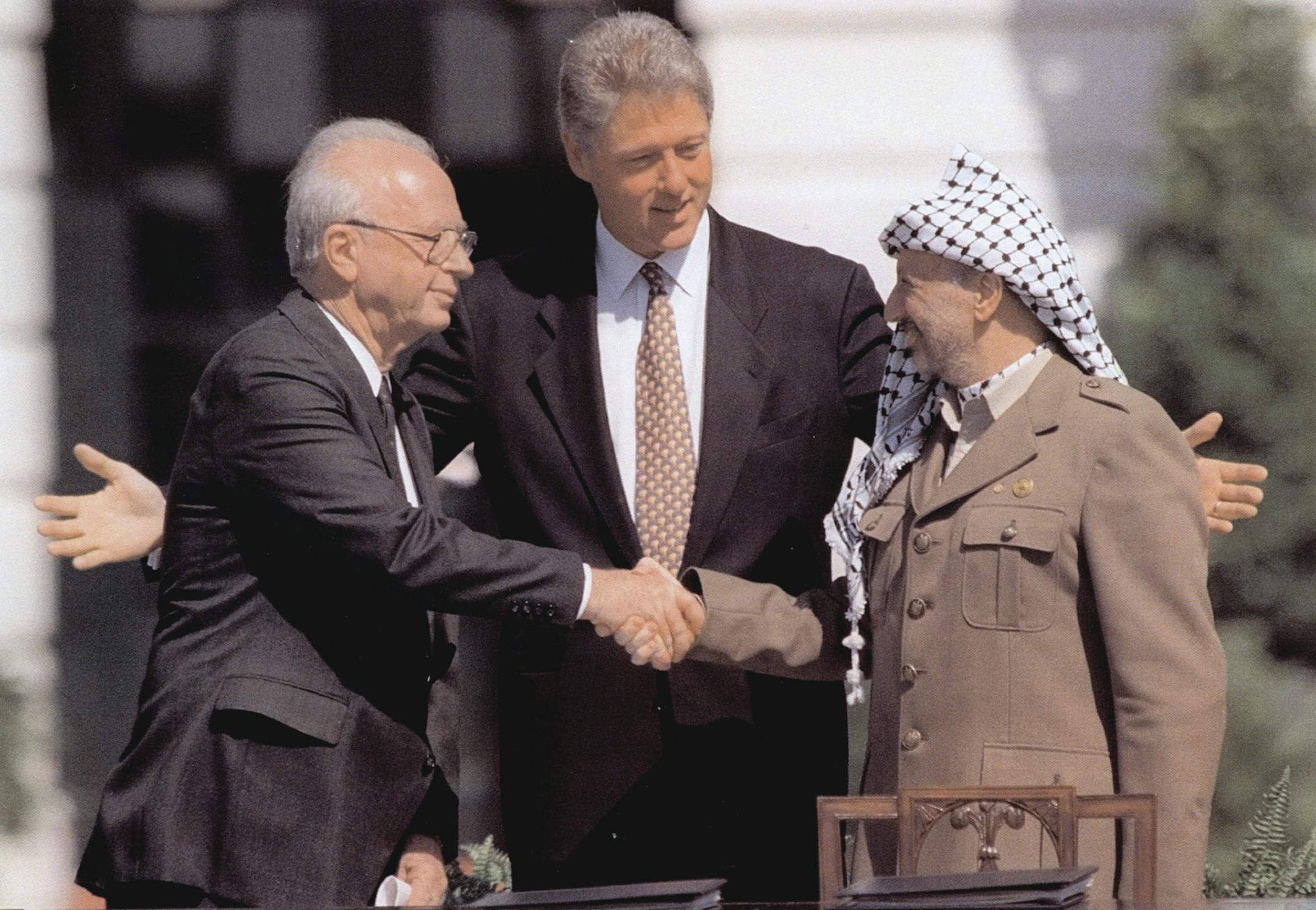
Thirty years ago this week, on Sept. 13, 1993, I sat on a folding chair in the sunshine on the White House lawn, along with 3,000 other witnesses, watching President Bill Clinton nudge a reluctant Israeli prime minister and the ebullient chief of the Palestine Liberation Organization into shaking hands.
The occasion for the world-famous clinch between Yitzhak Rabin and Yasser Arafat capped the signing of the Oslo Accords. Secretly negotiated in Norway, they set out a declaration of principles that mapped a potential pathway to the end of conflict between Israeli Jews and the Palestinians, with self-determination for the latter.
People have been predicting Oslo's failure since that handshake.
I think the accords still had a chance until about the year 2000. Since then, with brief resuscitations, Oslo has mostly been on life support — with deep wounds inflicted by both sides.
The coup de grace may have been delivered by the current Israeli government with its open policy of de facto annexation of the West Bank into one apartheid-like Israeli state — in which Palestinians are given minimal rights and are pressed to emigrate.
Yet, as I look back on decades of covering this story — and on my three weeks in Israel and the West Bank in April — I can recall why Oslo might have succeeded, why its prospects died, and why its ghost won't disappear.


