

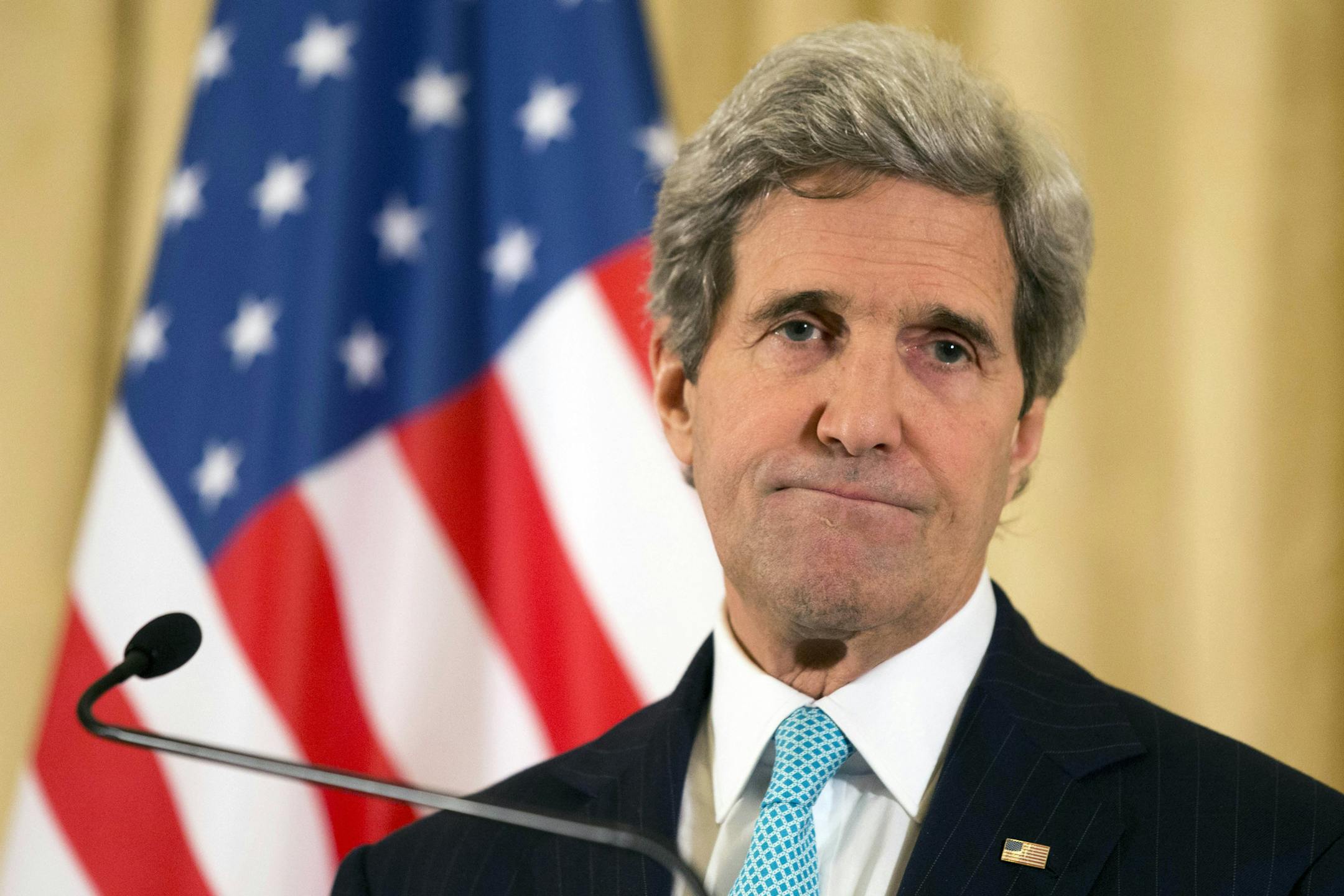
Why exactly did Secretary of State John Kerry's well-intentioned effort to reach an Israeli-Palestinian agreement fail?
In a fascinating postmortem, unnamed American officials involved in the negotiations told Israeli journalist Nahum Barnea the following: "There are a lot of reasons for the peace effort's failure, but people in Israel shouldn't ignore the bitter truth — the primary sabotage came from the settlements."
If you believe that, I have a bridge over the mighty Jordan River to sell you.
Nobody doubts the destructive impact of settlement activity. It prejudges and predetermines the outcome of negotiations, humiliates Palestinians and sends unmistakable signals that Israel has other agendas to pursue. And if we're talking about the failure of Kerry's effort to secure a relatively meaningless extension of the talks, I don't doubt the explanation.
But let's be clear: Kerry's peace process didn't fail primarily because of settlements. It has been on life support from the beginning, and here's why.
• The mini/max problem: Simply put, the maximum that Israeli Prime Minister Benjamin Netanyahu is prepared to give on the core issues that drive the Israeli-Palestinian conflict can't be aligned, let alone reconciled, with the minimum that Palestinian Authority President Mahmoud Abbas is prepared to accept. You want to know why every effort in the last decade has failed? That's why.
The gaps on Jerusalem, borders, security, refugees and recognition of Israel as a Jewish state are simply too big to bridge. They are not amenable to being resolved gradually and not feasible as a package of trade-offs that both sides can accept. We can rationalize, and blame one side or the other. But the price for a conflict-ending agreement is simply too high for each side to bear.
• Courting Bibi: The idea that Netanyahu is ready to pay the price and could be persuaded to do so was a fundamental misunderstanding of the man and his times. Now the second-longest continuously serving prime minister in Israel's history, Bibi never envisioned himself as the midwife or father of a Palestinian state. That's not who he is. Ideology, family, politics and his fears of the Arabs all drive him in a different direction.


