

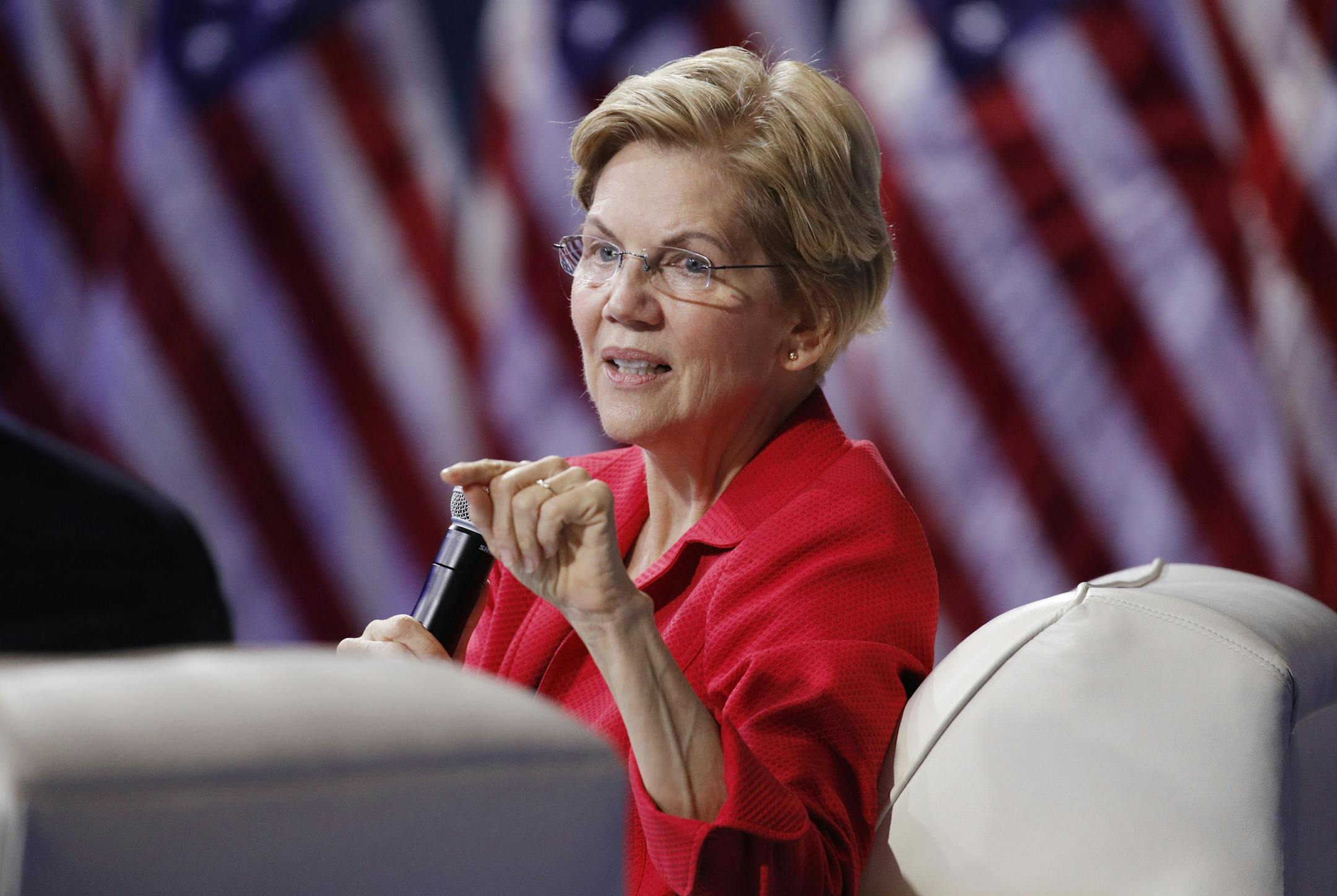
Elizabeth Warren took a pounding in the recent Democratic debate for her lack of candor on Medicare for All. Asked whether it would require the middle class to pay more in taxes, she was a study in wriggly evasion. But that was no surprise. The selling of Medicare for All depends on a large amount of deception.
The name itself is deeply misleading. The "for all" part may be accurate, but the "Medicare" is not.
It would be hugely ambitious to take the existing program and expand it to include everyone, not just seniors. But Bernie Sanders' proposal, which Warren co-sponsored, is to Medicare what a tiger is to a house cat. They have obvious similarities, but it would be dangerous to confuse the two.
To begin with, their plan is extravagantly generous. In his vision, Sanders boasted in the debate: "Premiums are gone. Co-payments are gone. Deductibles are gone. All out-of-pocket expenses are gone." Medicare, by contrast, has those features, which serve to restrain not only federal spending on health care but all spending on health care. Medicare for All would also cover things that Medicare doesn't — vision care, dental care, hearing aids and long-term care.
These are major changes that would greatly increase the cost of providing universal coverage. The government would have to start paying expenses that patients previously had to pay — not only the patients who would gain coverage but also those already on Medicare.
Right now, a study by the Mercatus Center at George Mason University noted, "40% of national dental care expenses are paid out of pocket," with Medicare paying almost none. Under Medicare for All, the government would cover them all.
The second consequence would be to stimulate consumption of medical care. If the cost of seeing a doctor, getting an X-ray or trying some mildly promising therapy is zero, the demand for such services will jump. That would lead to yet another effect: longer wait times for appointments — because the immediate supply of doctors and dentists would remain the same.
A recent study by the Urban Institute and the Commonwealth Fund estimated that a single-payer program providing the same benefits as the Affordable Care Act would boost federal outlays by $1.52 trillion in 2020. But expanding benefits and eliminating premiums, co-payments and deductibles, as Sanders and Warren propose, would carry a price tag of $2.8 trillion.


