

Tom Stoppard's wrenching drama "Leopoldstadt," which I recently saw on Broadway, begins in 1899 at a Christmas party in the Vienna apartment of Hermann Merz, a prosperous and assimilated Jewish businessman, who is married to a Catholic and nominally converted. Merz is convinced that the antisemitism that plagued his forefathers is fading into the past.
There's still plenty of anti-Jewish prejudice around, he acknowledges, but nothing comparable to what prior generations endured. His family socializes with aristocrats, patronizes the arts, worships high culture. "This is the promised land, and not because it's some place on a map where my ancestors came from," he says to his anxious and pessimistic brother-in-law. "We're Austrians now."
The rest of the play, which ends in 1955, chronicles how misplaced this confidence was. Seen in 2022 in New York — my own promised land — it felt like both an elegy and a warning. Jews are thriving in America, and even with the violent resurgence of antisemitism in the Trump era, I've rarely felt personally threatened, perhaps a function of my privilege. Over the past week, though, I'm reminded that well-off Jews in other times and places have also imagined that they'd moved beyond existential danger, and been wrong.
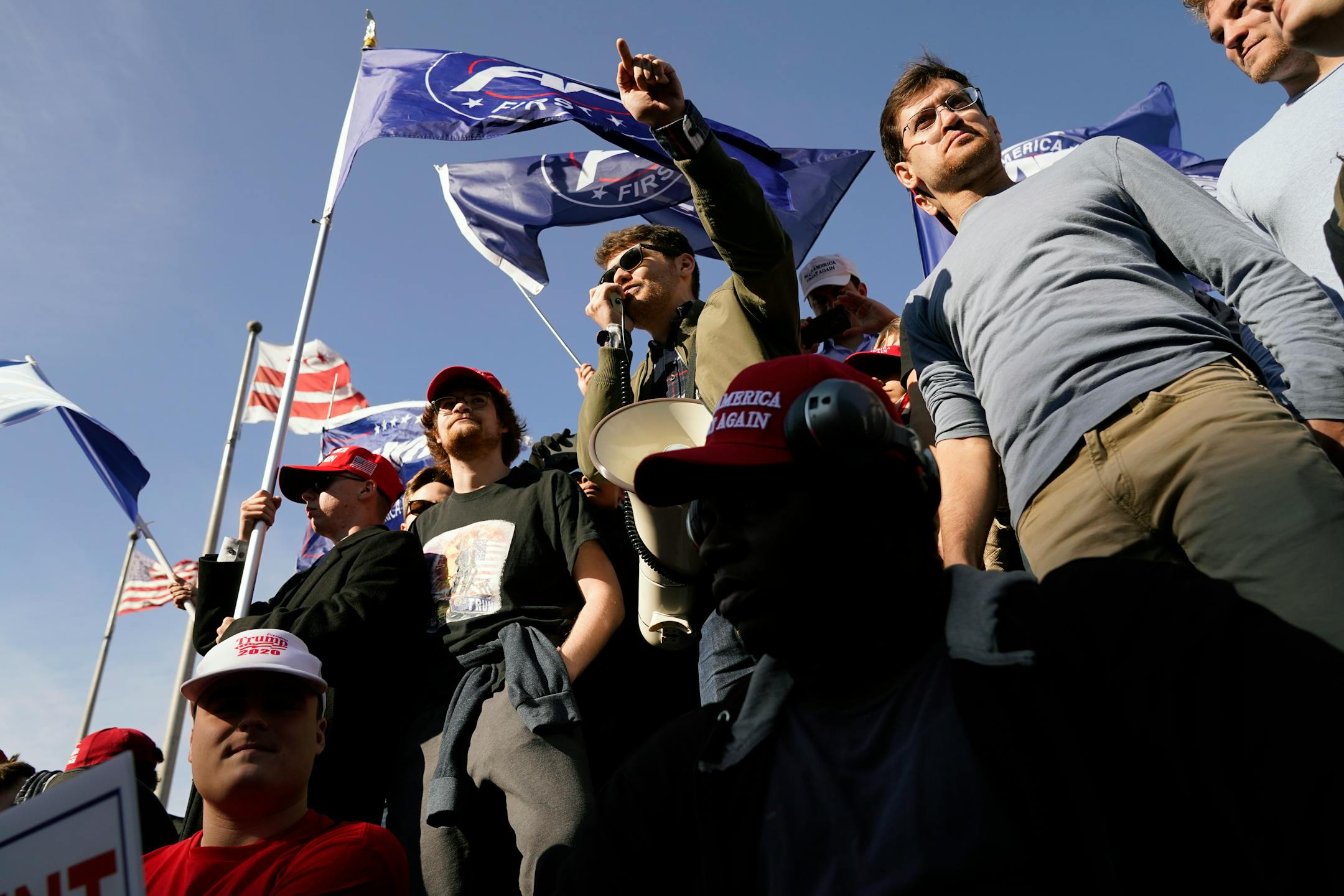
At this point, there is no excuse for being shocked by anything that Donald Trump does, yet I confess to being astonished that the former president dined last week with one of the country's most influential white supremacists, a smirking little fascist named Nick Fuentes. There's nothing new about antisemites in Trump's circle, but they usually try to maintain some plausible deniability, ranting about globalists and George Soros rather than the Jews. Fuentes, by contrast, is overt. "Jews have too much power in our society," he recently wrote on his Telegram channel. "Christians should have all the power, everyone else very little."
Fuentes was brought to Trump's lair by Ye, the rapper formerly known as Kanye West, who was evidently serious when he threatened to go "death con 3" on the Jews last month. (The relationship with West is a bit of a coup for Fuentes, who, openly wishing for conflict between Jews and Black people, has been willing to sublimate his anti-Black racism in the service of his antisemitism.) According to Axios, at one point during the dinner Trump turned to Ye and said of Fuentes: "I really like this guy. He gets me."
Since then, Trump has claimed he didn't know who Fuentes was. I find this unlikely. In September, I wrote a piece about a Trump-endorsed congressional candidate named Joe Kent that mentions Fuentes in the first paragraph. Trump scrawled a note of congratulations on the print version and mailed it to Kent, who sent the image out on his email list. But even if Trump's ignorance was sincere, he still didn't denounce Fuentes after learning his identity.
Most Republicans, in turn, spent days declining to criticize Trump, though former Vice President Mike Pence and several senators finally spoke out Monday. There is a good argument that politicians and journalists should avoid responding to every one of the ex-president's provocations. In this case, however, the reluctance to rebuke Trump erodes the already-shaky taboo against antisemitism in Republican politics.
Early this year, the Republican House minority leader, Kevin McCarthy — who could soon become House speaker — castigated Reps. Marjorie Taylor Greene and Paul Gosar for speaking at one of Fuentes' events. McCarthy's refusal to say anything about Fuentes' meeting with the Republican Party's most influential figure suggests that the boundary between the intolerable and the acceptable is shifting.


