
The lost art of communicating

As various Twitter fires burn, a radio legacy reminds us that it doesn't have to be this way.

October 11, 2022 at 11:02PM
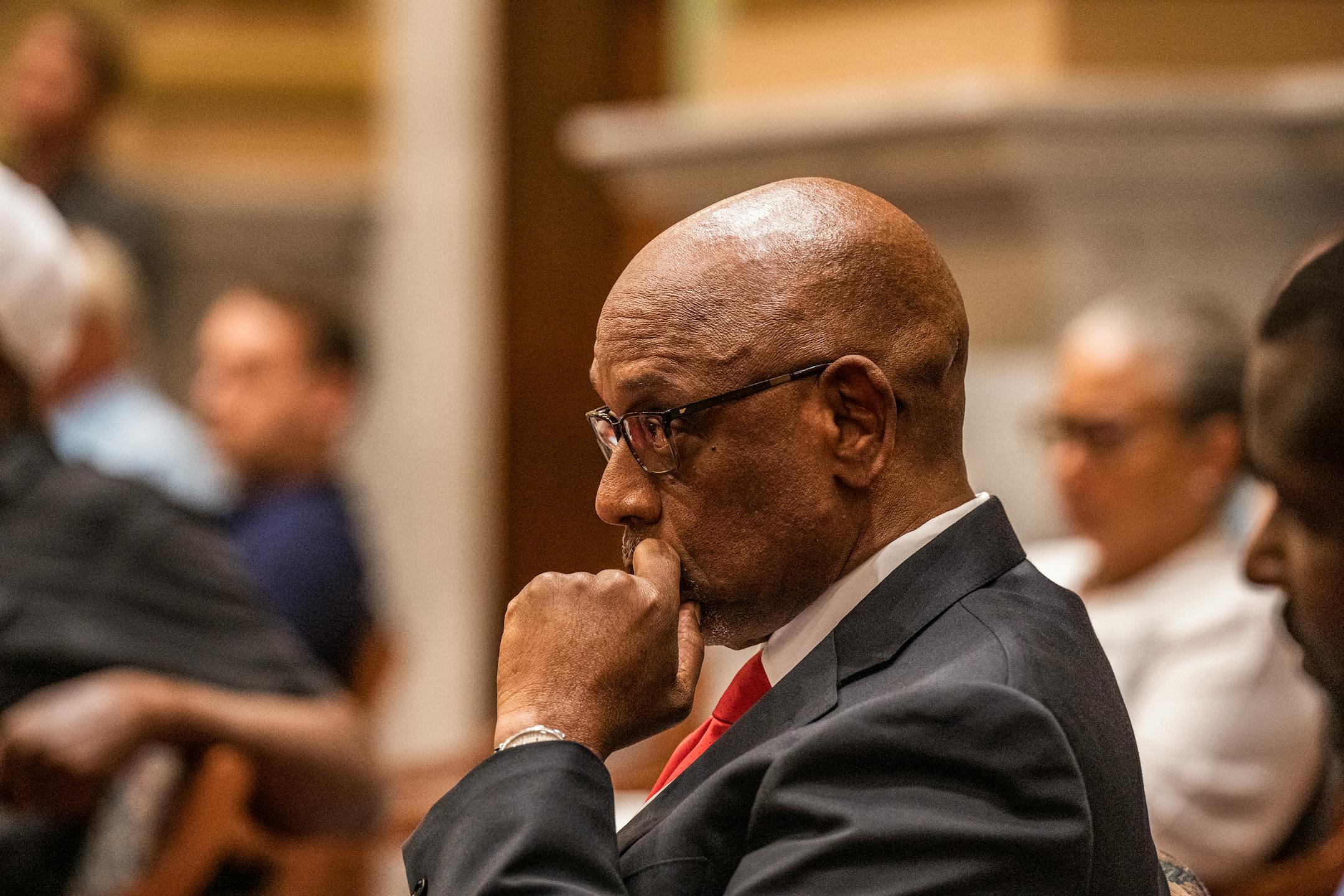
Cedric Alexander listens as the Minneapolis City Council and residents offer their opinions on his nomination to serve as the city’s first community safety commissioner during a public hearing in August. (Richard Tsong-Taatarii, Star Tribune/The Minnesota Star Tribune)

Opinion editor's note: Editorials represent the opinions of the Star Tribune Editorial Board, which operates independently from the newsroom.

•••

The on-and-off saga "Elon Musk Buys Twitter" is on or off again. Which? Your guess is as good as ours, but ours is that the social-media platform and its suitor will come to terms before an Oct. 28 deadline set by Chancery Court in Delaware. Our guess is, of course, subject to change.

If it comes to it, the question for the court and business schools everywhere will be under what conditions a person can walk away from a corporate deal after agreeing to it. For the rest of us, the main interest is still what Musk plans to do with Twitter if he acquires it.

He gave another of his famously vague clues recently when he tweeted that "buying Twitter is the accelerant to X, the everything app." We admire his dedication to progress, but we're not sure he nor anyone else should aspire to run everything — or use Twitter as rocket fuel.

Mostly though, it still seems, Musk is interested in looser content moderation. So on Friday, after the music and fashion personality Ye (Kanye West) used the platform for the first time in nearly two years, Musk wrote: "Welcome back to Twitter, my friend!" West then earned an account freeze from the current Twitter regime by tweeting that he, Ye, was "going death con 3 On JEWISH PEOPLE."

Yeesh.

Twitter has always had a load of promise as a way of democratizing discourse, but that's usually drowned out by yo-yos like Ye or by others having one of their moments of misjudgment.

Locally, an episode late last week involving Minneapolis Public Safety Commissioner Cedric Alexander demonstrated the latter. Just two months into his newly created job, Alexander engaged citizens critical of a new downtown policing strategy by tweeting things like "I don't care about what you think" and "stop winning," by which he meant whining.

Charlie Rybak, co-founder of online news service Southwest Voices and son of the former Mayor R.T. Rybak, summed this up as well as anyone could: "The biggest problems with Minneapolis and its police department are a lack of trust and poor leadership. It will be hard to fix either of those things if the highest paid employee in the history of Minneapolis spends his time yelling at the people that he works for on Twitter."

Alexander says he regrets his tone. Indeed. Still, a willingness to be accessible could be refreshing if executed adroitly. That would be true of all current and aspiring political leaders, as we wrote in an editorial on Sunday.

The thing is, it's possible to disagree — on Twitter or in any other mode of communication — without being unamiable.

An editorial writer with ties to the Bay Area in California took note late last week of an abrupt format change of KGO Radio from its longtime news/talk format. The station will focus on sports gambling instead. KGO is to San Francisco as WCCO is to Minnesota, with a similar storied history. It led its market in listenership as recently as 15 years ago.

Wanting to hear a sample of what was, the editorial writer found a video from 1990 in which C-SPAN did a simulcast of a KGO morning show with host Ronn Owens. Owens' cachet in northern California may be compared to that of Charlie Boone and Roger Erickson in Minnesota, though Boone and Erickson had a folksier style.

On that particular day in 1990, Owens' guest was San Francisco Mayor Art Agnos. The simulcast gets the typical C-SPAN treatment, with a live mike and a camera showing people milling about even when the radio show isn't on the air. That alone is interesting for the unfiltered banter, some of which would probably earn recrimination these days. The ease with which host and guest then switch to broadcast mode is impressive.

But what stands out most is the professionalism. Owens' questions are unstinting, yet he maintains a rapport. The mayor's answers are cogent and complete. If Agnos disagrees with Owens or with a caller, it's not personal, just matter-of-fact. If he doesn't know something, he says so. The politics are not without cynicism, but somehow lack pessimism. And there's an underlying sense of humor. Even the listeners calling in thrive in this atmosphere.

It brings to mind a moment from the movie "The King's Speech" in which England's King George V gives a warm Christmas address over the newish medium of radio in 1934. He finishes and says: "Easy when you know how."

The comment is meant as a slight toward his son, the future King George VI, who struggles with a stutter, but it also can be interpreted as a matter of fact for anyone whose success relies on communication.

True, the elder George in the movie went on to complain about the "devilish device" that has reduced his family "to those lowest, basest of all creatures" — actors. But he did with it what he had to do.

about the writer

about the writer

Editorial Board

See Moreicon