

It is not true that Minnesota has been unable to figure out through 156 years of statehood what a lieutenant governor is supposed to do.
Minnesota has been befuddled about lieutenant governors for only 42 years.
For the first 114 years of the North Star State's existence, lieutenant governors had a specific duty. They were constitutionally directed to be the presiding officer during floor sessions of the Minnesota Senate — in addition to staying here, healthy and ready in case the governor is visited by the Grim Reaper or stricken with the impulse to resign.
Lieutenant governors were also independent political operators, elected separately from governors. Sometimes the two were of opposing political parties and were rivals for the top job. Lieutenant governors could fire potshots at governors at uncomfortably close range. Witness GOP Gov. Elmer Andersen and DFL Lt. Gov. Karl Rolvaag circa 1962, and Rolvaag and DFL Lt. Gov. A.M. (Sandy) Keith in 1966.
Understandably, governors didn't enjoy this arrangement. That was one reason for the constitutional change enacted in 1972 that yoked governors and lieutenant governors as a ticket. It also stripped lieutenant governors of their state Senate duties, leaving a gaping void in their job descriptions.
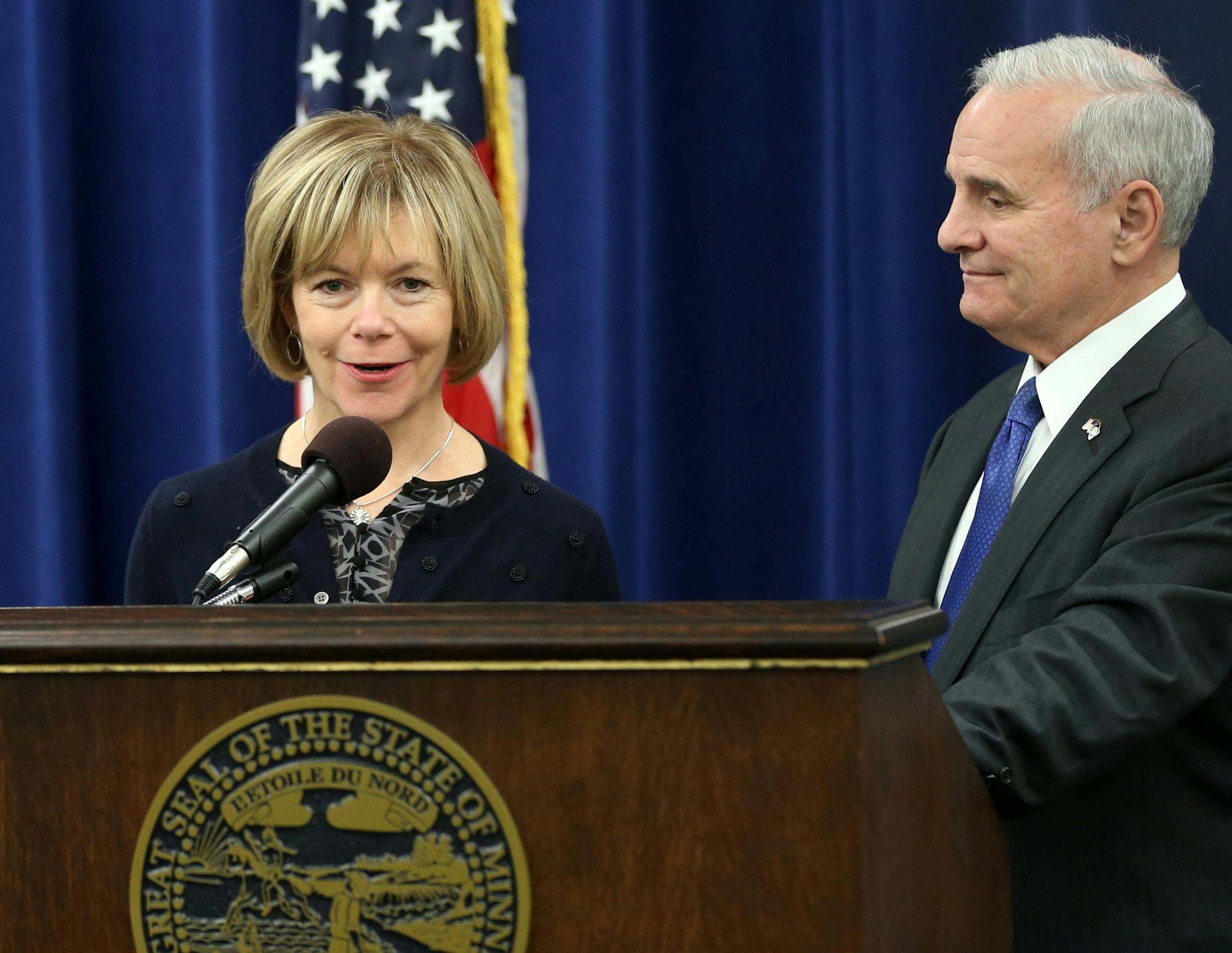
In three weeks, Tina Flint Smith will become the 10th lieutenant governor since 1974 to try to fill that gap. She succeeded retiring Lt. Gov. Yvonne Prettner Solon as DFL Gov. Mark Dayton's ballotmate this year.
To varying degrees and with varying wiles and styles, Smith's last nine predecessors have all aspired to fill their days as a meaningful player in their governors' administrations. Most of them, including Prettner Solon, have left office with that aim unmet.
Prettner Solon did fine work on state services for senior citizens and the disabled, and was the leader of a number of Minnesota delegations to Germany to study health care, education and alternative energy. But she couldn't fairly be called "deputy governor."


