

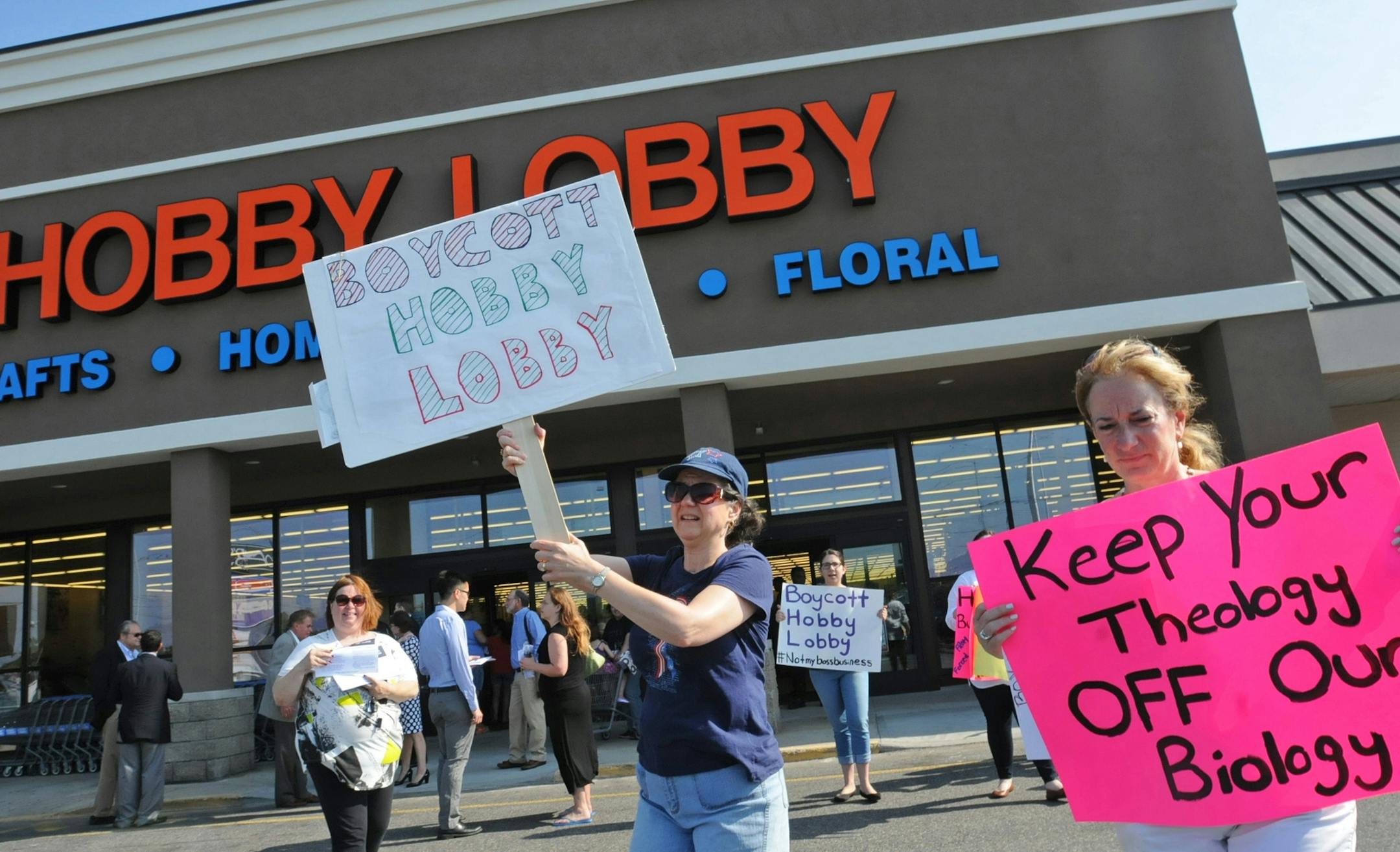
The smoke has just cleared from the online battlefield after articles, comments and insults were fired across enemy lines over the U.S. Supreme Court's recent Hobby Lobby decision.
Five individuals with decades of legal experience spent months reading countless pages of cases and briefs and listening to oral arguments before issuing an opinion more than 50 pages long. We, however, post our opinions as if we have no time for analyzing, contemplating or critical thinking.
When we race to the opinion potluck with such urgency, we get sloppy, really sloppy. In his essay "Politics and the English Language," George Orwell says that when "certain topics are raised, the concrete melts into the abstract, and no one seems able to think in terms of speech that are not hackneyed." He realized that "prose consisted less and less of words chosen for the sake of their meaning, and more and more of phrases tacked together like the sections of a pre-fabricated hen-house."
Peter Kreeft, a philosophy professor from Boston College, emphasized that the first step of making an argument is ensuring that the terms are clear. Our greatest philosophers spent significant portions of their arguments clarifying their terms. In Plato's "Republic," Socrates extensively debated what "justice" meant. It was essential because rushing to debate whether something is "just" makes no sense without clarifying what being "just" means in the first place.
In response to the Hobby Lobby decision, many have chosen "powerful" phrases over proper words. Elizabeth Wydra, for example, used this phrase in a CNN article: "This ability to impose religious beliefs … on tens of thousands of employees nationwide makes the extension of religious liberty rights to corporations, as opposed to individuals, particularly troubling."
The "impose religious beliefs" phrase is far from new. It has been regurgitated in arguments over other issues like abortion and same-sex marriage because it appeals to the live-and-let-live principle our culture cherishes. Yet, hardly any writers discuss or even clarify its meaning. It reminds me of Vizzini, a villain from "The Princess Bride," who yells "inconceivable!" whenever he is surprised or frustrated. Finally, one of his sidekicks tells him: "You keep using that word. I do not think it means what you think it means."
What does "imposing religious beliefs" actually mean? To impose is to force. Thus, imposing a religious belief upon another logically means forcing another to accept or abide by a religious belief. In this Hobby Lobby case, where do we see that happening?
An employer believes certain contraceptives are immoral and refuses to pay for them through insurance. Does that force the employees to abstain from using those contraceptives?


