

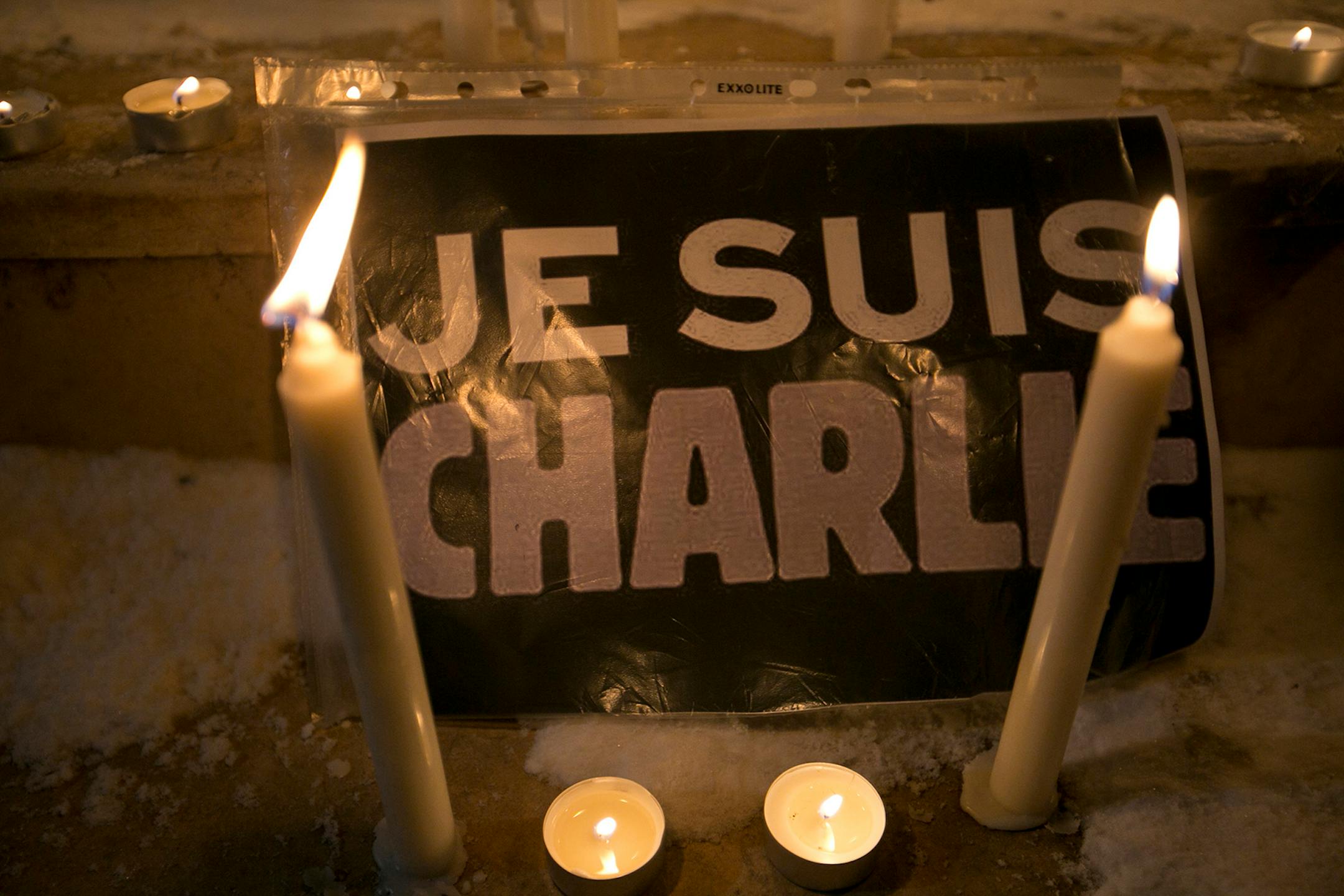
The information revolution is facing a counterrevolution. At an increasing and alarming rate, free expression is under assault, as described in two recent reports from organizations based in cities reeling from the aftermath of attacks on free expression.
The World Press Freedom Index 2015, issued by the Paris-based Reporters Without Borders, includes data compiled before the horrific Charlie Hebdo and kosher market attacks. And yet the report still states that there was a "worldwide deterioration in freedom of information in 2014. Beset by wars, the growing threat from nonstate operatives, violence during demonstrations and the economic crisis, media freedom is in retreat on all five continents."
Nations such as China, Syria, Turkmenistan, North Korea and Eritrea (the bottom five out of 180 nations ranked) made the list. But the index shows that beyond perennial offenders, two-thirds of countries performed worse than the previous year. Overall, violations of press freedom increased 8 percent.
These violations are more violent in some nations (or failed states), as evidenced by journalists being beheaded, among other grim fates. "It's a very concerning trend, a new barbaric propaganda," said Delphine Halgand, U.S. director for Reporters Without Borders. "When there are conflicts on the ground, there are information wars at the same time. This obsession to control the information, we can observe during conflict, but also during economic crises and during social crises." And it doesn't just happen in Syria or Somalia or similar societies, but from "the strongest democracies and from the most awful terrorist groups. There is this common obsession to control information."
In part this is because there's so much more information to control. The information revolution's technological transformations have created more outlets and as a result more journalists, including everyday citizens. The threat this poses to power structures results in an attempt to silence the reporting cacophony.
And it's not just journalists — artists are targeted, too.
That's the conclusion of a separate report issued by Freemuse, a Copenhagen-based international organization that advocates for musicians' and artists' rights to freedom of expression.
Freemuse verified 237 attacks and violations against artistic freedom in 2014, up from 199 in 2013. Like the Press Freedom Index, countries like China, Russia, Turkey and Iran were among the world's worst offenders. And the documented cases are only "the tip of the iceberg," Magnus Ag, senior program officer at Freemuse, said from Copenhagen. There are many more instances of intimidation, pre-censorship and resulting self-censorship, as well as outright artistic bans not documented in the report.


