

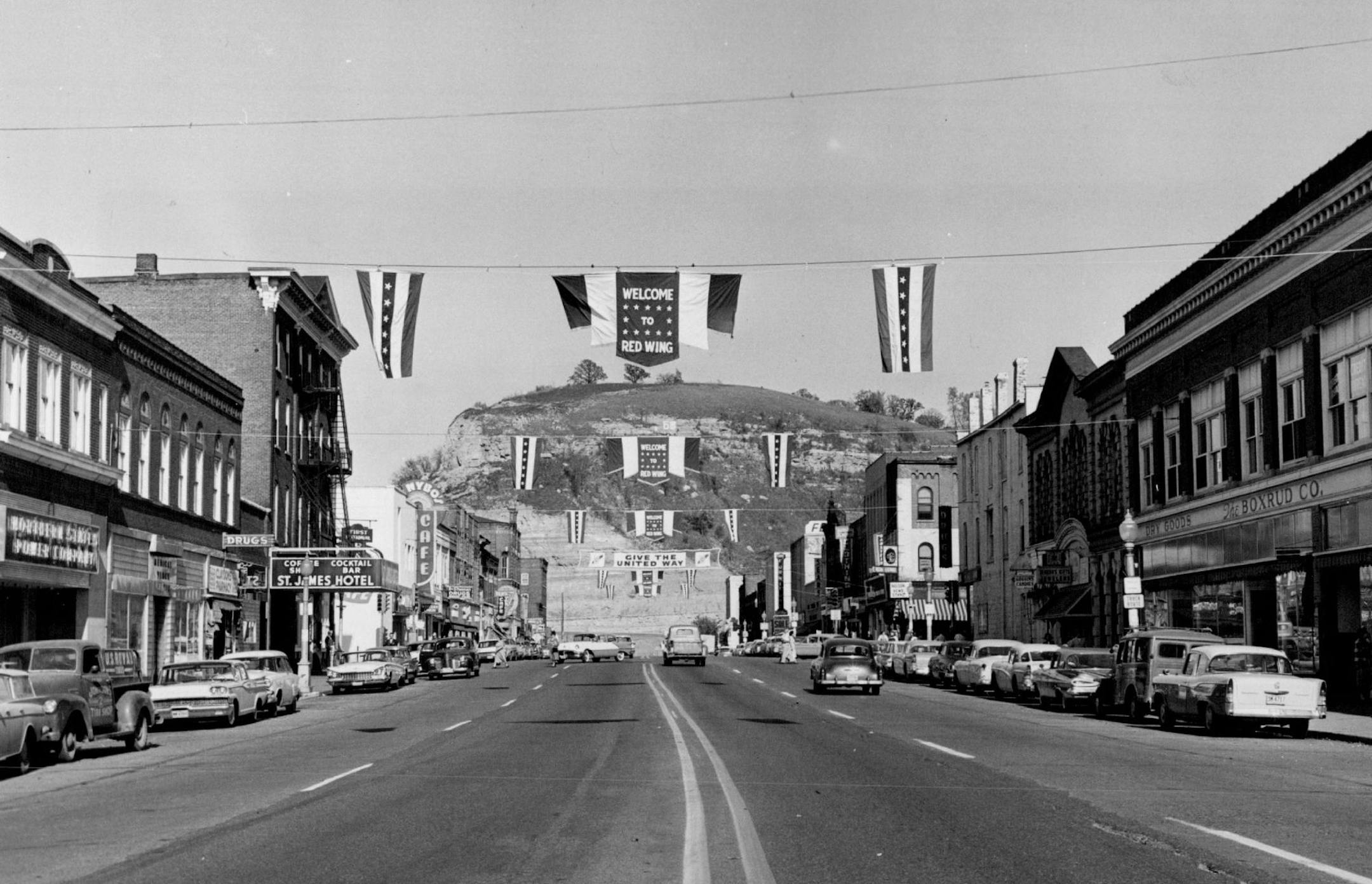
In October 1960, President Dwight Eisenhower made a trip to Red Wing, Minn., to open a new bridge over the Mississippi River. He spoke about human rights.
Eisenhower most likely accepted the invitation to Red Wing because it was the hometown of his military colleague Lauris Norstad, who followed him as NATO's Supreme Allied Commander in Europe.
Furthermore, Eugenie Anderson from Red Wing was Eisenhower's ambassador to Denmark.
Red Wing was also the home of William C. Christianson, who left the Minnesota Supreme Court to become a judge at Nuremberg, where Adolf Hitler's cabinet questioned whether Christianson was sophisticated enough to judge them — and where, in his final judgment of them, he stood firmly for the common decency of ordinary people.
I was a kid of 7 in the crowd that day with my dad, a Red Wing man who had been wounded in World War II. I am sure Eisenhower's human rights message made sense to him and to all the local men and women who had lived through the war.
Red Wing was and is a typical small town. Everyone knew that human rights were why we fought the war. Everyone knew human rights were the reason for heroes.
Three months later, in Washington, D.C., America's new president, John F. Kennedy, spoke of the founders and declared: "We dare not forget today that we are the heirs of that first revolution. Let the word go forth from this time and place, to friend and foe alike, that the torch has been passed to a new generation of Americans — born in this century, tempered by war, disciplined by a hard and bitter peace, proud of our ancient heritage — and unwilling to witness or permit the slow undoing of those human rights to which this nation has always been committed, and to which we are committed today at home and around the world."
Down through the decades, we remember the torch being passed and we revere Kennedy's "new generation" as the "greatest generation." But we have forgotten that at their core was a commitment to human rights.


