

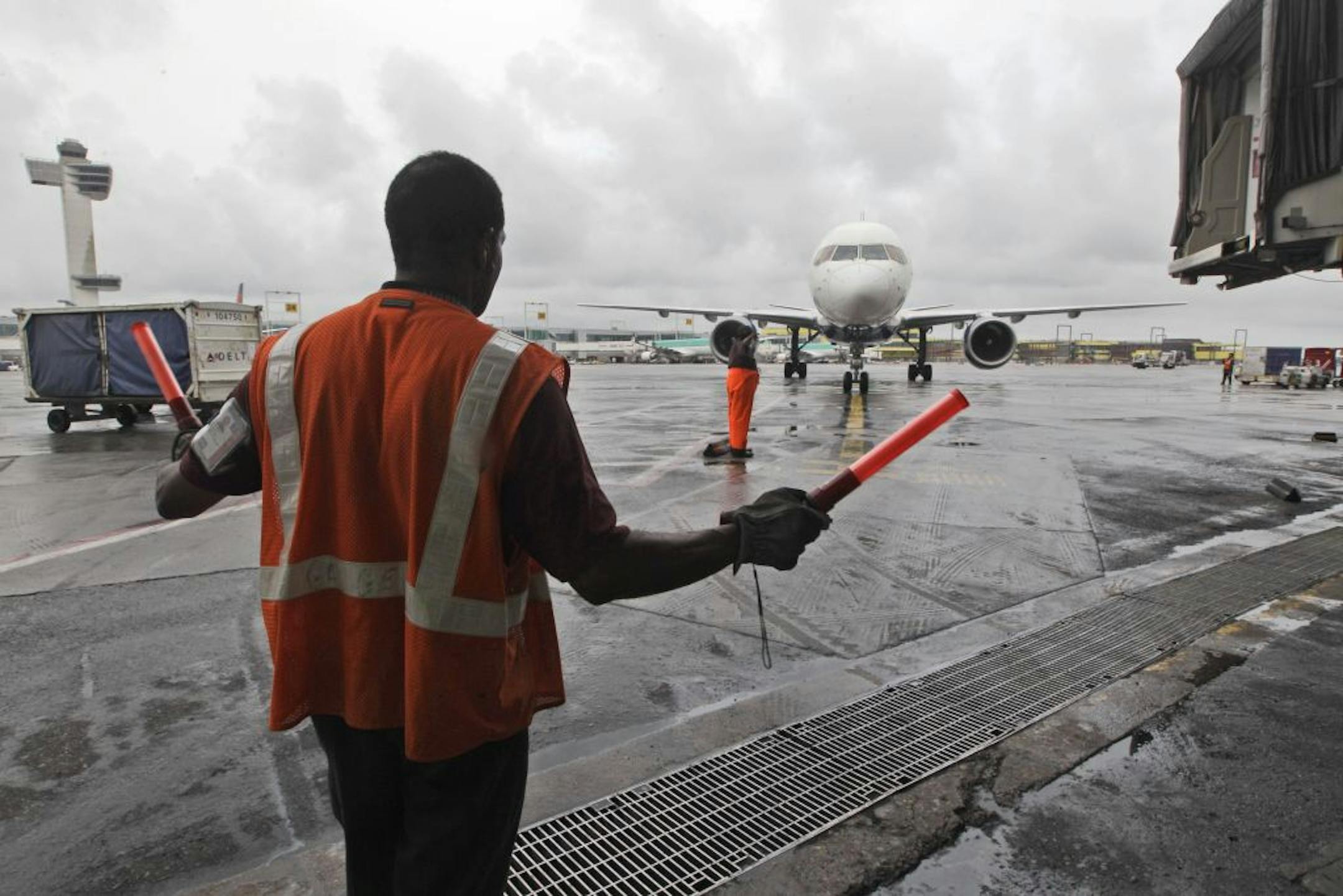
Relief was the main sentiment of travelers who planned to pass through John F. Kennedy International Airport in New York when security workers there canceled the threat of a Christmastime strike.
Yet two troubling questions linger. The first involves the airport workers' specific grievances. They complained of making only $8 an hour. Why so low, you wonder, especially compared with what union workers in security-related jobs get. The guards, hired by the contractor Air Serv Corp., were so angry that one of them even expressed a warning that those in safety fields often don't make explicit: that a labor action could compromise the public's security.
"They will be completely unsafe," said the guard, Prince Jackson.
The second question is why the nation now confronts the prospect of more labor trouble that could inconvenience the public, or possibly jeopardize safety, whether in Camden, N.J., where firemen are warning of the danger of closing engine companies, or in Long Beach, Calif.,. where a clerical employees' strike delayed the movement of goods worth $1 billion a day in a recent work stoppage.
The answer to both questions lies in the failure of an old grand bargain made in the very name of safety.
Back in the early days of the labor movement, the idea of public-sector unions seemed absurd to trade unions and governments alike. Calvin Coolidge, as Massachusetts governor, led in the firing of policemen after riots that took place during a labor walkout. The future president said, "There is no right to strike against the public safety."
Even Franklin Roosevelt, the father of our most aggressive labor law, the Wagner Act, drew the line at public-sector unions.
"The process of collective bargaining as usually understood cannot be transplanted to public service," Roosevelt said.


