

Opinion editor's note: Star Tribune Opinion publishes a mix of national and local commentaries online and in print each day. To contribute, click here.
•••
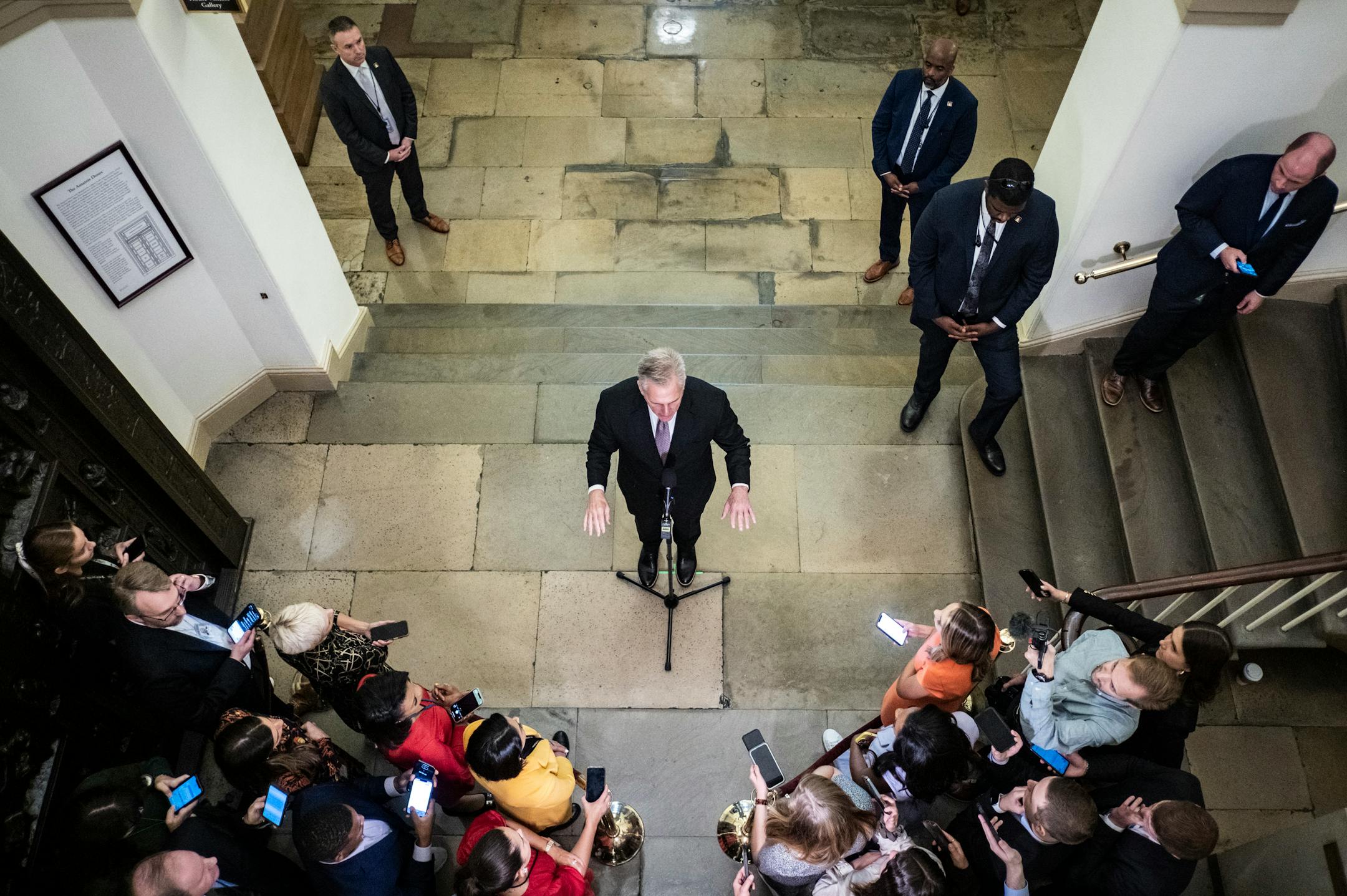
Years of broken promises, political reversals and obeisance to the GOP's Trumpian elements finally caught up this week with House Speaker Kevin McCarthy.
By reneging on last May's budget deal with President Joe Biden and on procedural promises to fellow Republicans, he angered both the Democrats and a crucial cadre of GOP right-wing members. The result: Tuesday's unprecedented vote abruptly ending his nine-month speakership.
In a larger sense, however, McCarthy fell victim to a decadelong Republican revolution that turned the GOP from a moderate conservative party that worked for smaller government and stronger defense to a divided party whose most extreme right-wing elements often hold sway.
That revolution hamstrung the last two Republican speakers before ousting this one and made it very difficult for House Republicans to govern, even when they had more than their current five-seat majority.
Facing the same ouster move that befell McCarthy, Speaker John Boehner quit Congress. His successor, Paul Ryan, retired rather than deal with an unruly GOP conference and a mercurial President Donald Trump. Now, McCarthy has become the first speaker in House history forced out in midterm.
This revolution started with the Tea Party movement more than a decade ago, spread with Donald Trump's election to the presidency and has been on full display since Republicans recaptured the House last November and displayed their divisions by taking 15 ballots to elect a speaker.


