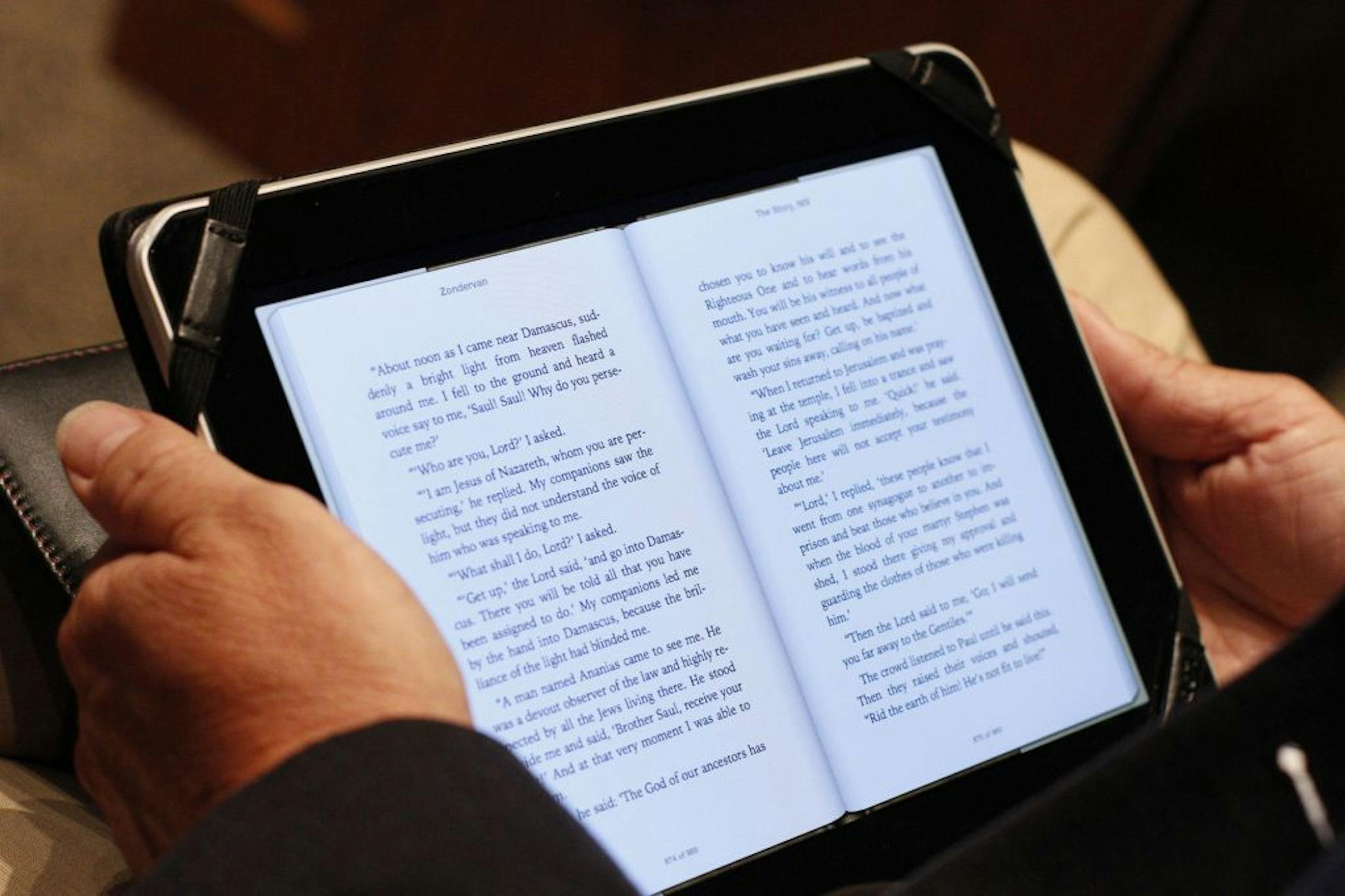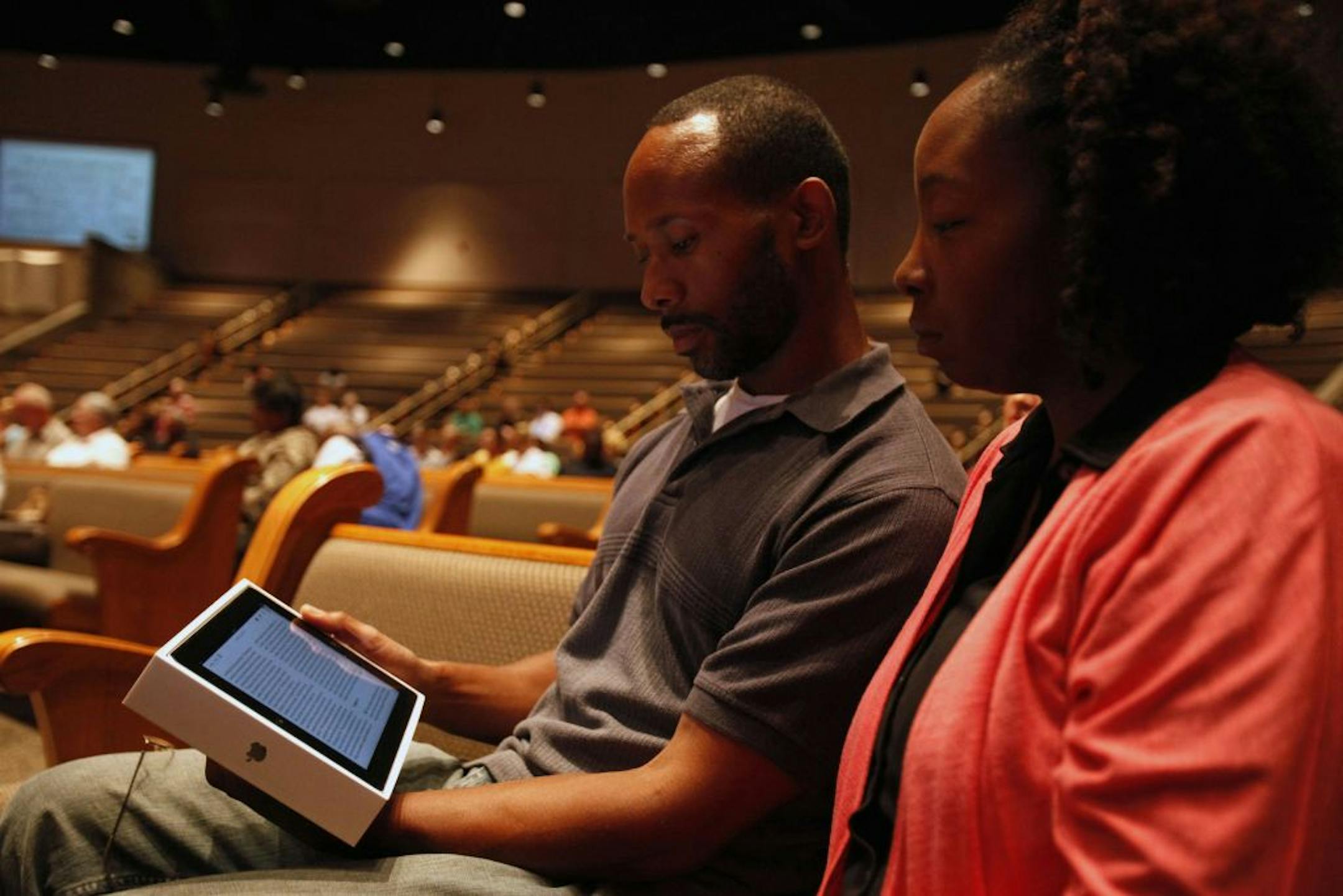
It's Tuesday evening Bible class at Apostolic Church in Auburn Hills, Mich., but it feels a lot like a Sunday church service.
The praise team has sung spirituals, and the pastor, the Rev. Steve Warman, is wrapping up his lesson.
As he builds toward the climax of his message, he refers to "the word of God" and holds up the text to which he is referring. But that's no Bible in his hand: It's an iPad.
During Bible study, several people read electronic tablets and a few look up verses on their smartphones, while others flip through the pages of a bound book.
Not too long ago, the sight of someone using an electronic device at a worship service might lead an observer to assume that person was not fully engaged. But not anymore. Reading the Bible used to mean reading a book, but increasingly people are getting the Word on smartphones, iPads and other electronic devices.
So what will happen to the printed Bible? The last word has not been written on that, but experts speculate that its unchallenged reign is over.
"The Bible is sort of the flagship of the printed book culture," said Timothy Beal, author of "The Rise and Fall of the Bible" (Mariner, $15.95).
"The printed word is losing its place as the dominant medium for reading."