The Center for Rural Policy and Development issued its State of Rural Minnesota 2014 Report this week, including a number of compelling graphics about the current and projected economic status of Greater Minnesota counties.
The report might prompt different conclusions based on who reads it, but since I write about Northern Minnesota, I see a rather specific pattern centered on demographics, population movement and economic status.
Northern Minnesota will see uneven population and economic growth over the next few decades. The window to diversify our economy using our existing resources is open now, but closing fast.
Let me explain. Check this out:
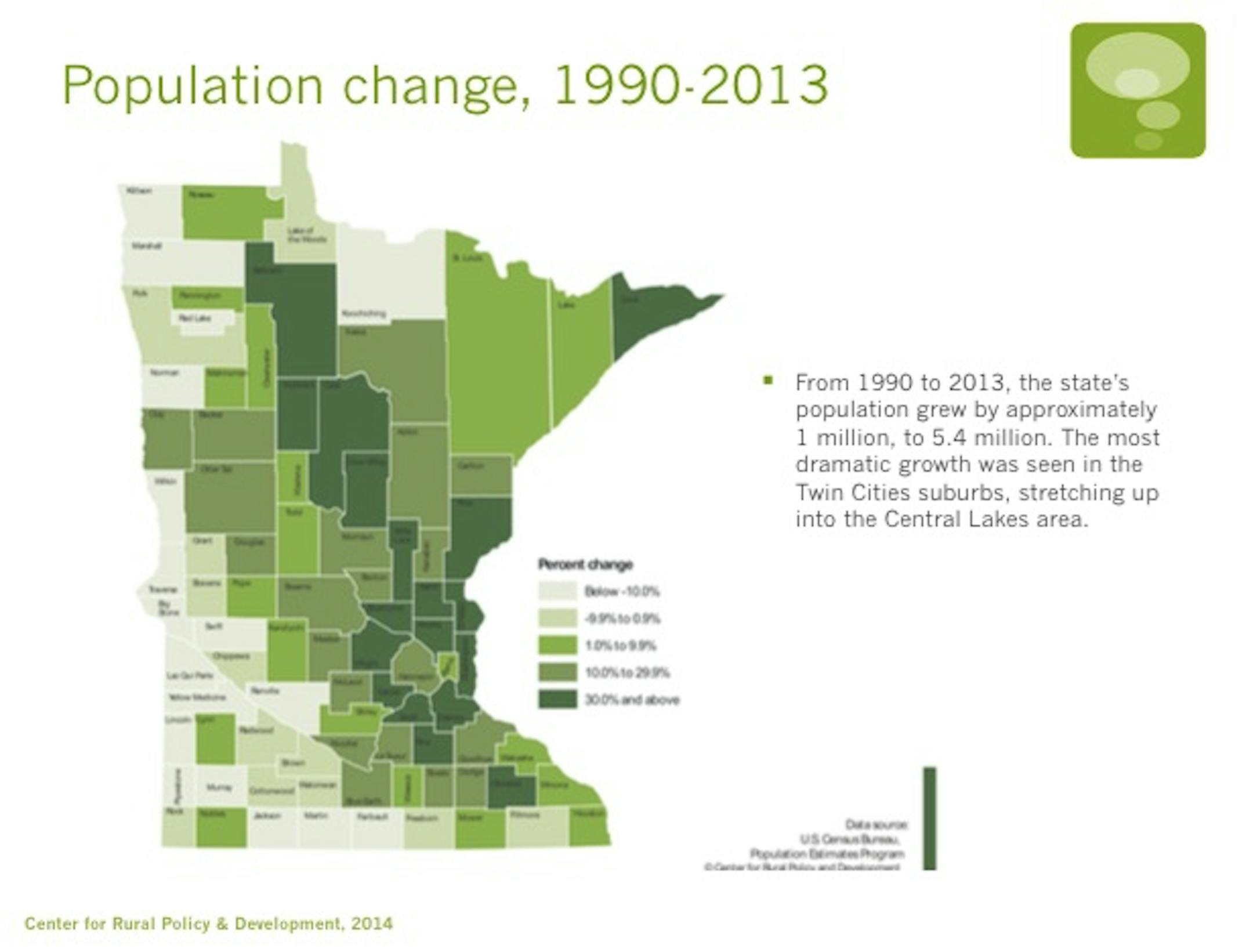
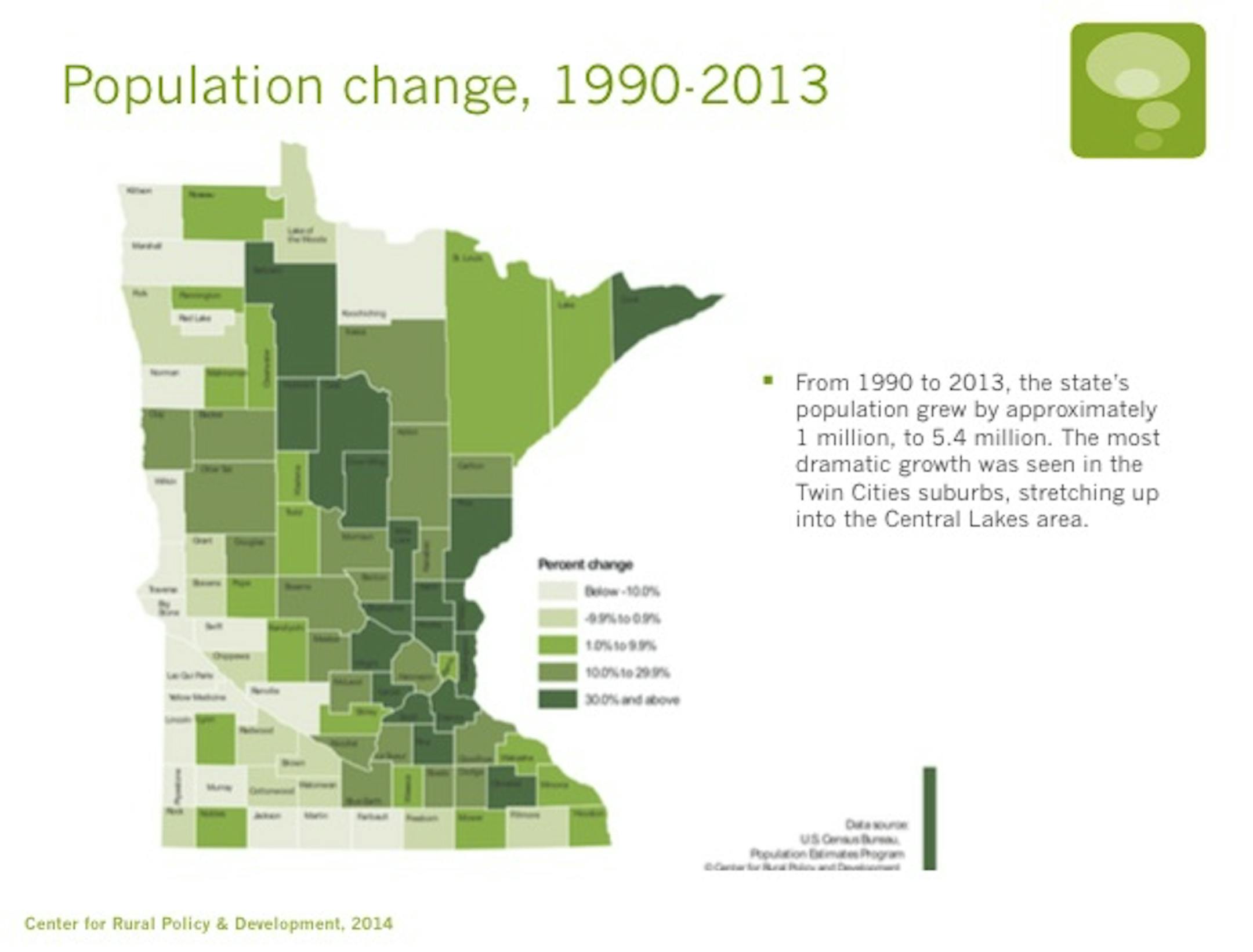
Since 1990, the population of most Northern Minnesota counties actually increased. Despite the old narrative of total collapse, we have seen people move back to the region after the disastrous 1980s. Our region is still alive and still changing. In St. Louis County, population decreased on the Iron Range (as it has for more than 50 years), but Duluth and desirable lakeshore property more than made up for it at the county level. You really see this effect in Itasca, Hubbard, Crow Wing and Beltrami counties, places like Bemidji, Park Rapids, Brainerd and Grand Rapids. These areas become much more populous and remain attractive cities for workers and families in their prime.
But life is not necessarily easy in those counties, case in point:
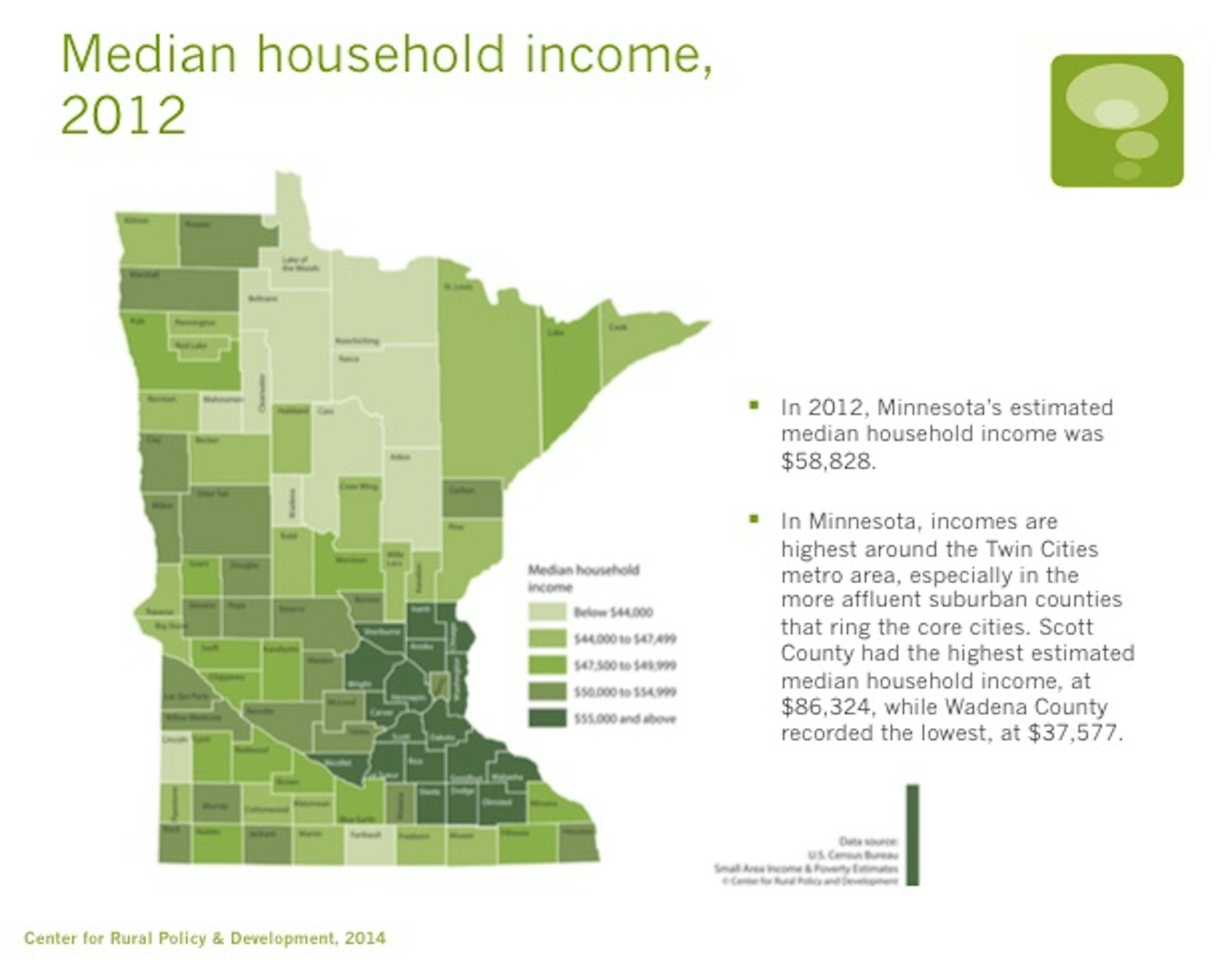
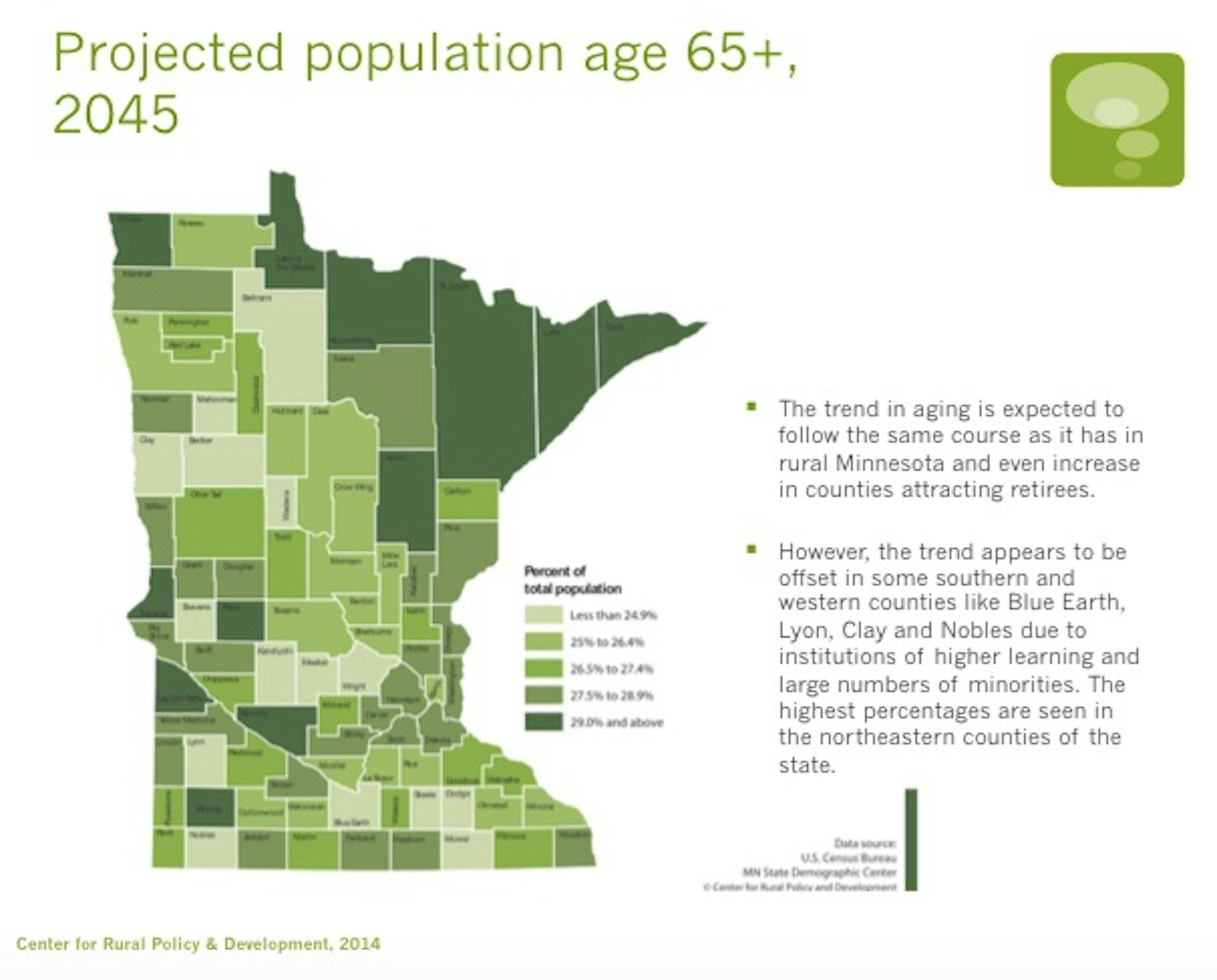
You see it all the time here in Itasca County, and I know the same is true down by Brainerd and over by Bemidji. Stratification. Some have 4,000 square foot log homes on big lakes, and others work multiple jobs to feed a family and keep a basic two-bedroom apartment. The economic struggle native people face on reservations is real, and so are the cultural barriers that keep things the same for all people in poverty generation to generation. In the woods, all manner of problems are easy for people in the big city to ignore. Trust me on this one. I've lived it.
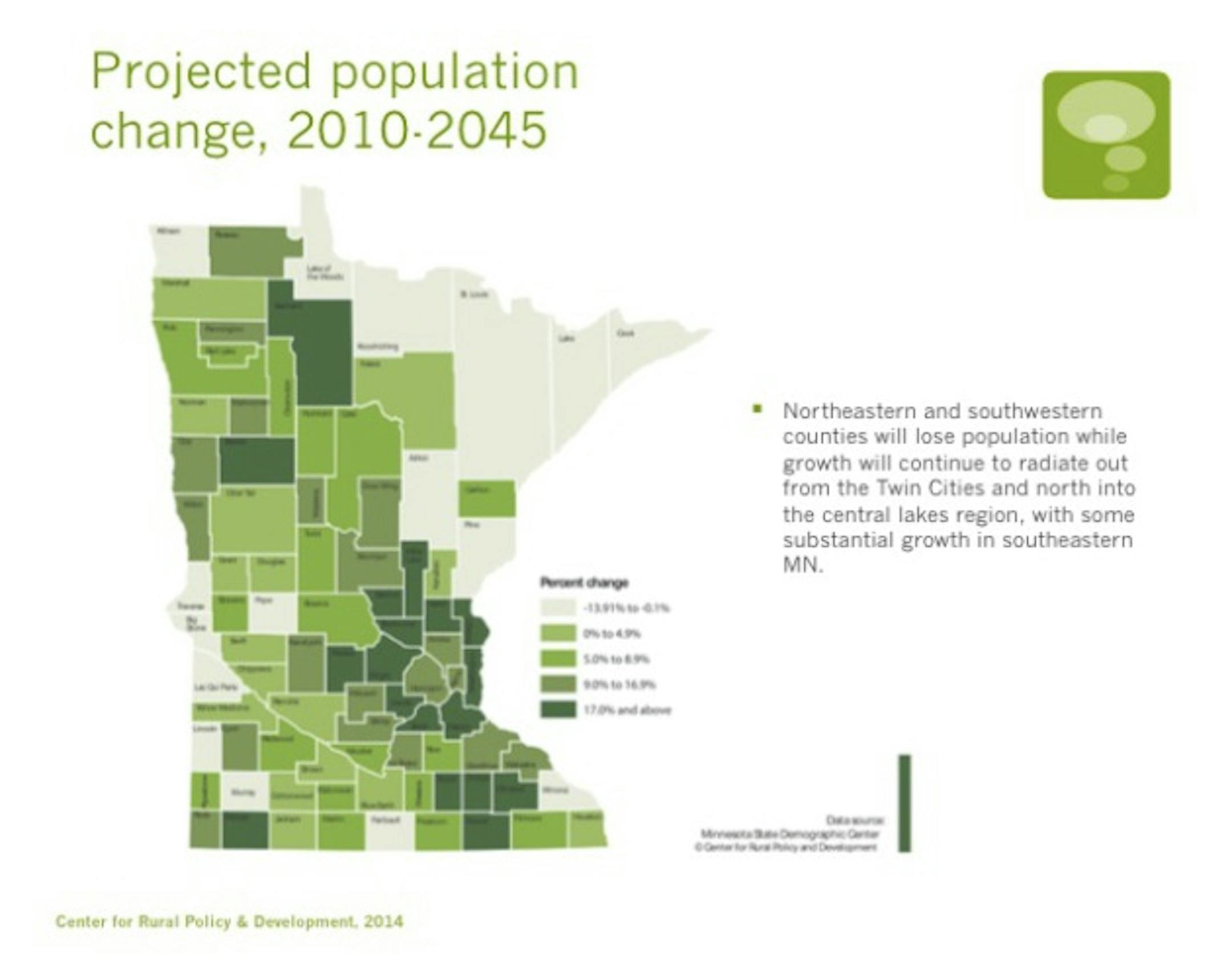
Looking forward, however, we see that the areas that have grown the most since 1990 will continue to grow faster than the region's biggest county: St. Louis.